
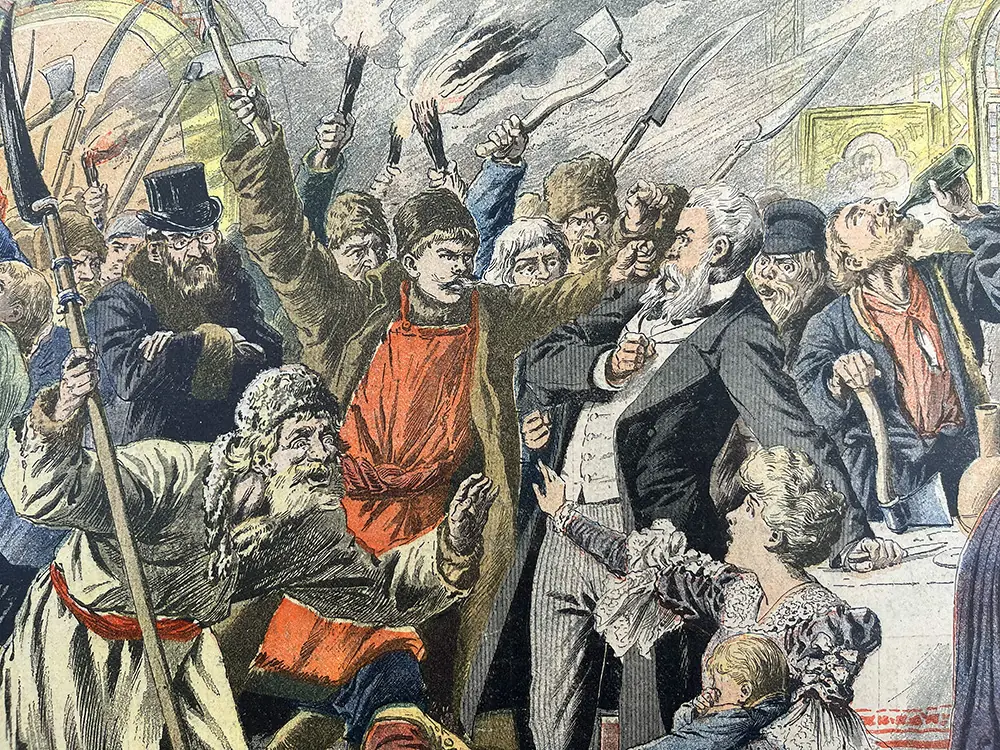
From Handshakes to Barricades: Russia in the French Illustrated Press
At the turn of the twentieth century, “Le Petit Journal” pictured an empire undergoing extraordinary change.
In September 1897, the illustrated supplement of Le Petit Journal celebrated the bright future of the Franco-Russian alliance. A full-page illustration placed French president Félix Faure and Emperor Nicholas II beneath a winged figure, surrounded by flags and cheering crowds. Their clasped hands promised that the French Republic and the Russian Empire could face the future together.
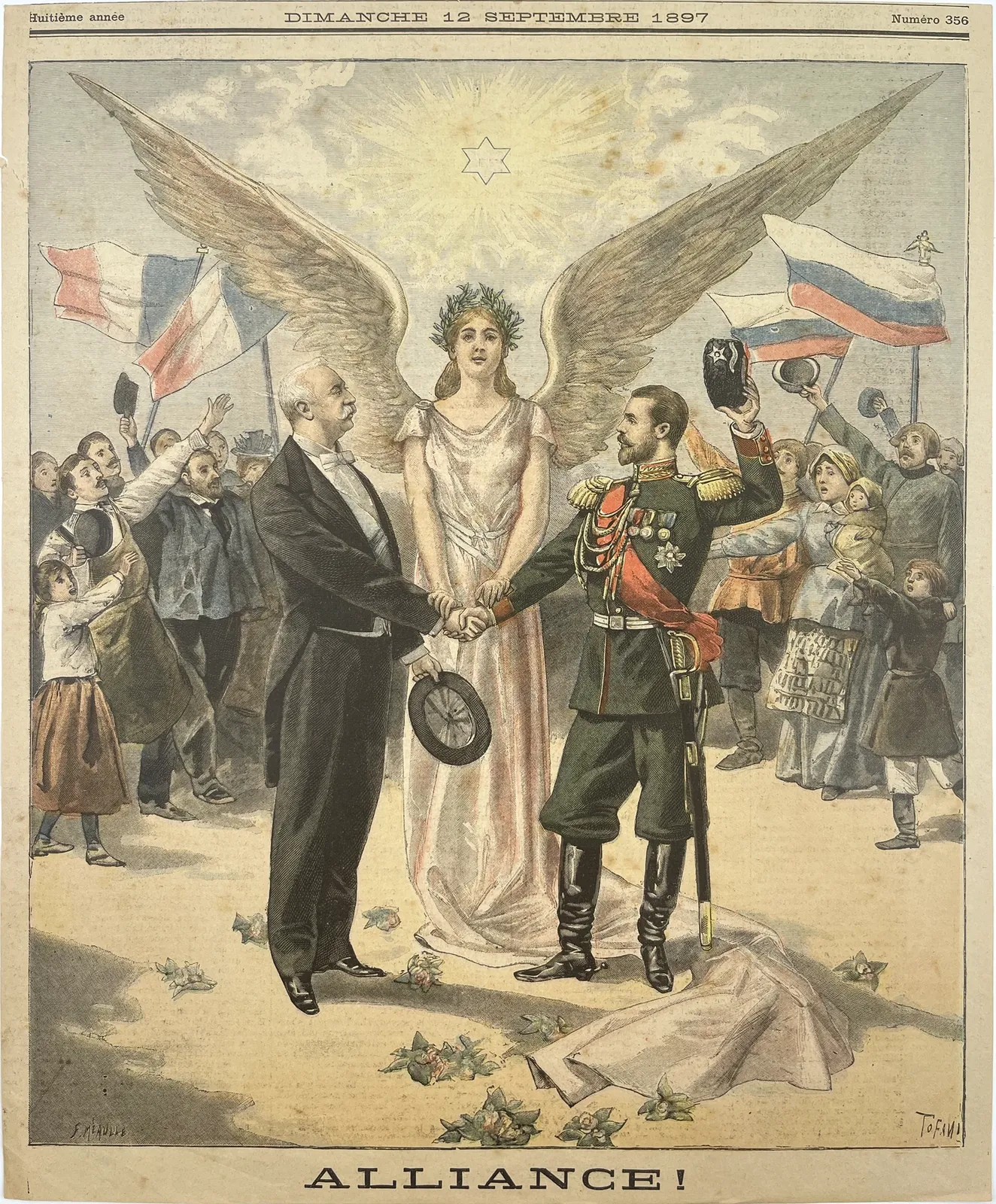
“Alliance!” The newspaper celebrates the partnership between France and Russia, September 1897.
Within a decade, the same publication would bring French readers scenes of military defeat, mass strikes, political assassination, and fighting in Moscow’s streets. The country whose friendship France had so publicly welcomed was changing in ways that diplomatic ceremonies could only partly reveal.
Founded in 1863 as an inexpensive daily, Le Petit Journal had a particular audience in mind. It reached readers whom the established political press had largely neglected, including shopkeepers, artisans, and workers. Its illustrated supplement combined foreign affairs with crime, discoveries, entertainment, and remarkable occurrences.
Full-page color illustrations, introduced in 1890, gave distant events an immediacy that helped sell the news. An imperial visit, an unfamiliar custom, and a revolutionary bomb could all command the same dramatic treatment.1
Making an Ally Familiar
The Franco-Russian alliance grew from concerns about European security. France sought a counterweight to the growing might of Germany. Russia found both a military partner and a source of investment capital in France. Negotiated under Alexander III in the early 1890s, the agreement became an important inheritance for Nicholas II. French lending helped finance Russian railways, connecting the partnership to the development of the imperial economy.2
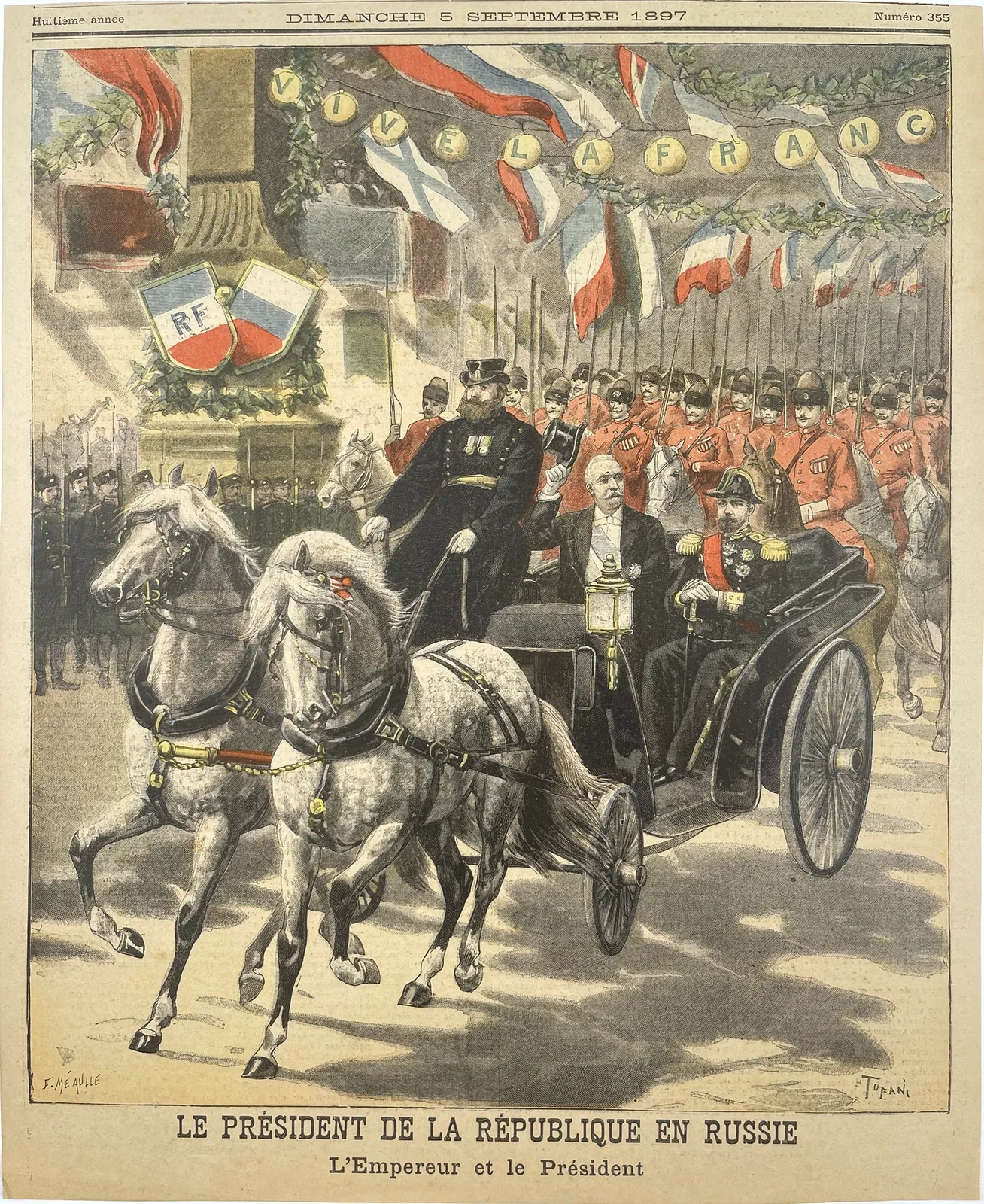
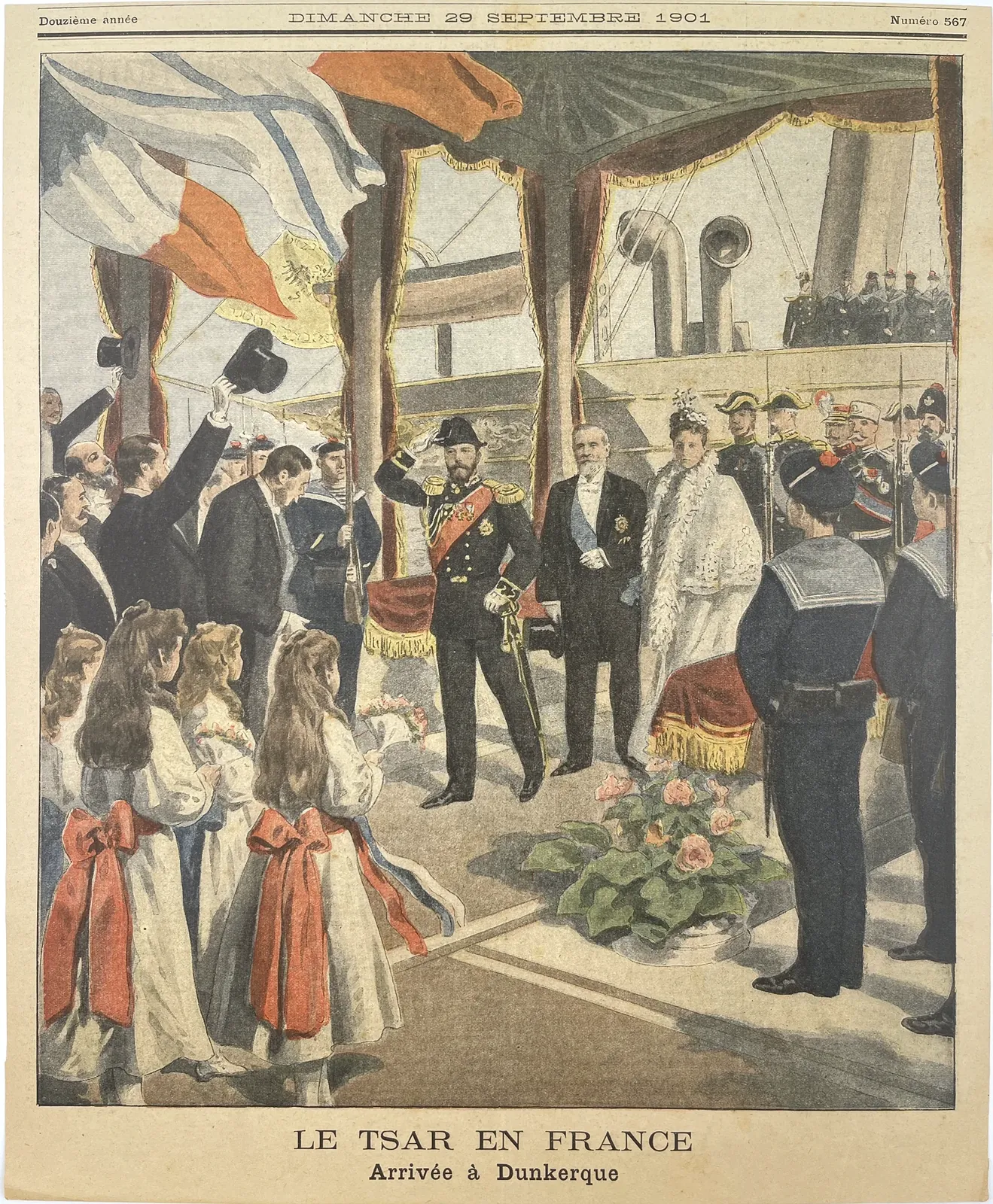
Reciprocal visits made the alliance a public spectacle. Nicholas II rides with President Faure in Russia in 1897. In 1901, the Tsar receives a welcome at Dunkirk.
Illustrated newspapers helped turn a strategic agreement into a friendship their readers could recognize. Visits, banquets, military reviews, and family gatherings made the imperial household familiar. An image of Faure seated with Nicholas and Alexandra, holding on his lap their firstborn, Grand Duchess Olga, brought the diplomacy into a domestic setting. Readers far removed from court could recognize the pleasure of welcoming a guest.
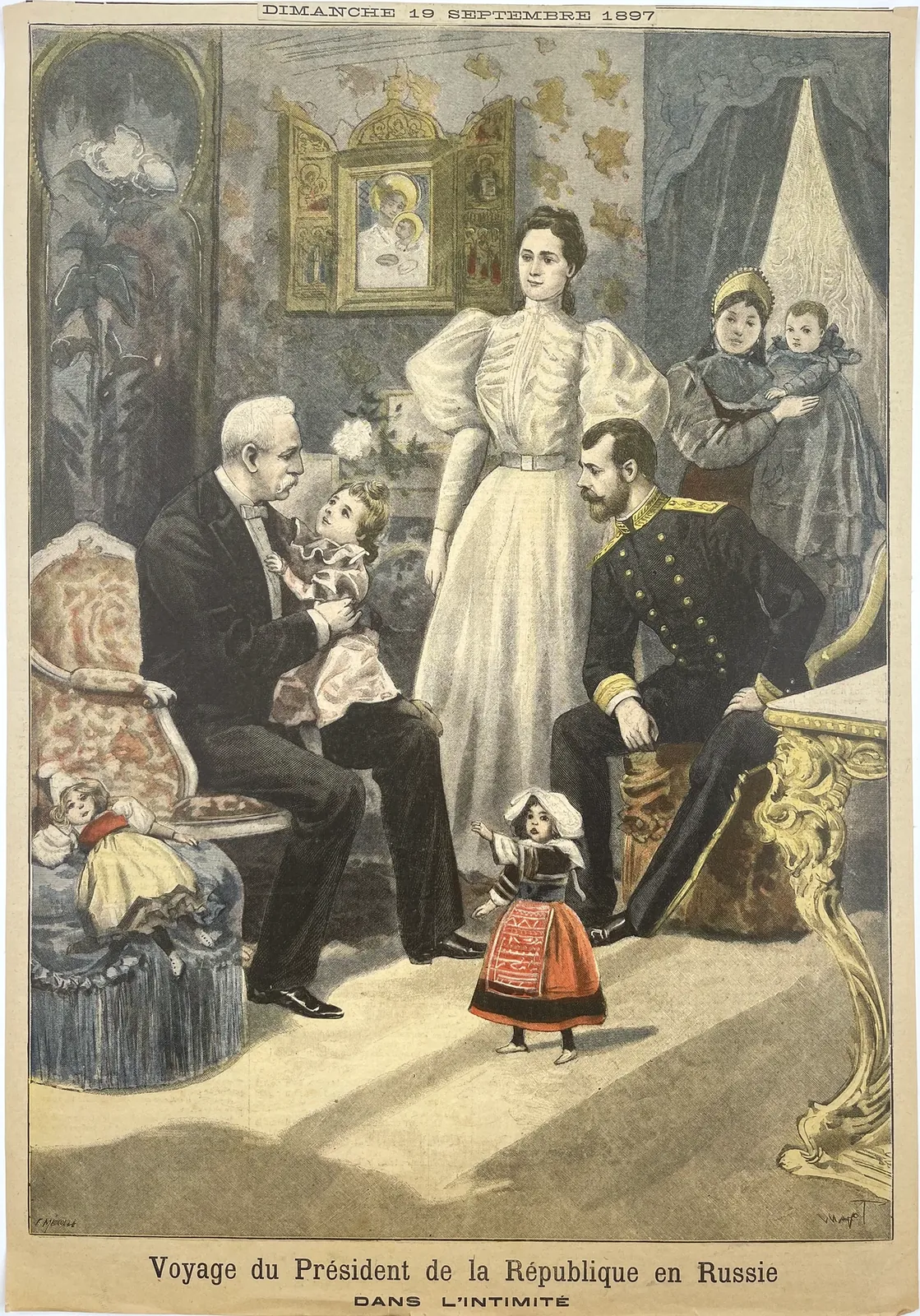
The French president’s visit “in private” in 1897. Domestic warmth becomes part of the public presentation of the alliance.
The alliance also offered France an opportunity to display its military technology. During Nicholas II’s 1901 visit, Le Petit Journal pictured him inspecting what its caption proudly called “our new gun.” Its recoil mechanism allowed the crew to fire repeatedly with much less need to reposition the piece.
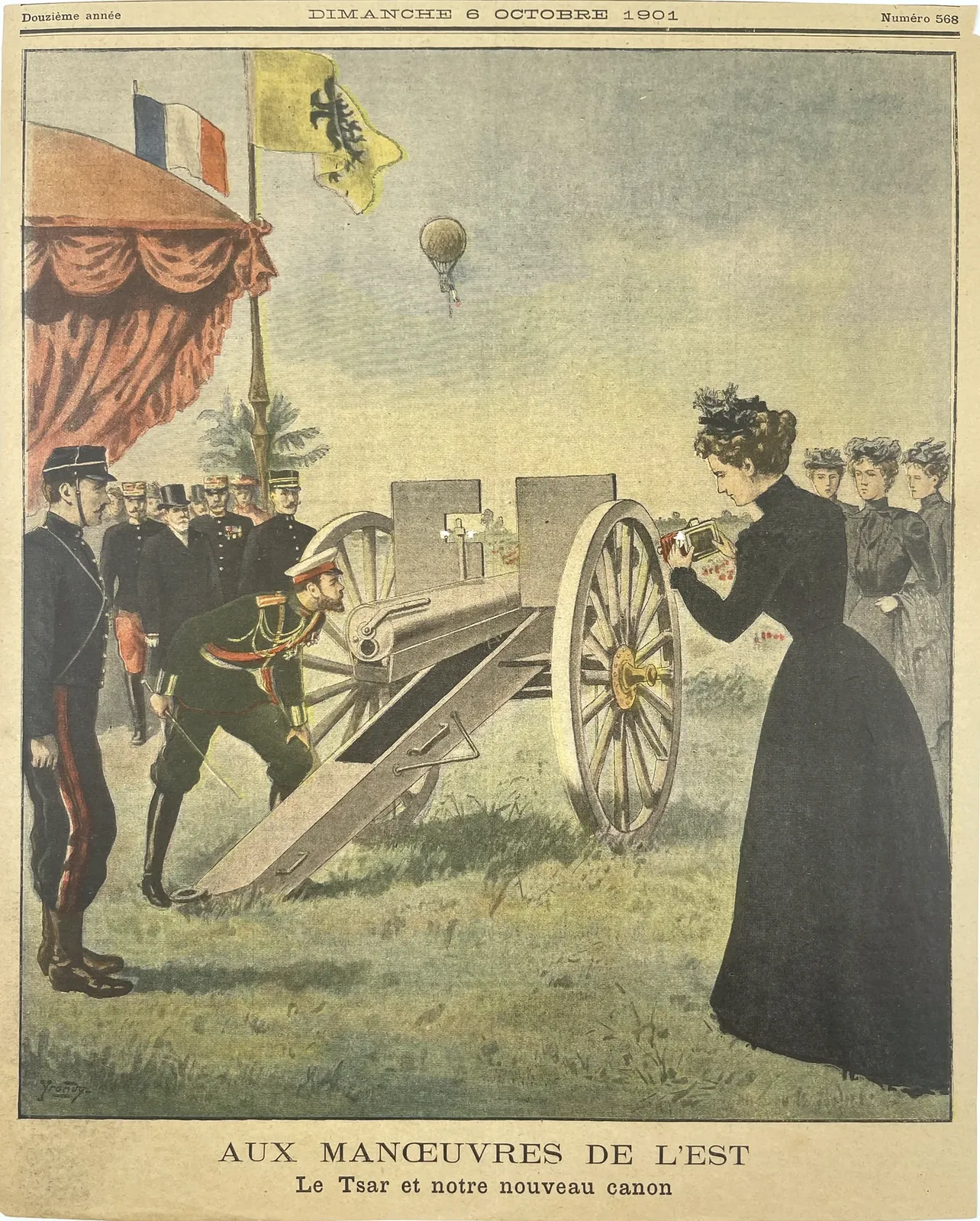
“The Tsar and our new gun.” Nicholas II inspects French artillery during his 1901 state visit.
The artist added a more personal detail by placing a camera in Empress Alexandra’s hands, suggesting knowledge of her interests. An enthusiastic amateur photographer, Alexandra recorded the family’s private world of holidays, excursions, and life at home. Official ceremonies, however, belonged to a different photographic setting, and would have been documented by professional photographers.3
Russia in the French Imagination
An allied Russia could still seem culturally distant. French readers could understand the sociability of a holiday, the importance of a baptism, or a family’s pride in its children. The illustrations in Le Petit Journal offered such connections while emphasizing the dress, architecture, and religious practices that distinguished Russian life.
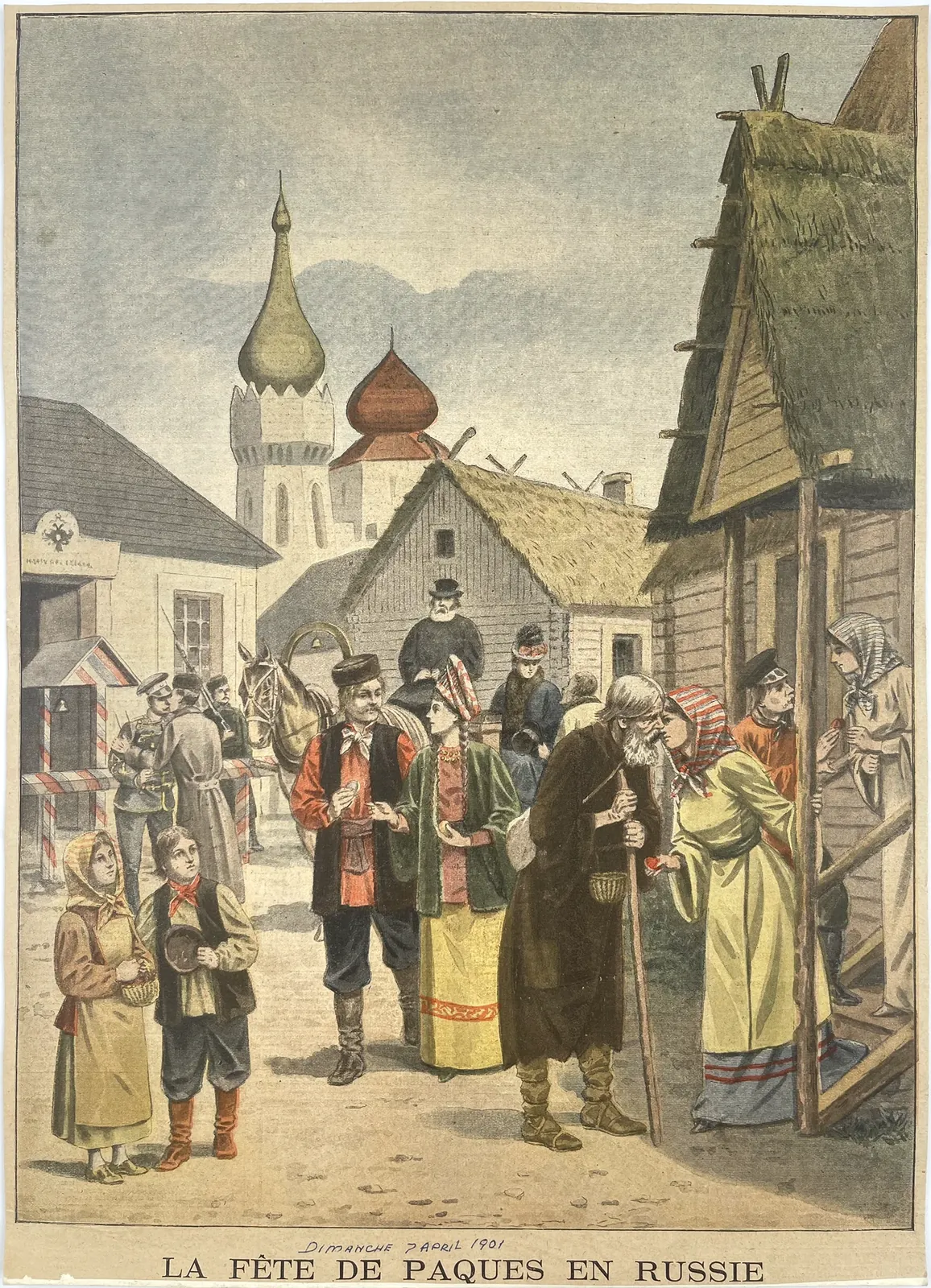
Easter in Russia, 1901. A familiar Christian holiday appears in a setting marked as distinctly “Russian.”
These scenes, however, require care as historical evidence. An illustrator with limited knowledge of Russia could combine garments, headwear, and architecture into a scene that appeared convincingly Russian to a French audience, even when its details were inaccurate. In the Easter illustration, the presumed church and belfry in the background are more reminiscent of a mosque, while the thatched cottages have a Scandinavian flavor. The clothing worn by the people exchanging Easter greetings and painted eggs mixes real and imagined forms of Russian dress.
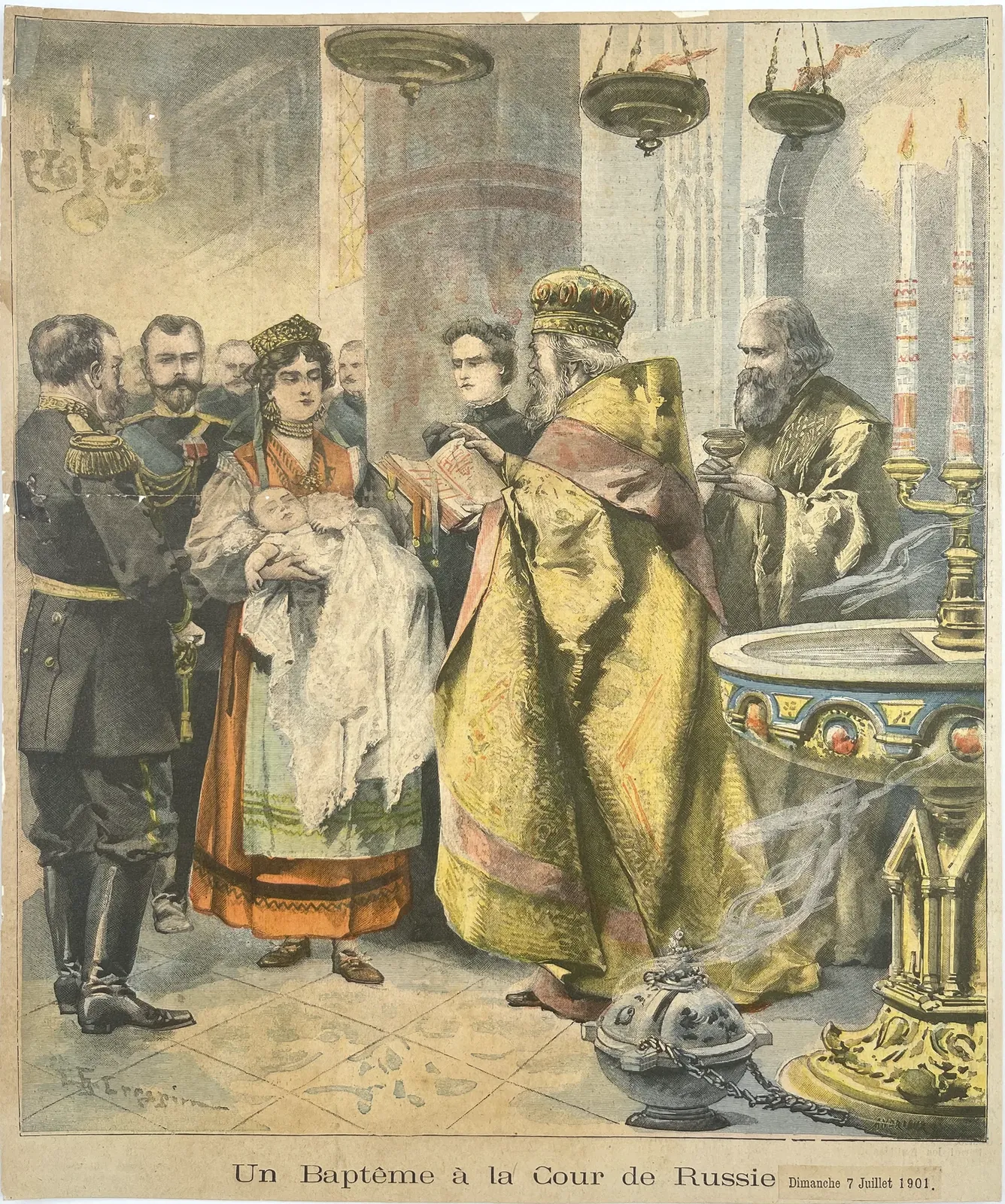
A baptism at the imperial court. Religious observance also belongs to the ceremonial life of the dynasty.
The scene of a baptism at the Russian court takes a similar approach. The officiating clergyman’s vestments combine elements of an Orthodox bishop’s and priest’s robes into a nondescript ensemble. The Gothic-style font and enormous censer seem more appropriate to a French Catholic cathedral than to a Russian Orthodox church.
Other subjects offered readers a sharper sense of distance. In July 1903, the newspaper published an illustration of the frenzied dance of a religious sect, possibly the Khlysts, under the heading Un culte agité et bruyant, a “restless and noisy cult.”
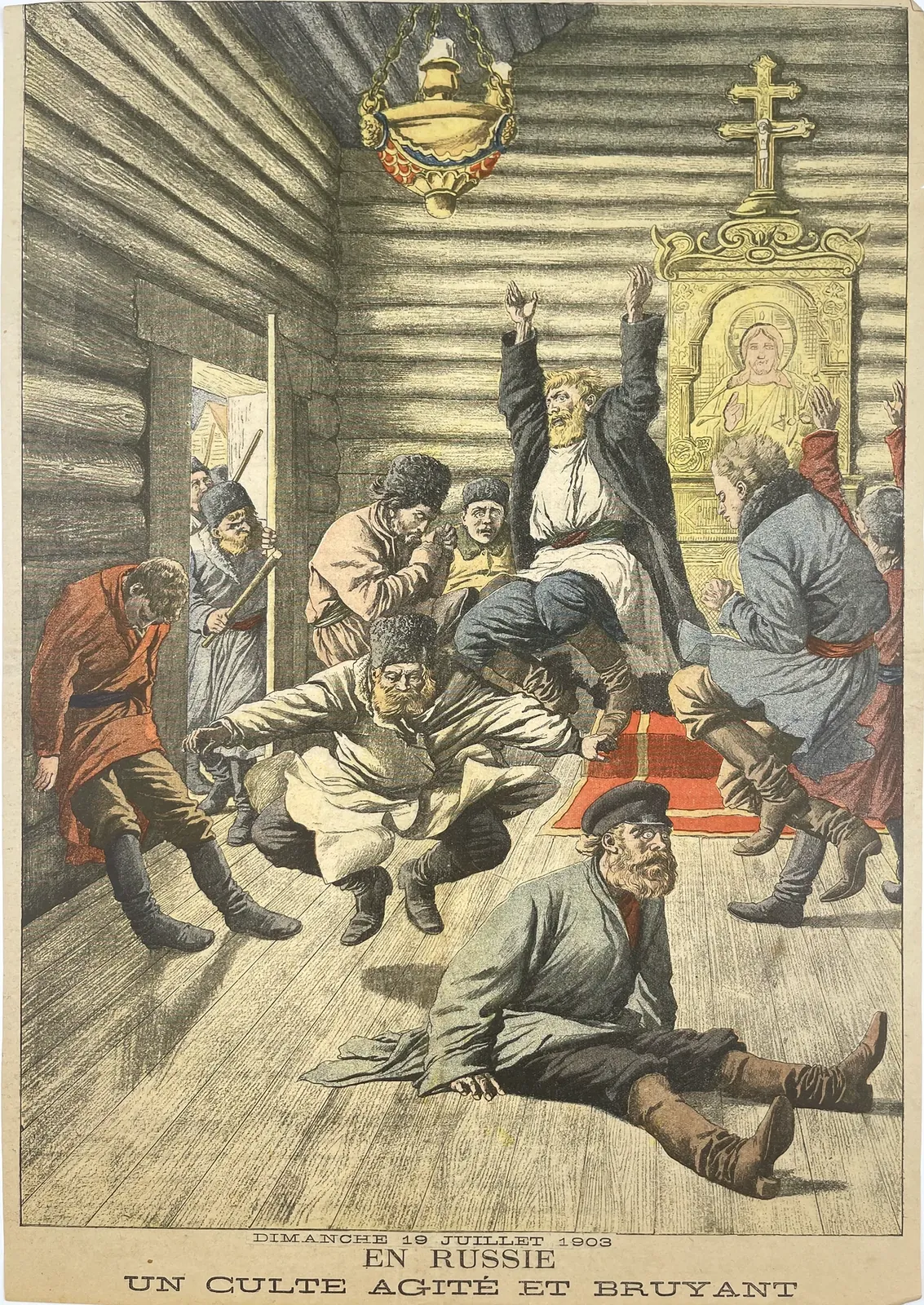
“In Russia. A restless and noisy cult,” July 19, 1903.
The contrast with the imperial baptism is revealing. Russia could appear dignified and devout at court, yet strange and unruly beyond it. The “barbaric” Russia of superstition, violence, and unfamiliar practices coexisted with the Russia of elegant diplomacy and imperial grandeur. Those impressions could reinforce one another, making the country both impressive and unsettling.
The “Siberian Amazons” provided another kind of exotic spectacle. Published in October 1904, the illustration identifies its mounted women as a Cossack sotnia, or unit of one hundred, exercising near Nikolsk-Ussuriisk in the Russian Far East. Calling them Amazons translated the reported scene into a European myth of women warriors. Their weapons, fur hats, and charging horses offered readers an exciting departure from conventional expectations of women’s lives.
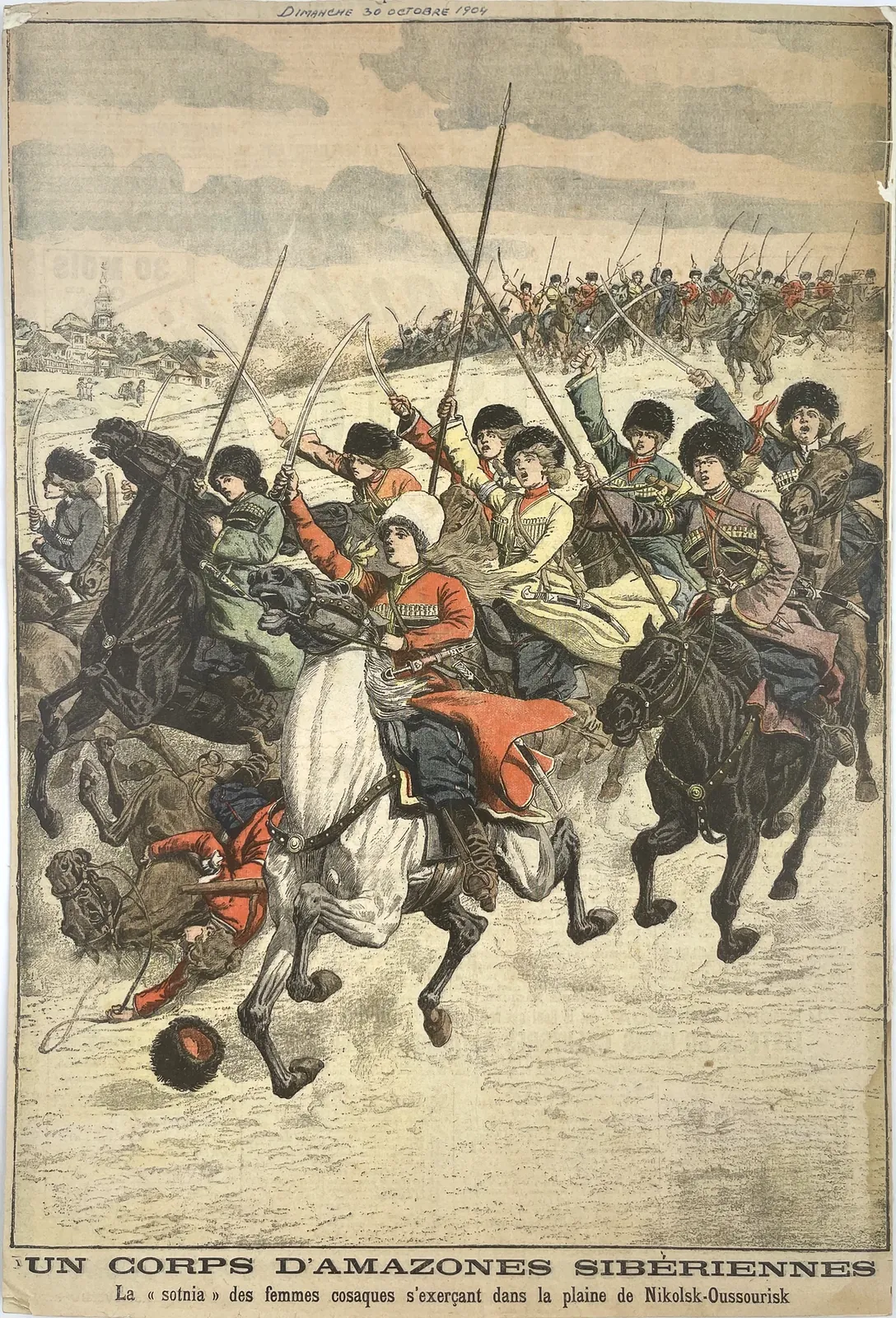
“A corps of Siberian Amazons.” The caption identifies a unit of Cossack women exercising near Nikolsk-Ussuriisk, October 30, 1904.
An Empire in Transformation
At the Paris Exposition of 1900, Russia presented both its cultural distinctiveness and its modern ambitions. Alongside displays of the empire’s peoples and territories, visitors could sit in a railway car and watch a painted moving panorama simulate a journey on the Trans-Siberian Railway. The country furnishing the illustrated press with exotic customs was also presenting itself as a modern industrial power.4
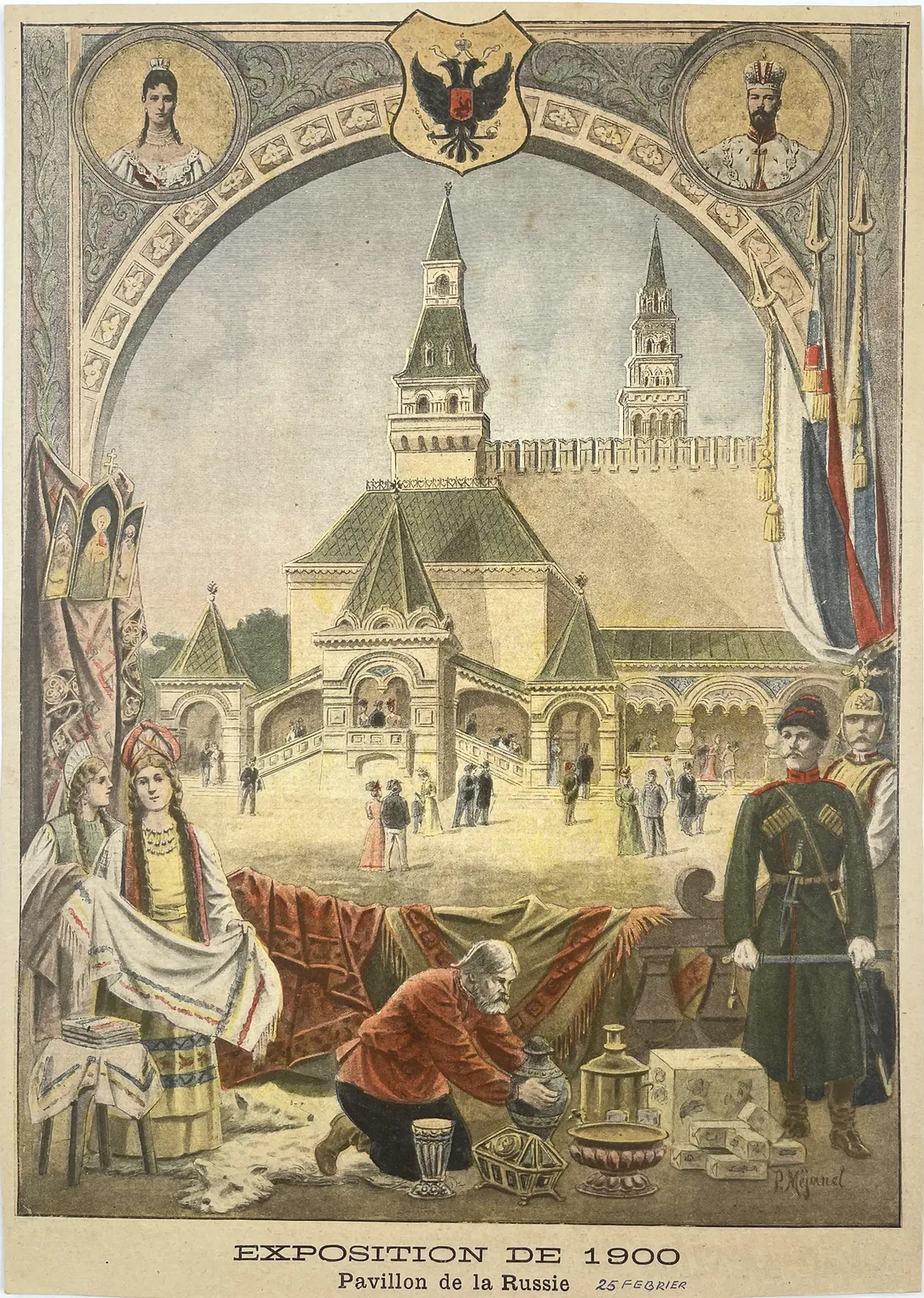
The Russian pavilion at the Paris Exposition of 1900.
Under Finance Minister Sergei Witte, the Russian government encouraged railway construction, foreign investment, and heavy industry. Factories, mines, and oilfields expanded, drawing unprecedented numbers of people into industrial centers in search of wage work.
Industrialization transformed lives as well as landscapes. For many workers, entering a factory meant leaving the familiar rhythms and relationships of village life for crowded urban quarters, relentless schedules, and the authority of foremen. Agricultural work was demanding, but factory life brought unfamiliar pressures. Workers had to adjust to strict schedules, the pace of machinery, and dependence on wages.
Industrial growth created opportunities alongside grievances about wages, hours, housing, and employers’ authority. Large workplaces brought workers together, making collective action easier. Economic development was creating groups whose demands increasingly extended into politics.5
An Empire Tested by War
The same industrial growth that was changing life within Russia also supported its ambitions abroad. Railways extended Russian influence into East Asia, where those ambitions collided with Japan’s. The struggle concerned ports, commercial access, and control over territories whose inhabitants had little say in the arrangements.
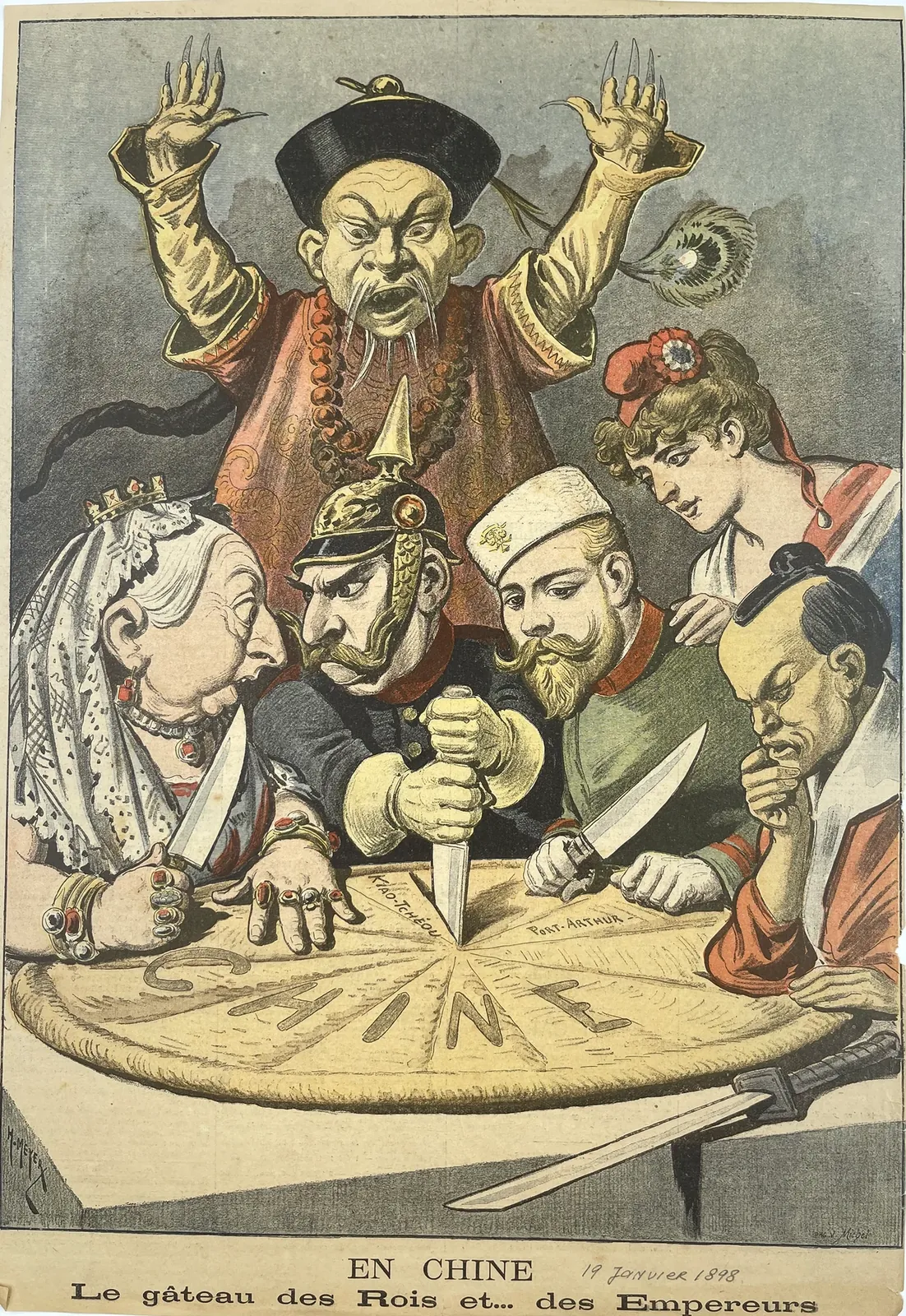
“The Cake of Kings and Emperors.” The cartoon presents imperial rivalry as Britain, Germany, Russia – accompanied by France – and Japan compete for influence in China.
In 1895, Russia, France, and Germany had pressed Japan to surrender gains made in its war with China. Russia subsequently leased Port Arthur on the Liaodong Peninsula. Its expanding presence in Manchuria, alongside competing ambitions in Korea, deepened the conflict with Japan. In February 1904, Japan launched a surprise attack on the Russian fleet at Port Arthur, sparking the Russo-Japanese War.
The conflict tested Russia’s ability to turn its enormous resources into effective military power. Its size promised an advantage, but distance complicated almost every aspect of the campaign. Reinforcements, horses, ammunition, and food had to travel thousands of miles along a railway with limited capacity. Mobilizing men was only the beginning: they had to reach the battlefield, receive equipment, and remain supplied once fighting began.
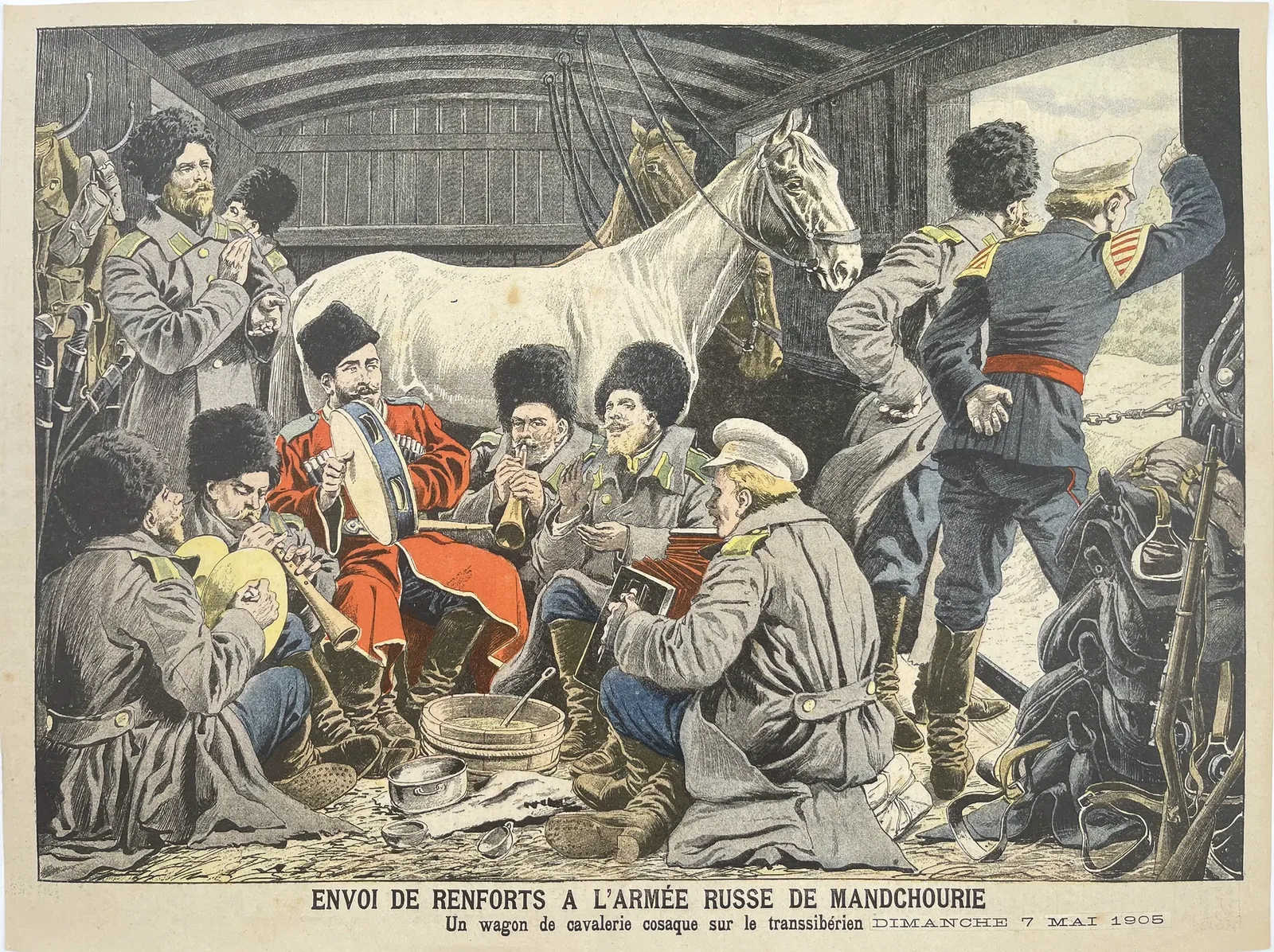
Reinforcements traveling on the Trans-Siberian Railway. Its limited capacity and the enormous distances involved slowed Russia’s movement of troops and supplies to the front, giving Japan an advantage in the opening stages of the war.
The fighting placed equally demanding pressures on the army. Rapid-firing artillery, magazine rifles, and machine guns made exposed positions increasingly dangerous. Soldiers dug trenches and strengthened defenses; artillerymen needed concealed positions, reliable observation, and communications that could direct their fire. In these respects, the conflict anticipated conditions that would become familiar during the First World War. Foreign military observers followed the campaigns closely, studying what this encounter between modern armies might mean for their own countries.
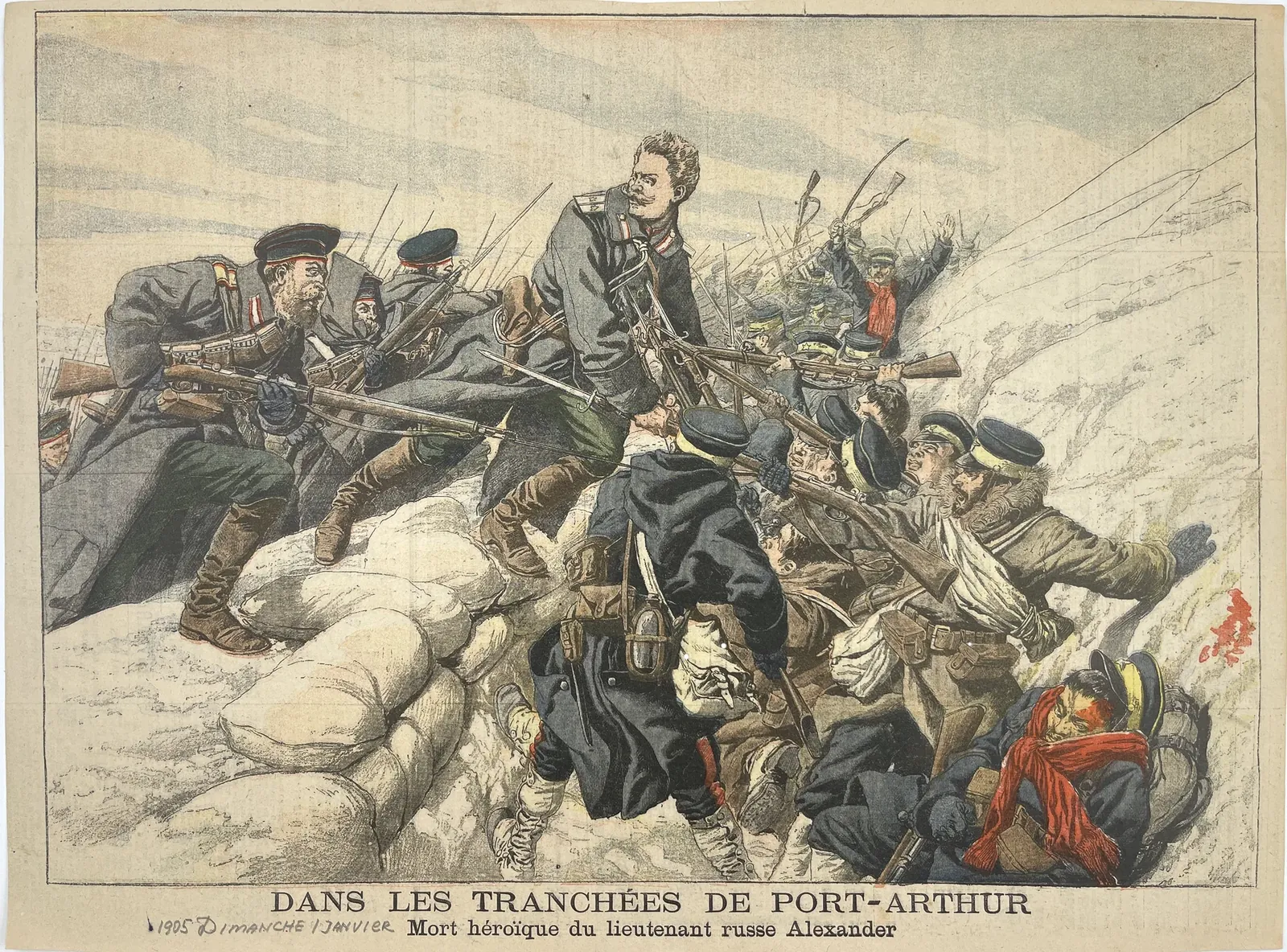
Trench warfare at Port Arthur. The earthworks and confined fighting positions suggest a war increasingly shaped by the need for protection from modern firepower.
For French readers, these developments arrived through illustrations that combined familiar military drama with more troubling accounts of the fighting. Charges, commanding gestures, and individual acts of courage remained compelling subjects. Alongside them appeared exhausted troops, damaged equipment, and scenes in which survival or defeat displaced the promise of victory.
The Russian surrender of Port Arthur in January 1905 produced a particularly revealing contrast. In “Glory to the Vanquished,” an allegorical figure offers a wreath above the defeated Russian commander, General Anatoly Stessel. Military defeat becomes an occasion for honoring endurance.
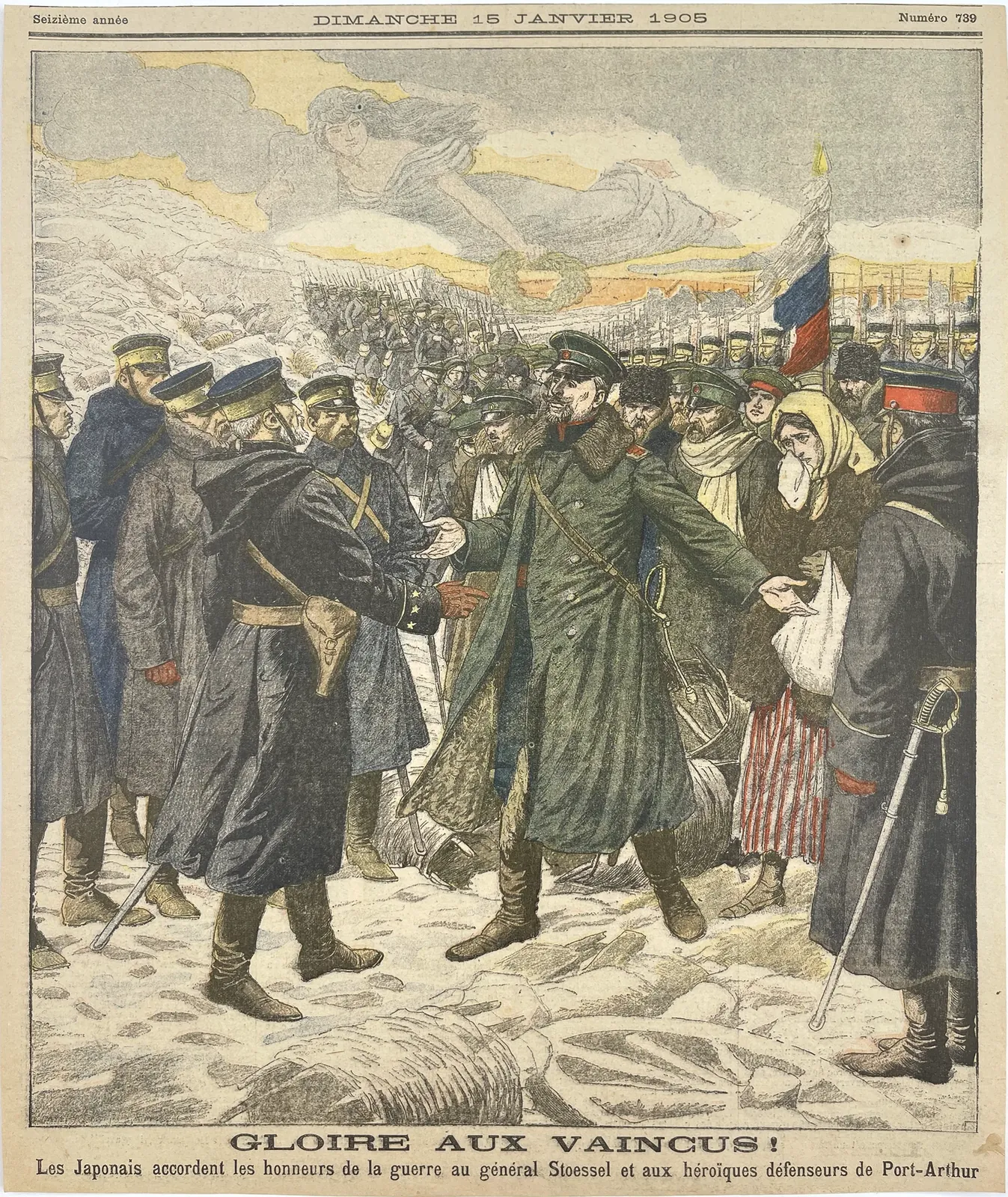
“Glory to the Vanquished!” An allegorical tribute transforms the surrender of Port Arthur into a scene of military honor.
The illustration of the surrender negotiations presents a more somber scene. Officers gather around a table in a dilapidated mud-brick house. Stessel, his head hung low, signs the terms of the surrender. Published only a week apart, the two images offered different ways of understanding the same defeat: one cast the end of the siege in a heroic light; the other showed the bleak reality of defeat.
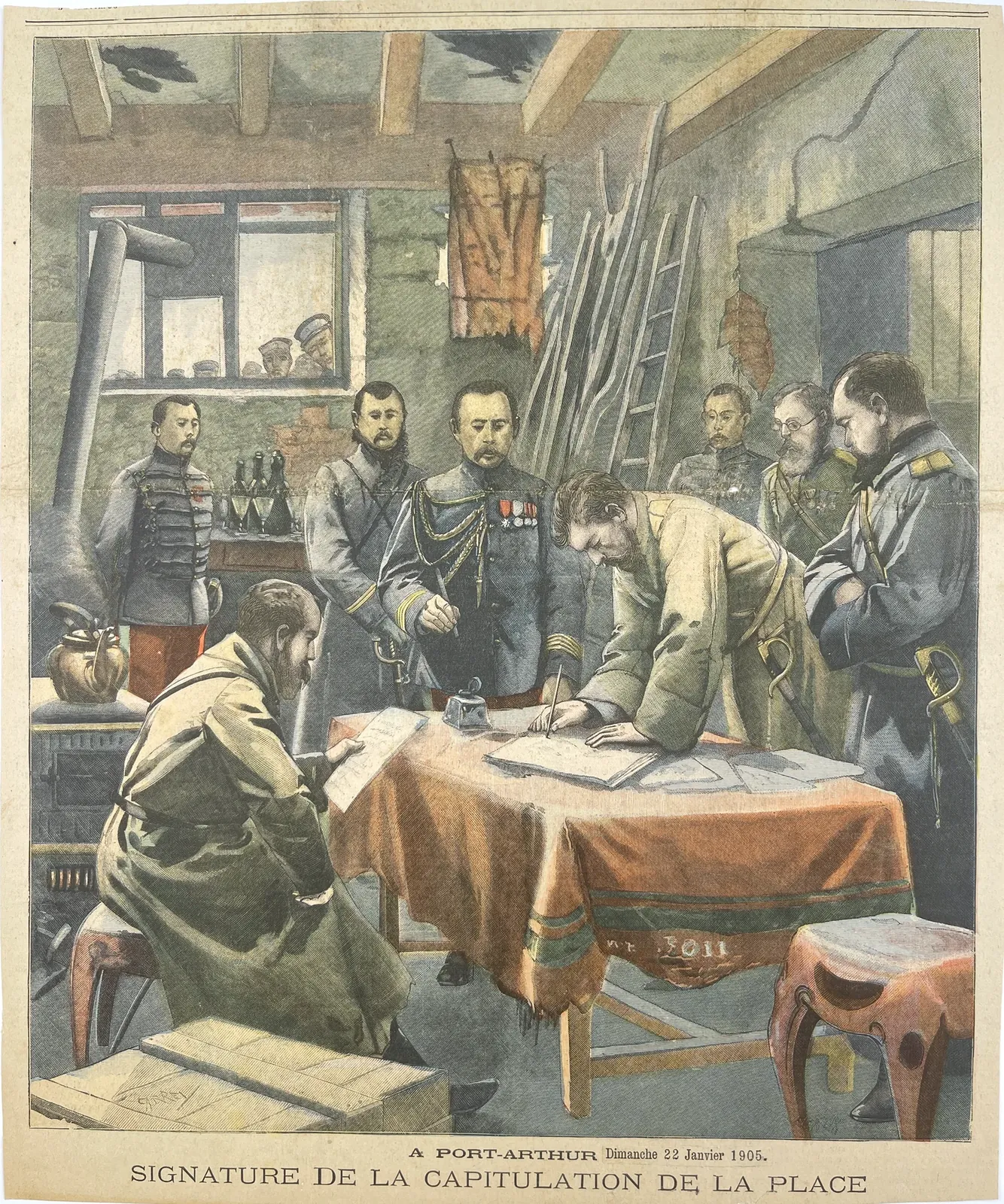
Signing the surrender of Port Arthur. A restrained interior scene offers a somber counterpart to the allegorical celebration of the defeated garrison.
Further military reverses followed. At Mukden, in February and March 1905, more than half a million Russian and Japanese troops fought across an extensive front. Coordinating men, artillery, supplies, and communications proved an enormous challenge. After weeks of costly fighting, Russian forces withdrew as Japanese advances threatened their line of retreat.
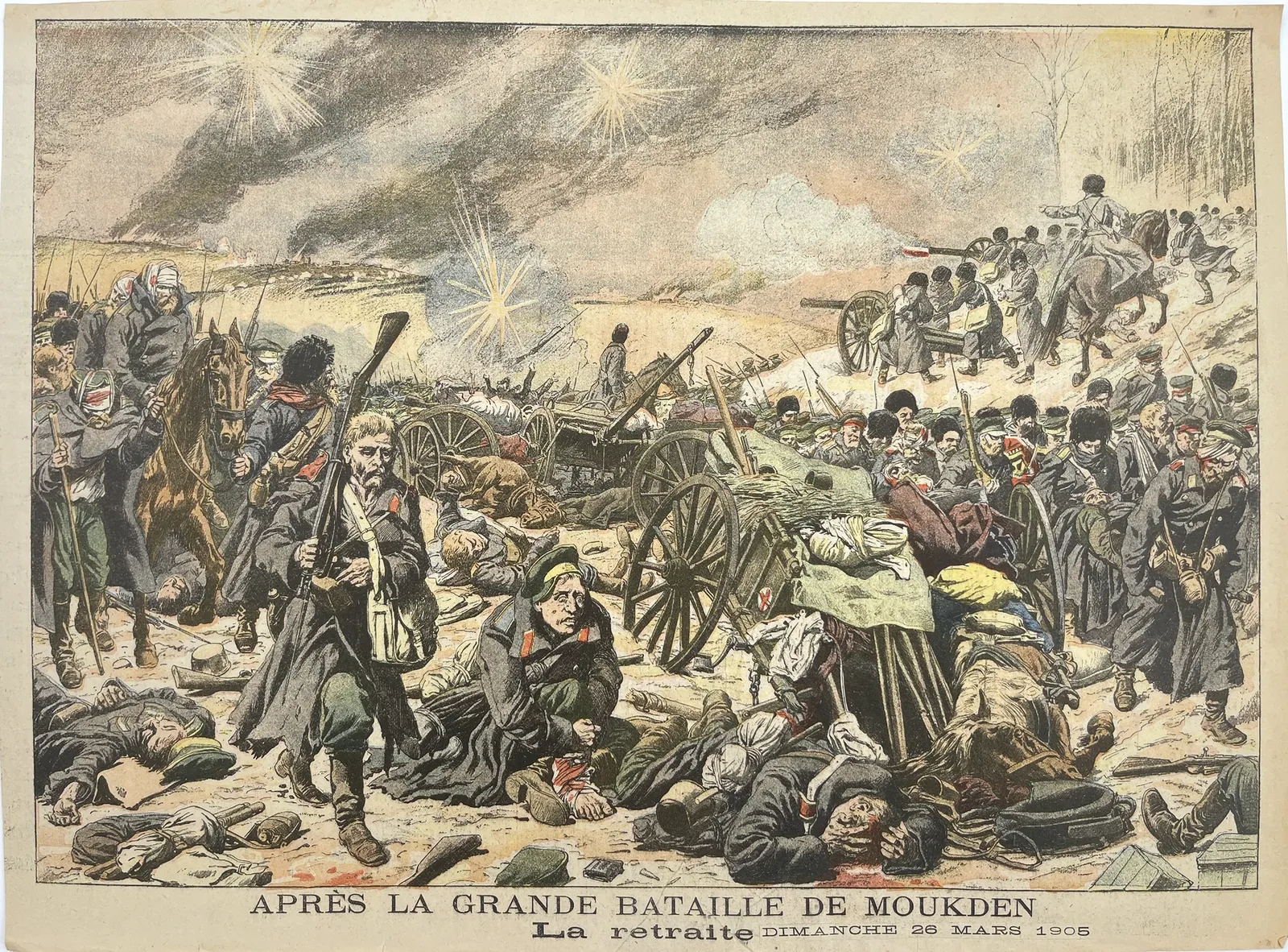
“After the Great Battle of Mukden: The Retreat.” Wounded and exhausted men crowd the road alongside horses and artillery. The scene conveys the human cost of defeat and the difficulty of keeping an army together under its pressure.
At sea, a Russian fleet sailed from the Baltic around Africa to East Asia, only to suffer a devastating defeat at Tsushima on May 27–28, 1905. Most of the force was sunk or captured. The extraordinary voyage demonstrated Russia’s naval reach, but also the difference between bringing ships to battle and employing them effectively.6
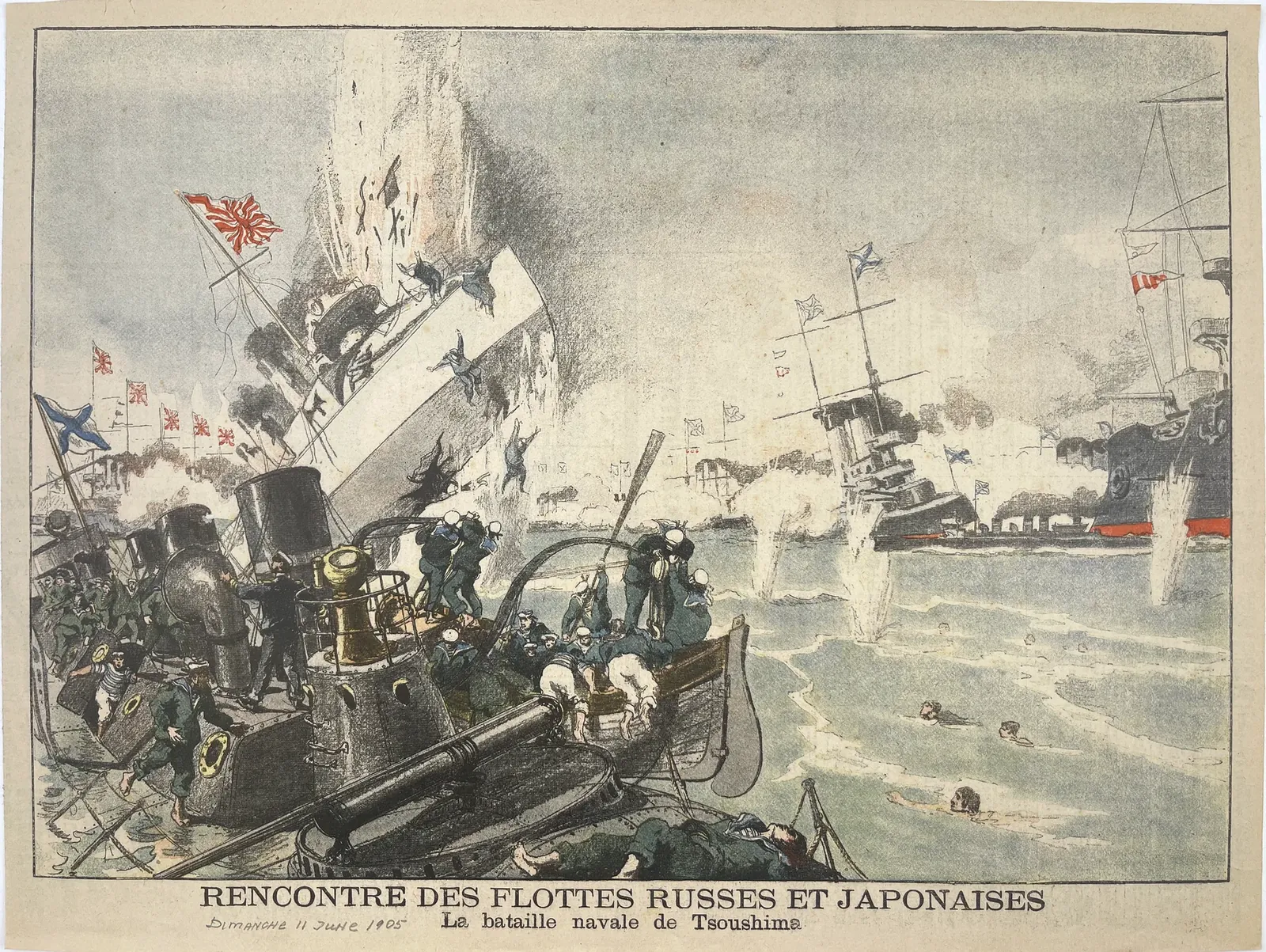
The Battle of Tsushima. The illustration combines the drama of traditional battle painting with the vulnerability of men aboard modern warships.
Together, Mukden and Tsushima exposed the uneven results of Russia’s transformation. Russia possessed a large army, modern weapons, and substantial industrial resources, yet struggled to combine them effectively across enormous distances. The war exposed the strains of an empire undergoing rapid change.
For French readers, the illustrations offered an increasingly somber account of their ally’s war. For the Russian government, the challenges of war abroad added to the pressures already threatening its authority at home.
From Petition to Barricade
The war intensified conflicts already developing within Russia. Demands for political participation were spreading among educated professionals, students, and workers whose experiences of a changing society brought them into conflict with autocratic government.
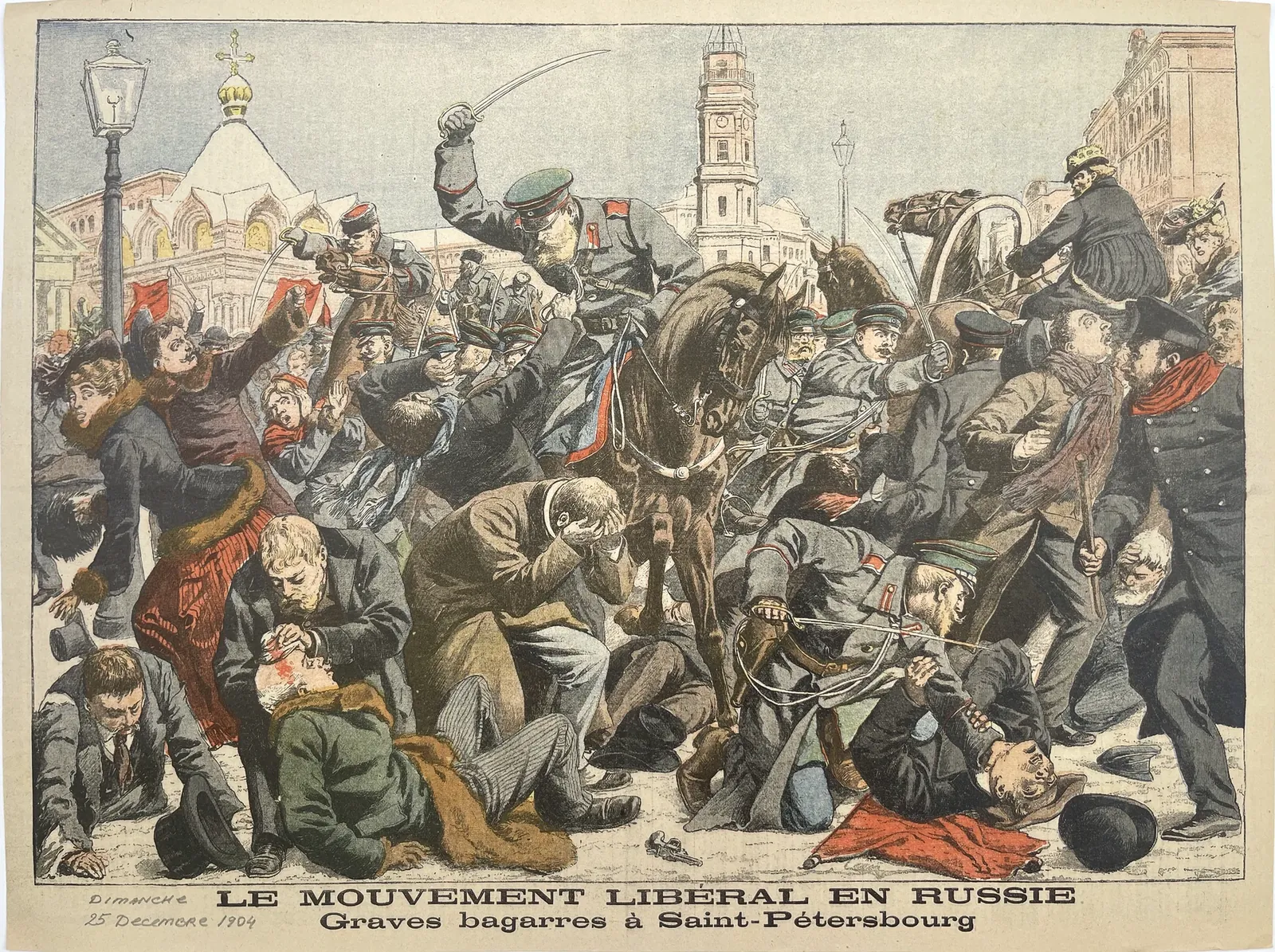
“The liberal movement in Russia.” The illustration depicts unrest in the imperial capital in December 1904. Demonstrations, protests, and strikes led to the events of Bloody Sunday.
In January 1905, workers and their families marched through St. Petersburg to present Nicholas II with a petition. Their appeals for an eight-hour working day and better conditions accompanied demands for civil liberties and an elected constituent assembly. When troops opened fire on the processions, the bloodshed shattered many marchers’ hopes that the Tsar would hear their grievances and offer protection. The events became known as Bloody Sunday.7
Within weeks, revolutionary violence struck the imperial family itself. On February 17, 1905, Socialist Revolutionary Ivan Kalyaev threw a bomb at Grand Duke Sergei Alexandrovich’s carriage in the Moscow Kremlin. Sergei was Nicholas II’s uncle, a former governor-general of Moscow, and a prominent defender of autocratic authority. His widow, Grand Duchess Elizaveta Feodorovna, was the sister of Empress Alexandra. The killing brought the revolution into the family circle of the Emperor and Empress.
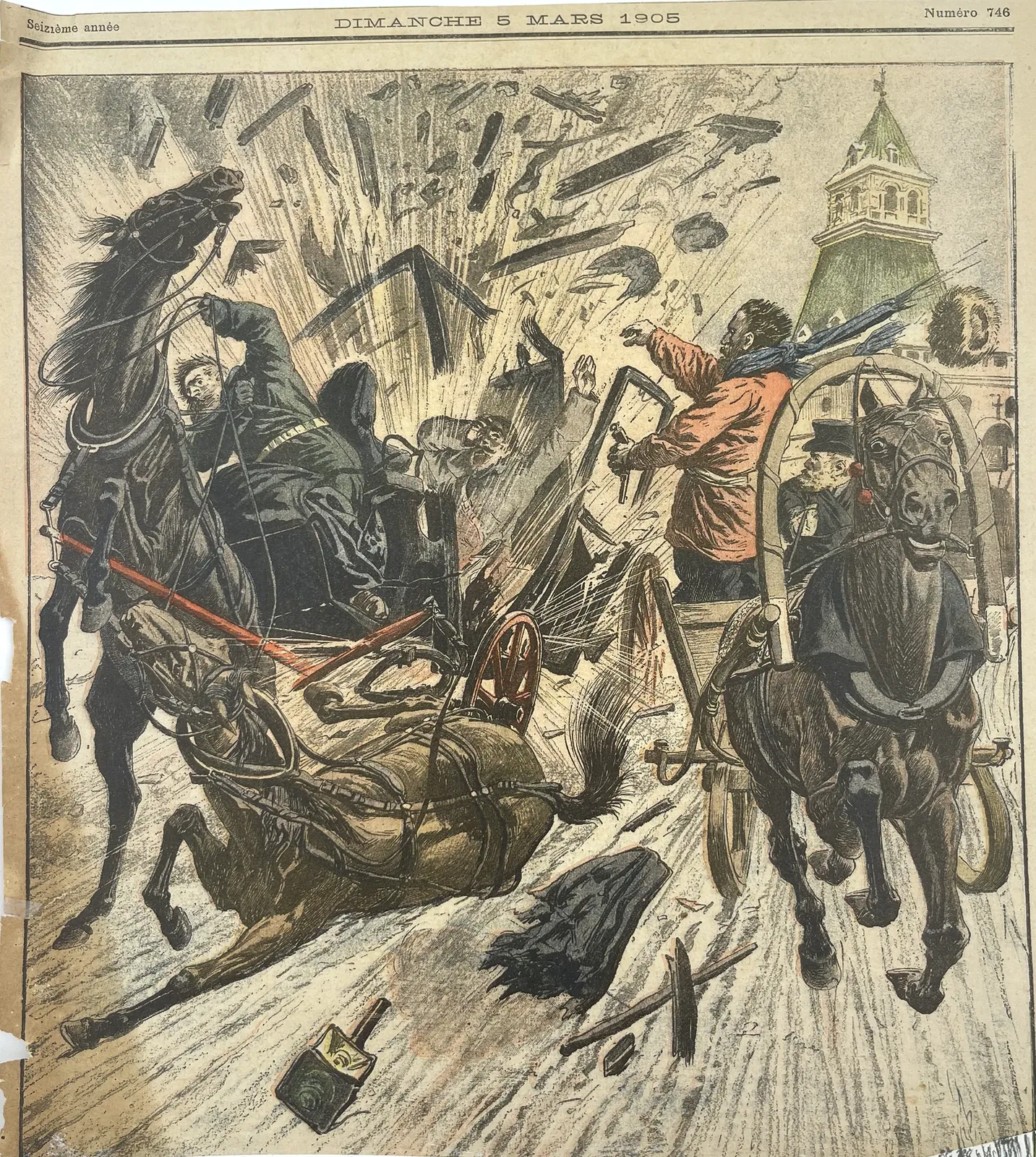
“Revolutionary attack in Moscow.” The illustration depicts the assassination of Grand Duke Sergei Alexandrovich in 1905.
Throughout 1905, strikes became a means of pressing claims that the political system struggled to accommodate. Railway workers played a crucial role in the autumn general strike. Infrastructure built to strengthen the empire gave its employees the ability to interrupt transport and communications across vast distances.
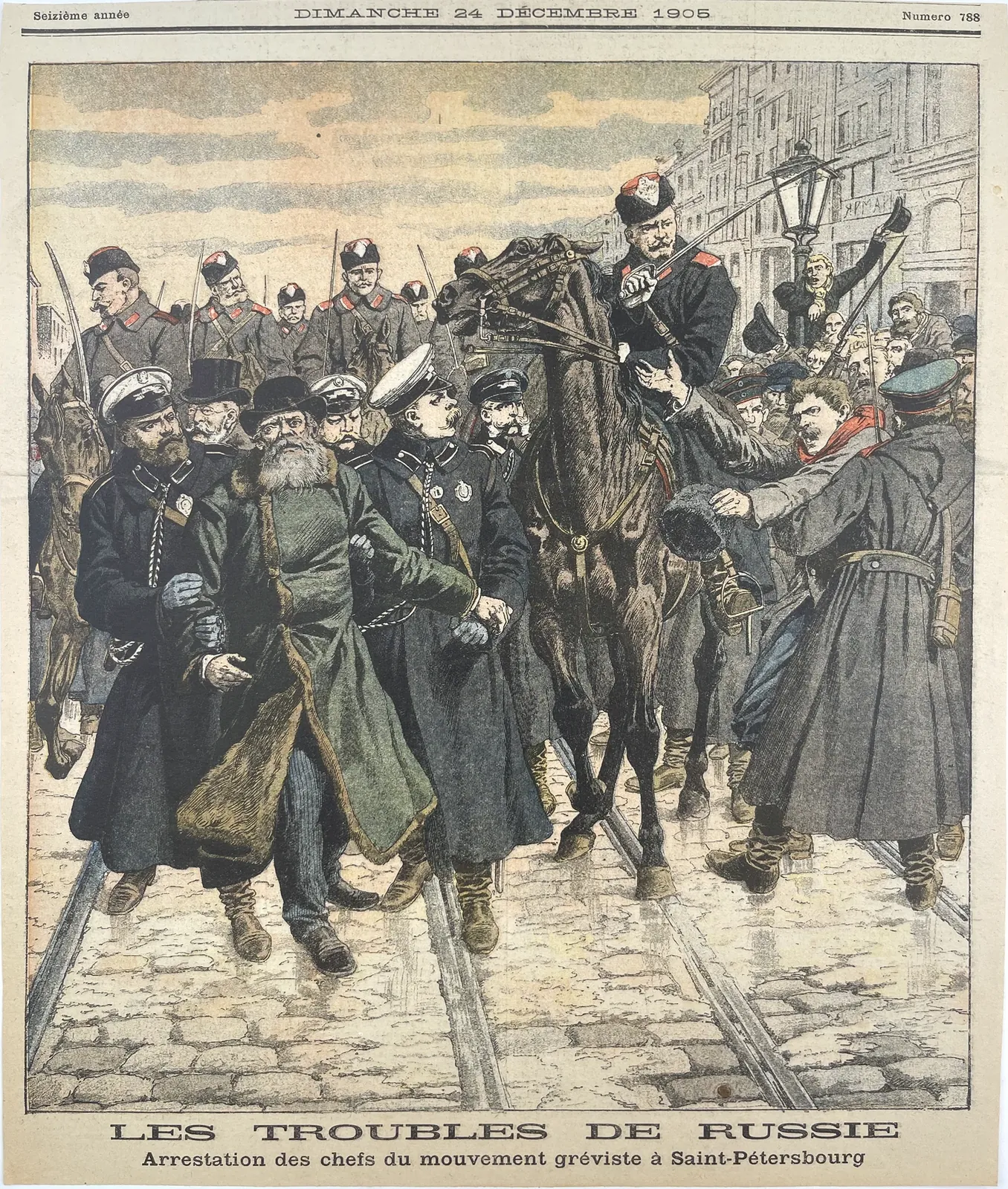
The arrest of strike leaders in St. Petersburg, published December 24, 1905.
French readers had experiences through which to understand these events. Their own industrial society had seen fierce disputes over wages, hours, and the right to organize. France had legalized trade unions in 1884. Events in Russia touched on familiar questions: workers’ rights, the disruption of strikes, and the government’s use of force.
Across the empire, unrest extended beyond workers’ demands and opposition to the government. In Baku, labor disputes in the oil industry unfolded alongside violence between Armenians and Azerbaijanis. Le Petit Journal depicted imperial troops fighting men it identified as “Tatars” – the contemporary term for Azerbaijanis – against a backdrop of oil derricks: a reminder of the city’s importance to Russia’s growing industrial economy.
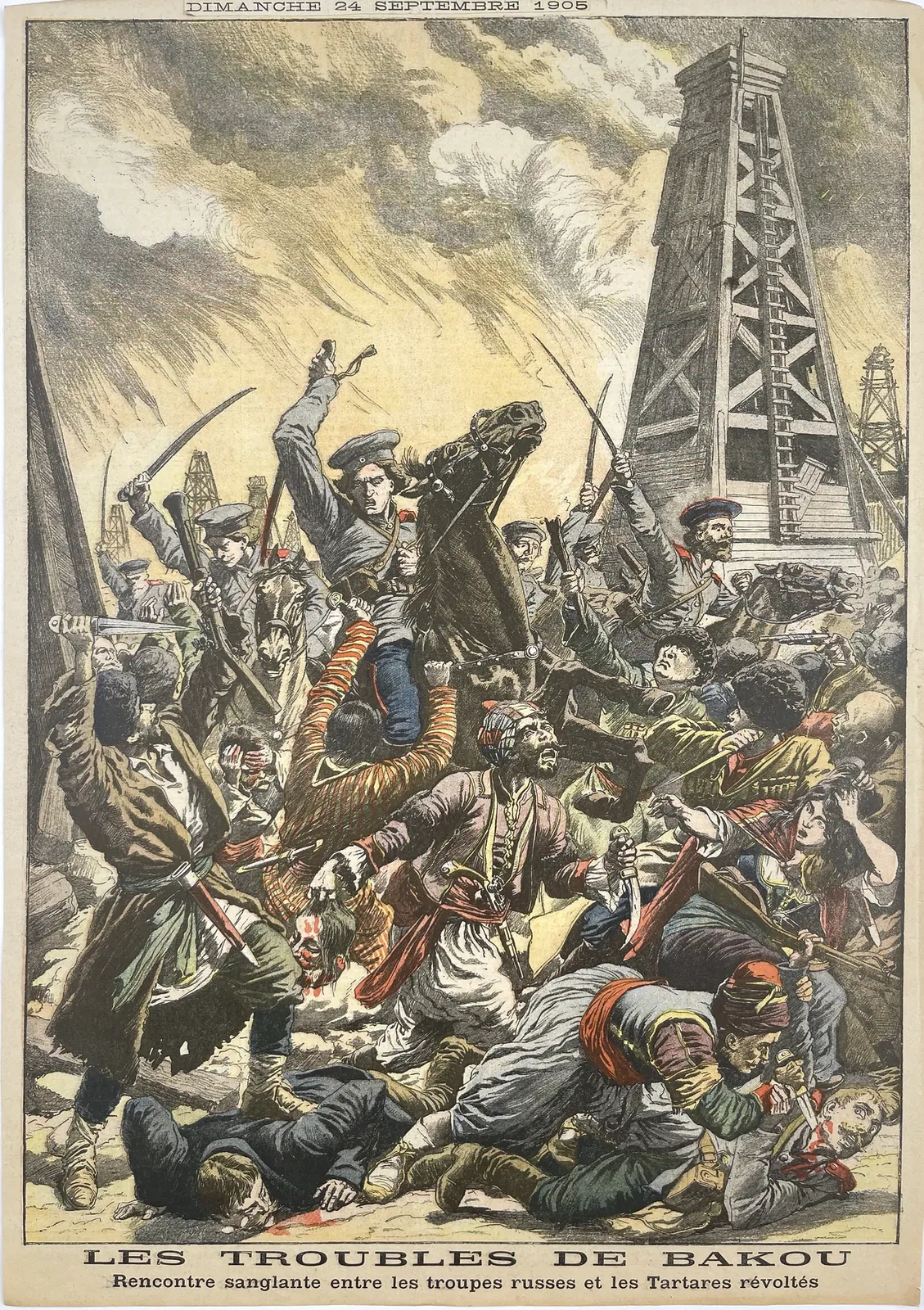
The troubles in Baku. Oil production, labor unrest, communal violence, and imperial authority converged in the Caspian city.
In the countryside, attacks on estates expressed grievances about land and landlords’ power. The newspaper called one scene a jacquerie, borrowing the name of a medieval French peasant revolt. The word gave readers a familiar historical frame, carrying associations of rural fury and destruction into their understanding of Russian events.
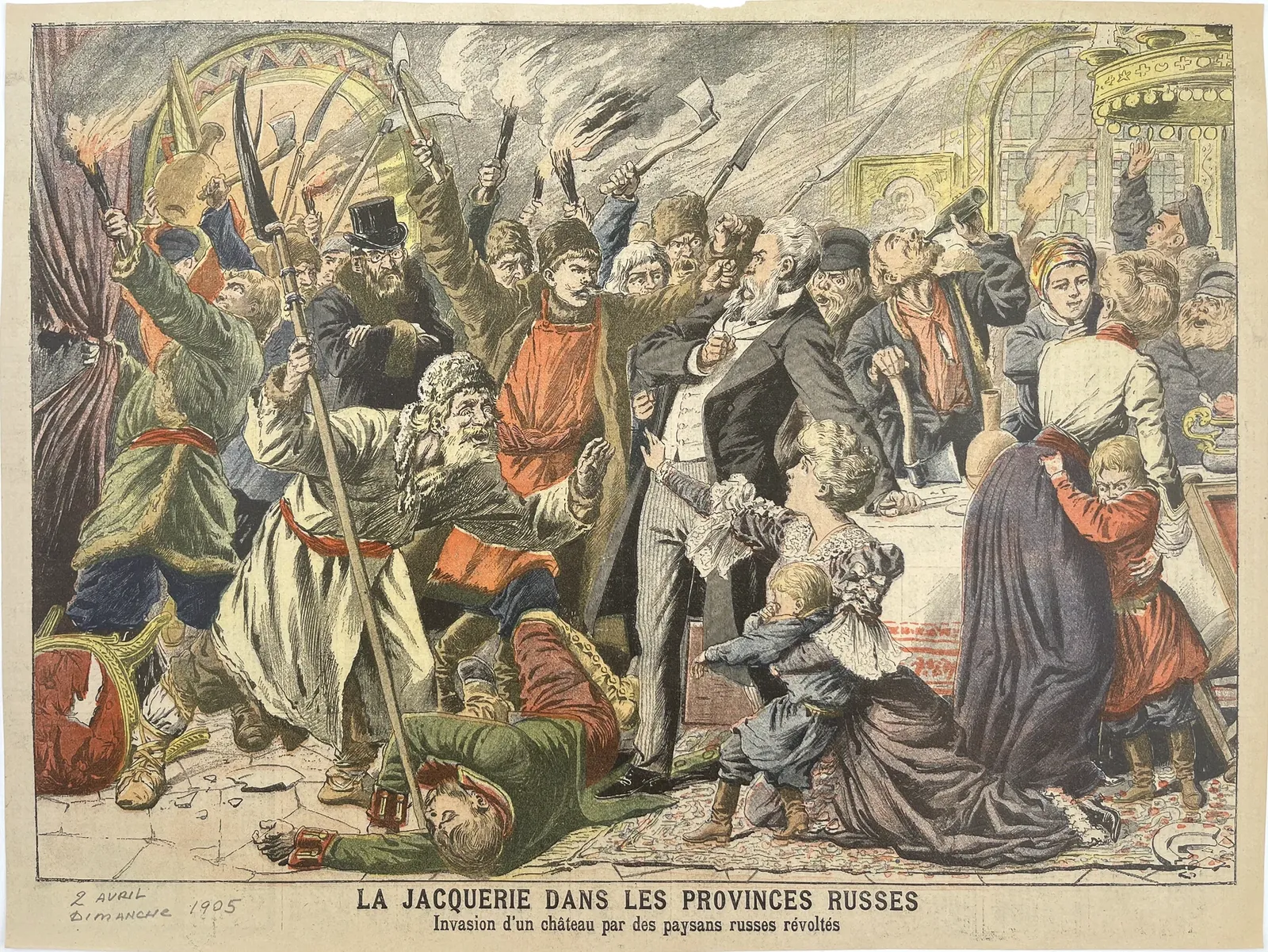
“A jacquerie in the Russian provinces.” Peasants ransack a landowner’s home in this depiction of upheaval at a Russian estate.
Political assassination furnished another subject suited to the paper’s dramatic methods. In Saratov, General Viktor Sakharov, who had been sent to suppress agrarian unrest, was killed by Socialist Revolutionary Anastasia Bitsenko.
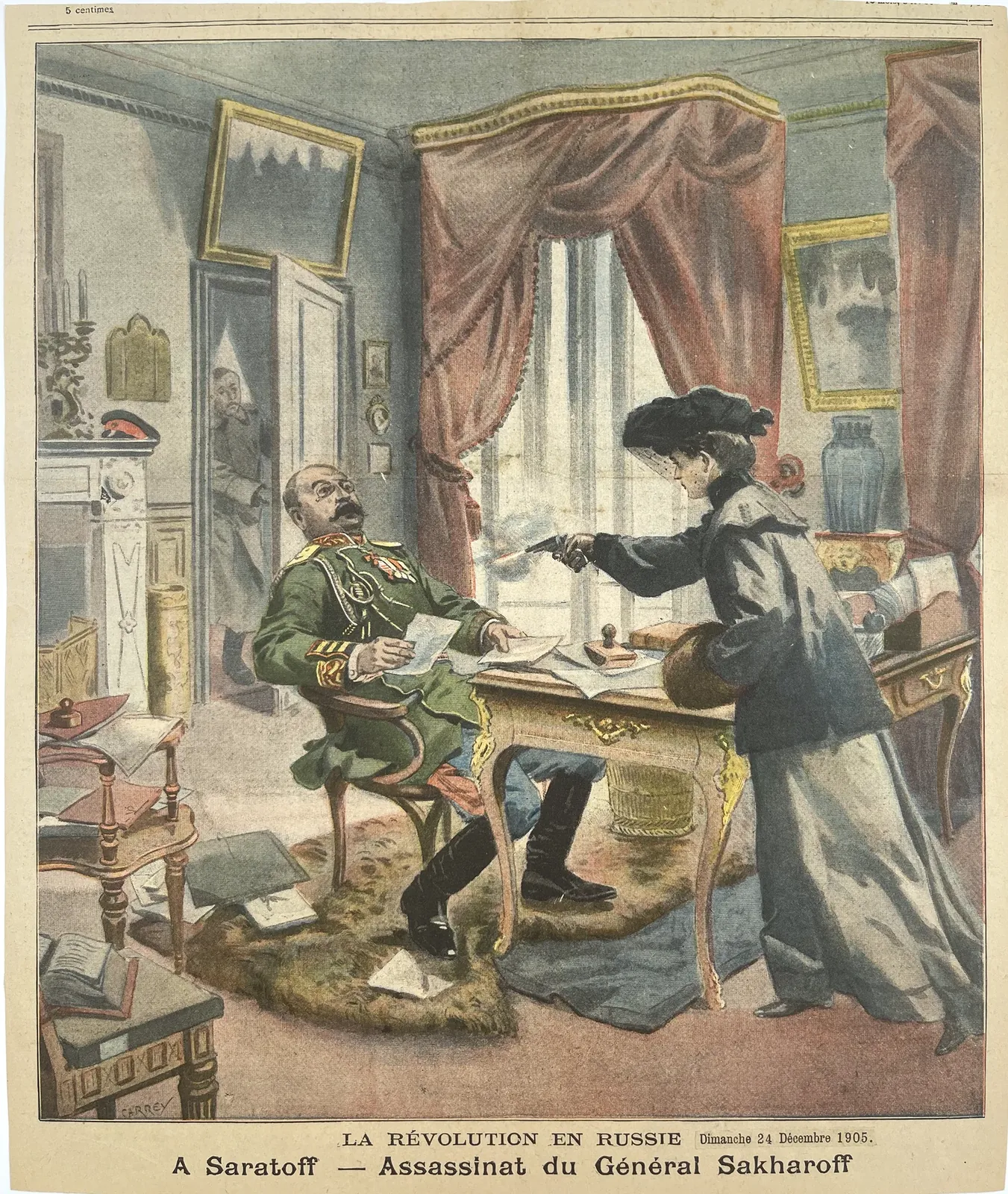
The assassination of General Sakharov in Saratov, as envisioned by illustrator Paul Carrey.
Under pressure from the general strike, Nicholas II issued the October Manifesto, promising civil liberties and a legislative role for an elected Duma. The promise divided opponents of the government over how much had been won and what should follow. In December, armed insurrection in Moscow ended in military suppression.8
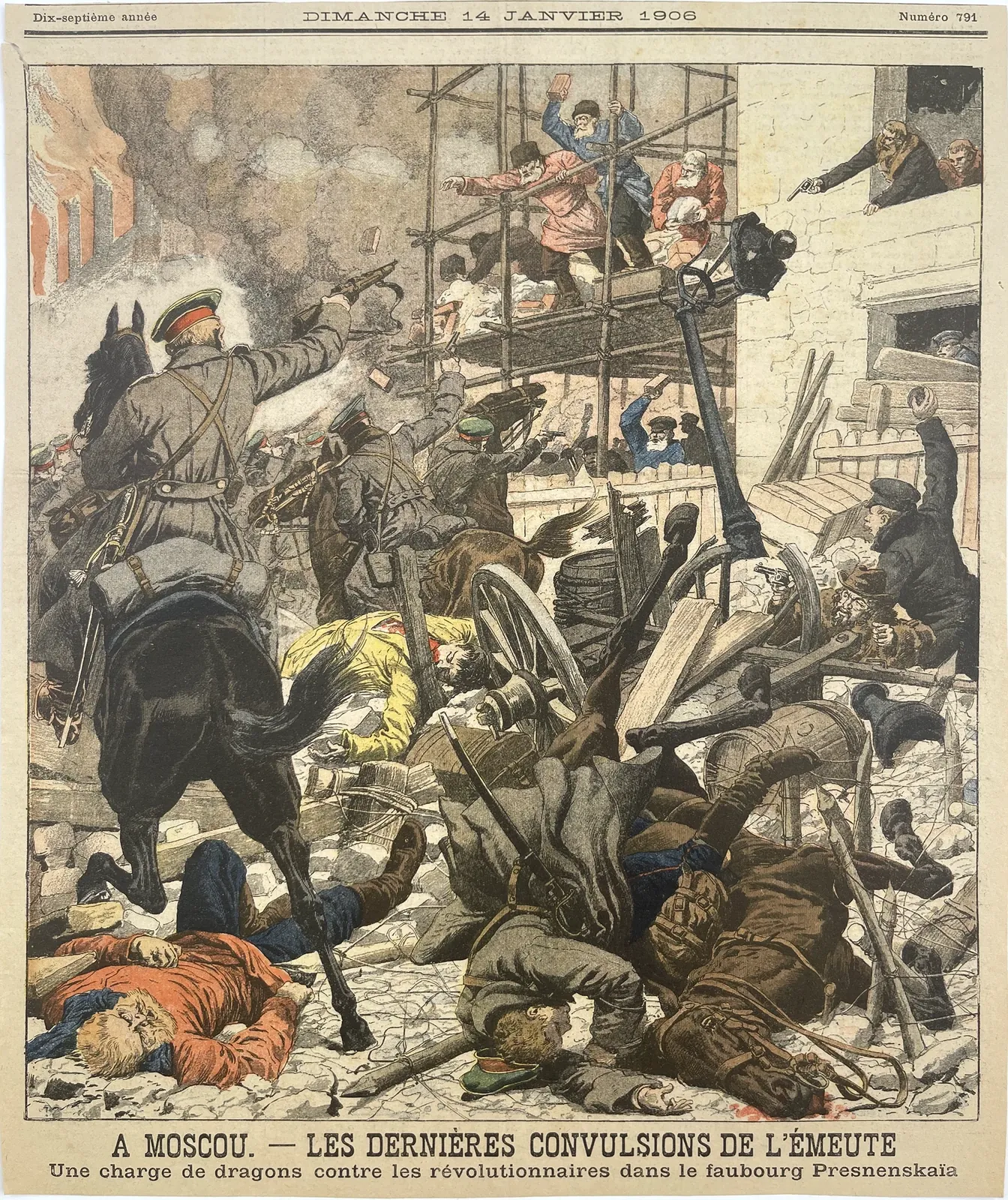
The Moscow uprising. Published in January 1906, the image depicts troops charging revolutionaries in the Presnia district during the previous December’s fighting.
Less than a decade separated the alliance handshake from the Moscow barricades. During those years, Le Petit Journal’s Russian subjects had expanded from rulers and their entourages to railway workers, peasants, and political activists.
For French readers, Russia remained an ally, an investment, and an object of curiosity. Through Le Petit Journal, they encountered a country whose imperial ceremonies and unfamiliar customs increasingly shared the page with military defeats and demands for change. By the time the newspaper reached Moscow’s barricades, workers, peasants, and soldiers had become central figures in a story once dominated by emperors and visiting presidents
The illustrations featured here belong to a larger collection received by the Russian History Museum in 2025 from the estate of Andrei Vlasov of Montreal. We are grateful for this generous gift, which makes it possible to preserve and share these historical materials.
Do you have documents, artifacts, or other materials relating to Russian history? We welcome inquiries about potential gifts to the collection. Please contact RHM to discuss the materials you are considering donating.
Your financial support helps us preserve materials like these, research their history, and share them with a wider public.
References
1. Bibliothèque nationale de France, “La fondation du Petit Journal en 1863,” RetroNews, April 4, 2018, https://www.retronews.fr/histoire-de-la-presse/long-format/2018/04/04/la-fondation-du-petit-journal-en-1863; BnF, “Le supplément illustré du Petit Journal,” November 19, 2013, https://gallica.bnf.fr/accueil/fr/html/le-supplement-illustre-du-petit-journal. ↩
2. D. N. Collins, “The Franco-Russian Alliance and Russian Railways, 1891–1914,” The Historical Journal 16, no. 4 (1973): 777–788, https://doi.org/10.1017/S0018246X00003940. ↩
3. Musée de l’Armée, “Canon de campagne de 75 mm modèle 1897,” https://www.musee-armee.fr/collections/tresors-du-musee/canon-de-campagne-de-75-mm-modele-1897.html; ROSPHOTO, Photography in the Museum (2018), https://static3.rosfoto.org/wp-content/uploads/2020/04/photography-in-museum-2018.pdf, on the imperial family’s amateur photography. ↩
4. Tyson Luneau, “Selling Siberia: Russian Railway Panoramas at the 1900 Exposition Universelle,” Peripheral Histories?, September 16, 2021, https://www.peripheralhistories.co.uk/post/selling-siberia-russian-railway-panoramas-at-the-1900-exposition-universelle. The carriage attraction was the Wagons-Lits Panorama Transsibérien, distinct from Pavel Pyasetsky’s separate panorama. ↩
5. Robert Eugene Johnson, “Peasant Migration and the Russian Working Class: Moscow at the End of the Nineteenth Century,” Slavic Review 35, no. 4 (December 1976): 652–664, https://doi.org/10.2307/2495656; Lewis Siegelbaum, “Workers and Industrialization,” in The Cambridge History of Russia, vol. 3, edited by Ronald Grigor Suny (Cambridge: Cambridge University Press, 2006), 440–467, https://doi.org/10.1017/CHOL9780521811446.018. ↩
6. John T. Greenwood, “The U.S. Army Military Observers with the Japanese Army during the Russo-Japanese War (1904–1905),” Army History, no. 36 (Winter 1996), https://history.army.mil/Portals/143/Images/Publications/ArmyHistoryMag/pdf/19901999/AH36newOCR.pdf; A. N. Kuropatkin, The Russian Army and the Japanese War, translated by A. B. Lindsay, edited by E. D. Swinton, vol. 1 (London: John Murray, 1909), chapter VIII, https://www.gutenberg.org/cache/epub/58256/pg58256-images.html; U.S. Department of State, Office of the Historian, “The Treaty of Portsmouth and the Russo-Japanese War, 1904–1905,” https://history.state.gov/milestones/1899-1913/portsmouth-treaty. ↩
7. “Petition of the Workers and Residents of St. Petersburg for Submission to Nicholas II,” January 1905, reproduced from Georgii Gapon, The Story of My Life (1906), 257–261, https://www.marxists.org/history/ussr/events/1905/workers-petition.htm; Abraham Ascher, The Revolution of 1905, vol. 1, Russia in Disarray (Stanford: Stanford University Press, 1988). ↩
8. Ascher, The Revolution of 1905, vol. 1, Russia in Disarray; Henry W. Nevinson, The Dawn in Russia; or, Scenes in the Russian Revolution (London: Harper & Brothers, 1906), https://www.gutenberg.org/files/69996/69996-h/69996-h.htm. ↩


