

Pascha Against All Odds: A Selection of Easter Treasures
In Imperial Russia, the spirit of Pascha (Easter) was expressed through a rich array of objects and rituals, extending well beyond the familiar tradition of decorated eggs. Last year, we featured a selection of Easter eggs and egg-shaped objects from our collection.
This year, we’re highlighting a broader constellation of objects that illuminate the celebration of the “Feast of Feasts.” We go beyond the obligatory Easter egg to showcase service books from Japan, Paschal gifts with a Romanov connection, and a hand-written periodical produced by White émigrés. They reveal how Pascha was commemorated and shared at the turn of the 20th century, even during the most challenging times.
An Easter Egg Surprise
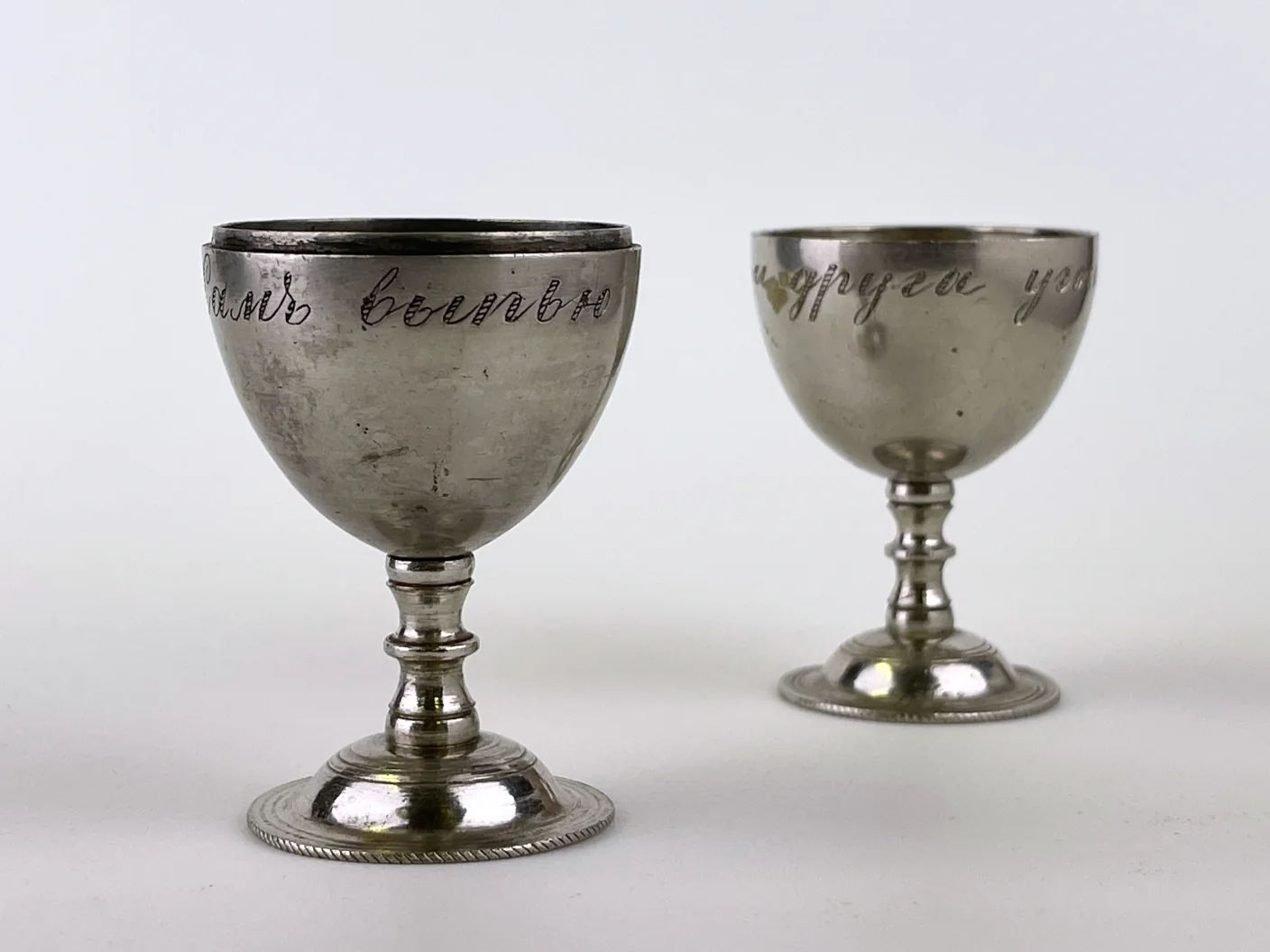
From the opulent creations of Fabergé to the playful delights tucked inside modern confections, Easter eggs have long carried the promise of surprise. This seemingly modest example continues that tradition in an unexpected way.
At first glance, there is nothing special about this unassuming, silver-plated egg. But open it up neatly into two halves, and you’ll find a clever mechanism: two small stands that screw into each side, transforming them into perfectly balanced cups. We have encountered similar objects in our collection and wondered about their intended purpose. Were they meant to hold a perfectly soft-boiled egg? Perhaps. But this piece tells a more definitive story.
Its inscription, in pre-revolutionary Russian orthography, provides the answer. One half reads “Самъ выпью” (“I shall drink myself”), while the other continues, “и друга угощу” (“and treat a friend”). With that, any ambiguity disappears: these were clearly crafted as shot glasses, intended for sharing a drink.
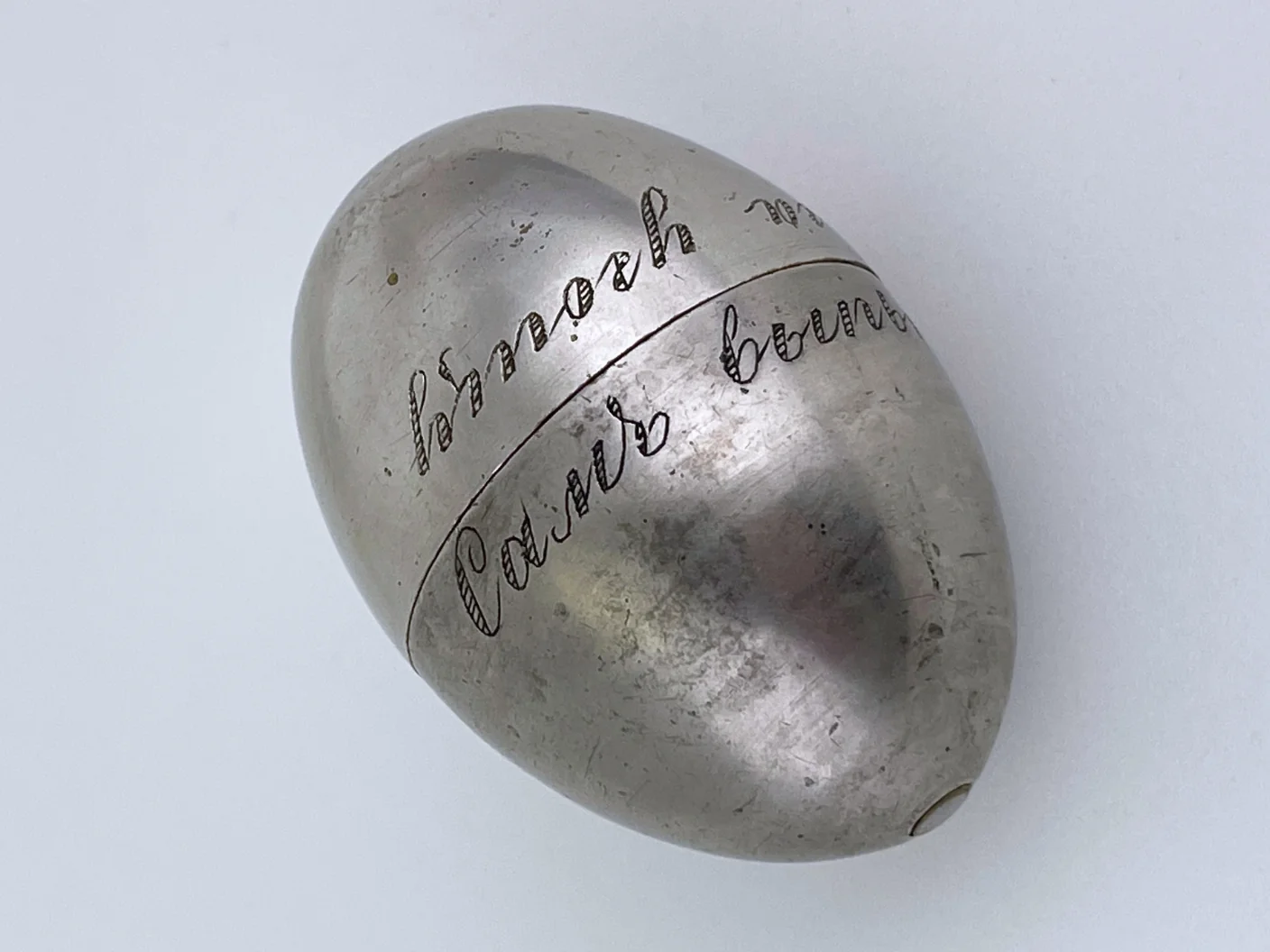
While eggs have long been exchanged at Easter as emblems of rebirth and new life, this example offers a playful interpretation of the tradition. Like the egg-shaped coin purse in our collection, it’s both festive and functional, conveying an invitation to gather, to toast, and to share in the joy of the holiday.
“Christ is Risen” in the Land of the Rising Sun
Two recently donated books reveal a fascinating meeting point between Russian Orthodox tradition and Japan. The first is a Japanese-language Pentecostarion, the liturgical book used during the Paschal season. Its title page is striking: delicate Japanese-style blossoms, along with an Orthodox cross and an image of Holy Resurrection Cathedral in Tokyo, visually uniting local artistic sensibilities with Orthodox sacred tradition.
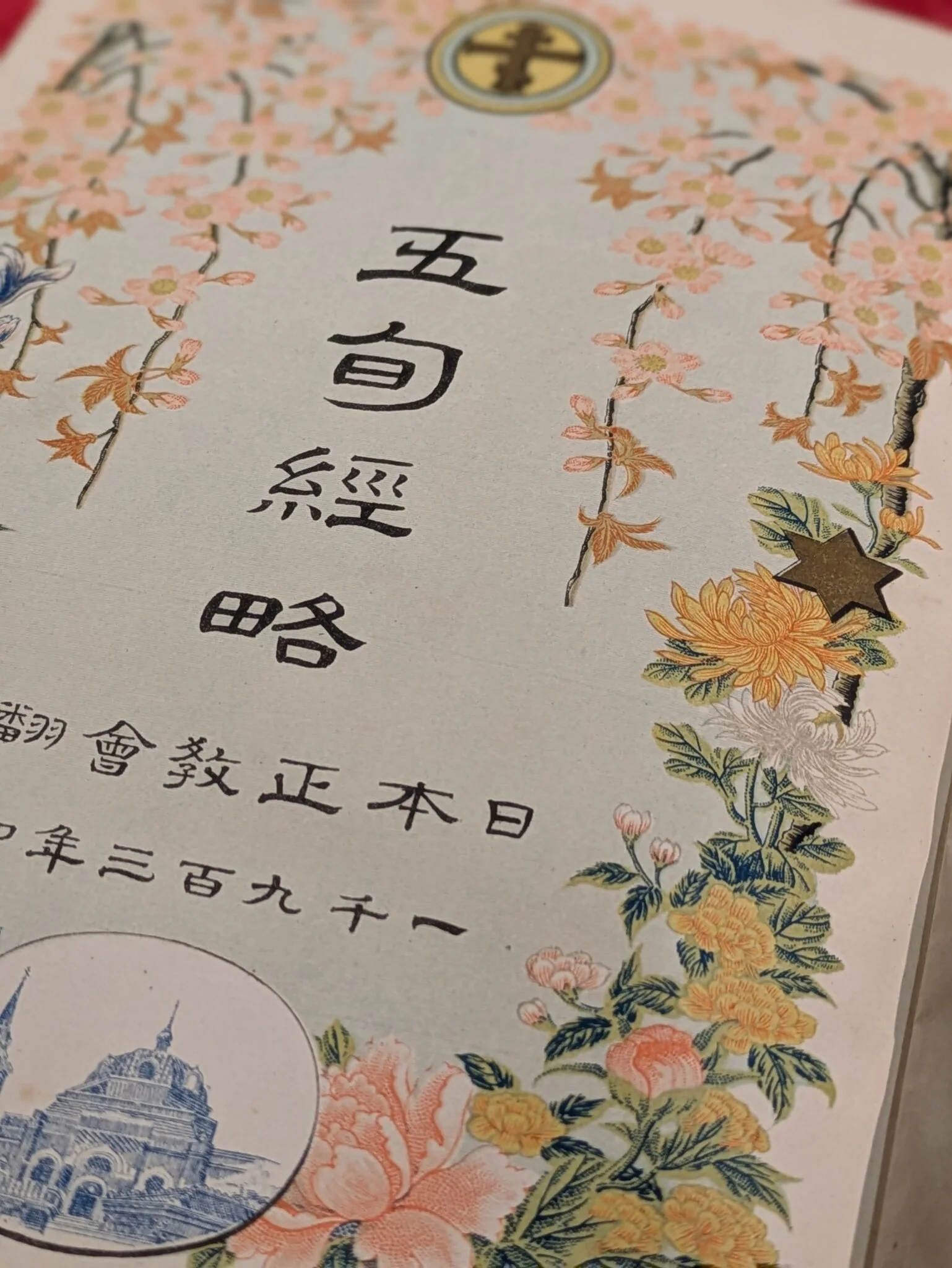
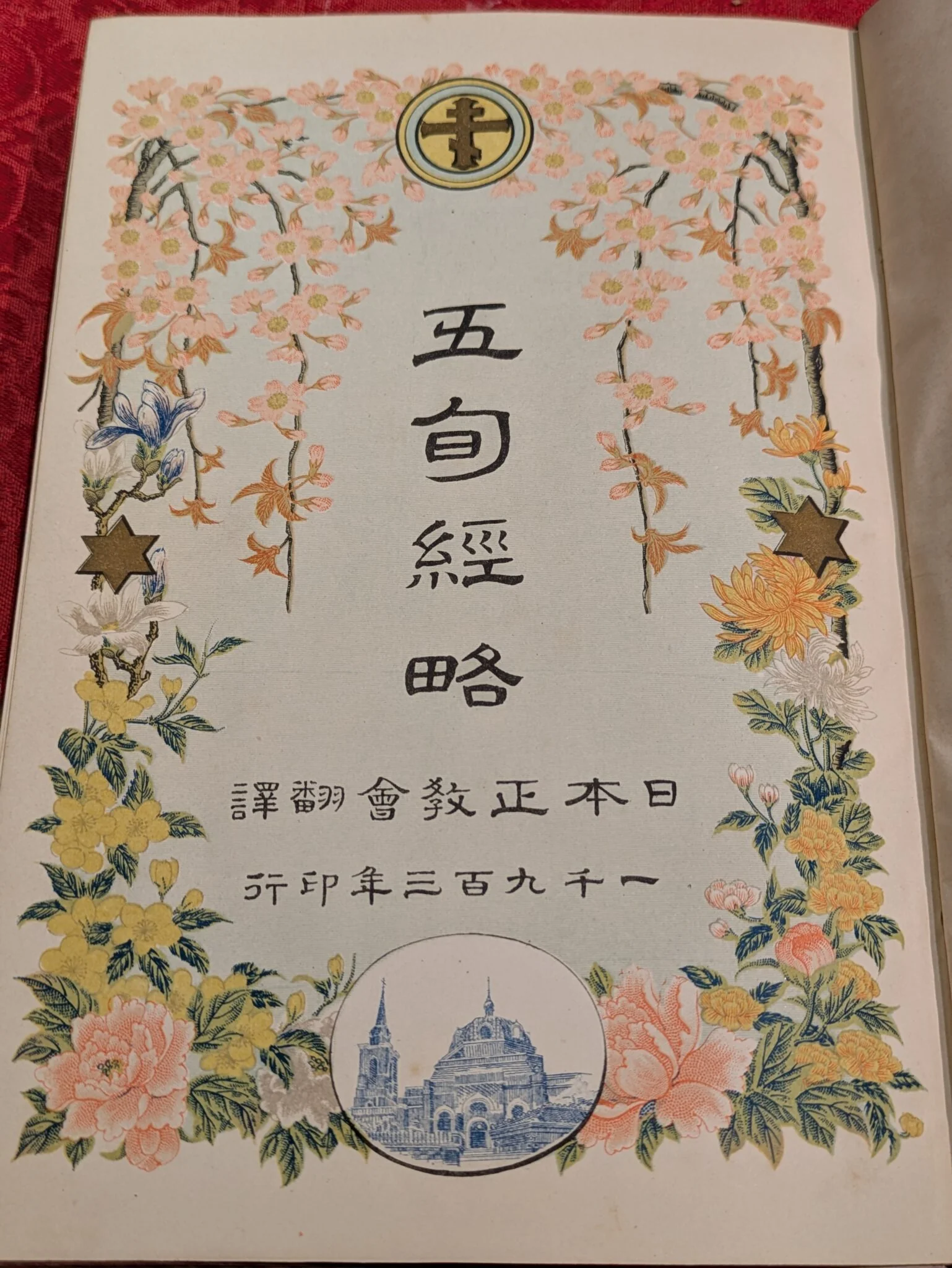
This cultural and spiritual bridge is inseparable from the life and work of St. Nicholas of Japan. Born Ivan Kasatkin, he arrived in Japan in the late nineteenth century and devoted decades to establishing Orthodoxy there. He mastered the language, translated key liturgical texts, and founded churches and schools (including the cathedral depicted on the title page), laying the foundation for a vibrant Orthodox community that endures to this day. Among his many translations is this abbreviated Pentecostarion, published in 1903.
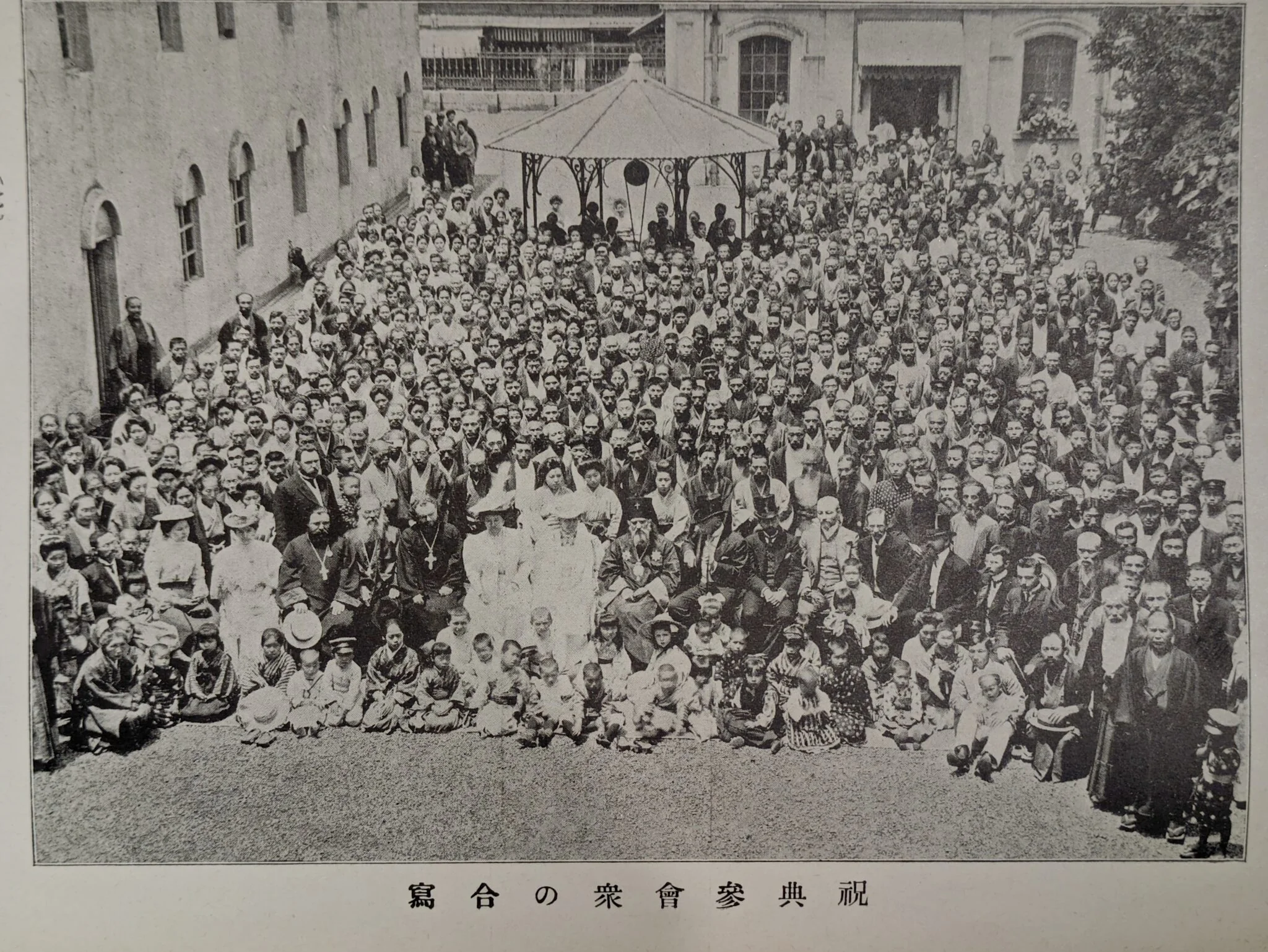
St. Nicholas of Japan flanked by the newly-arrived Russian envoy. Photo from a Japanese Orthodox publication, Russian History Museum collection
The volume is complemented by a second Paschal service book from the same period: a collection of sheet music. Though the text is entirely in Japanese, the melodies are immediately recognizable as those sung in Russian Orthodox churches during the Easter season. Its opening page presents the familiar Paschal troparion, “Christ is Risen” (Христос Воскресе), rendered in Western musical notation over the Japanese characters.
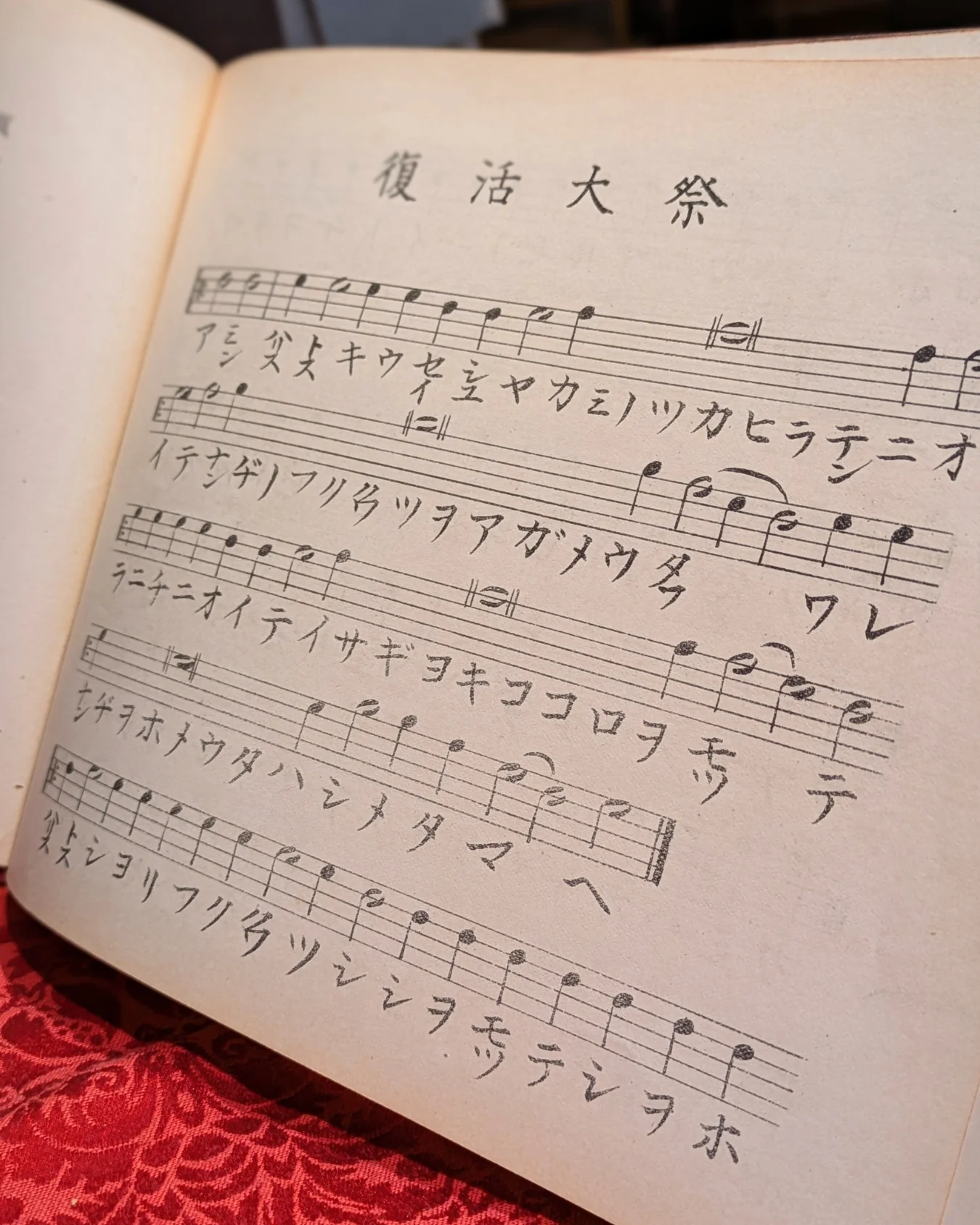
Together, these books offer a vivid testament to the lasting legacy of St. Nicholas of Japan, illustrating how Orthodox worship took root in a new cultural landscape while remaining connected to its origins.
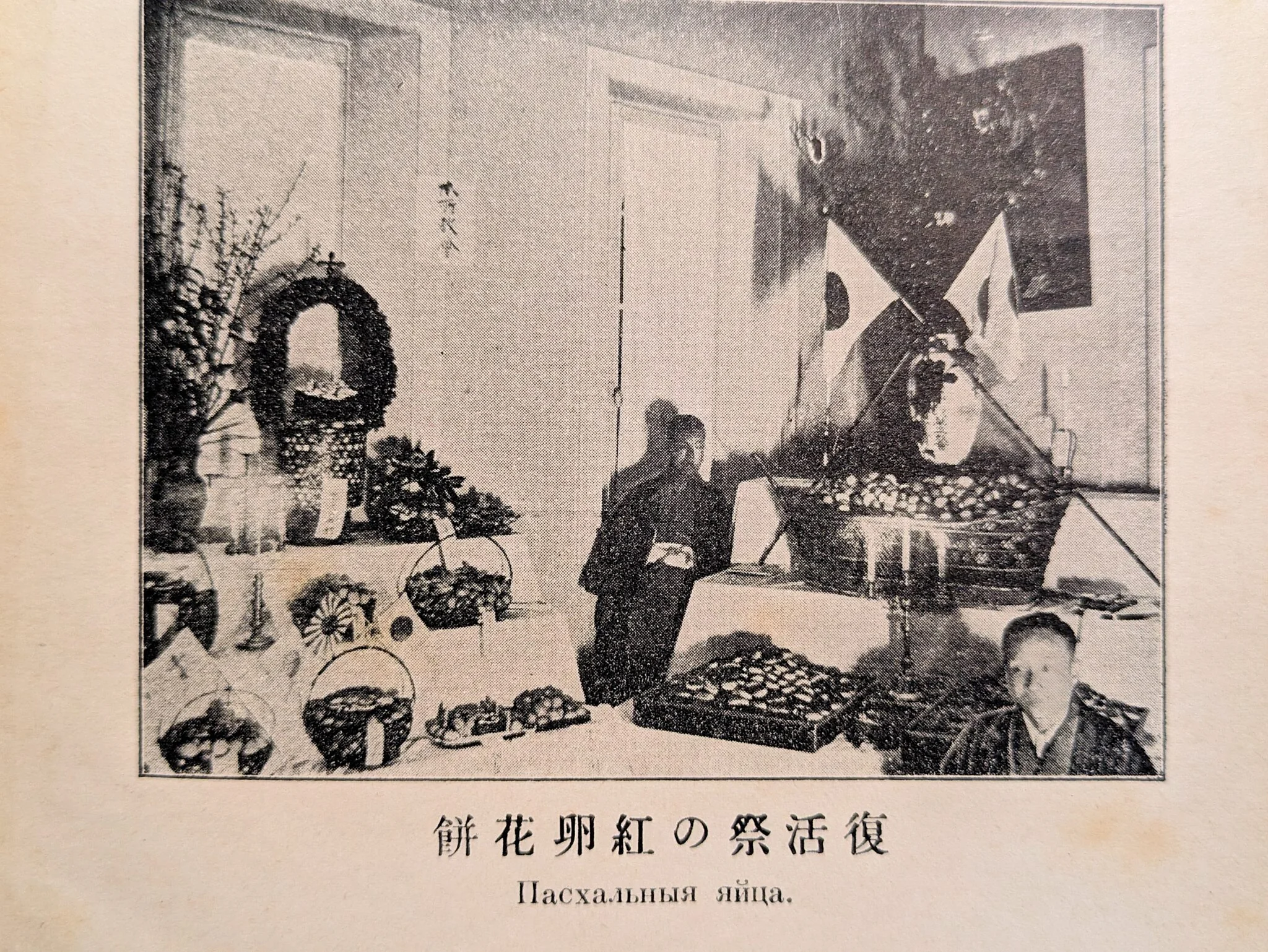
Easter eggs prepared for blessing on Pascha in Japan, early 1900s. Photo from a Japanese Orthodox publication, Russian History Museum collection
From Court to Trenches
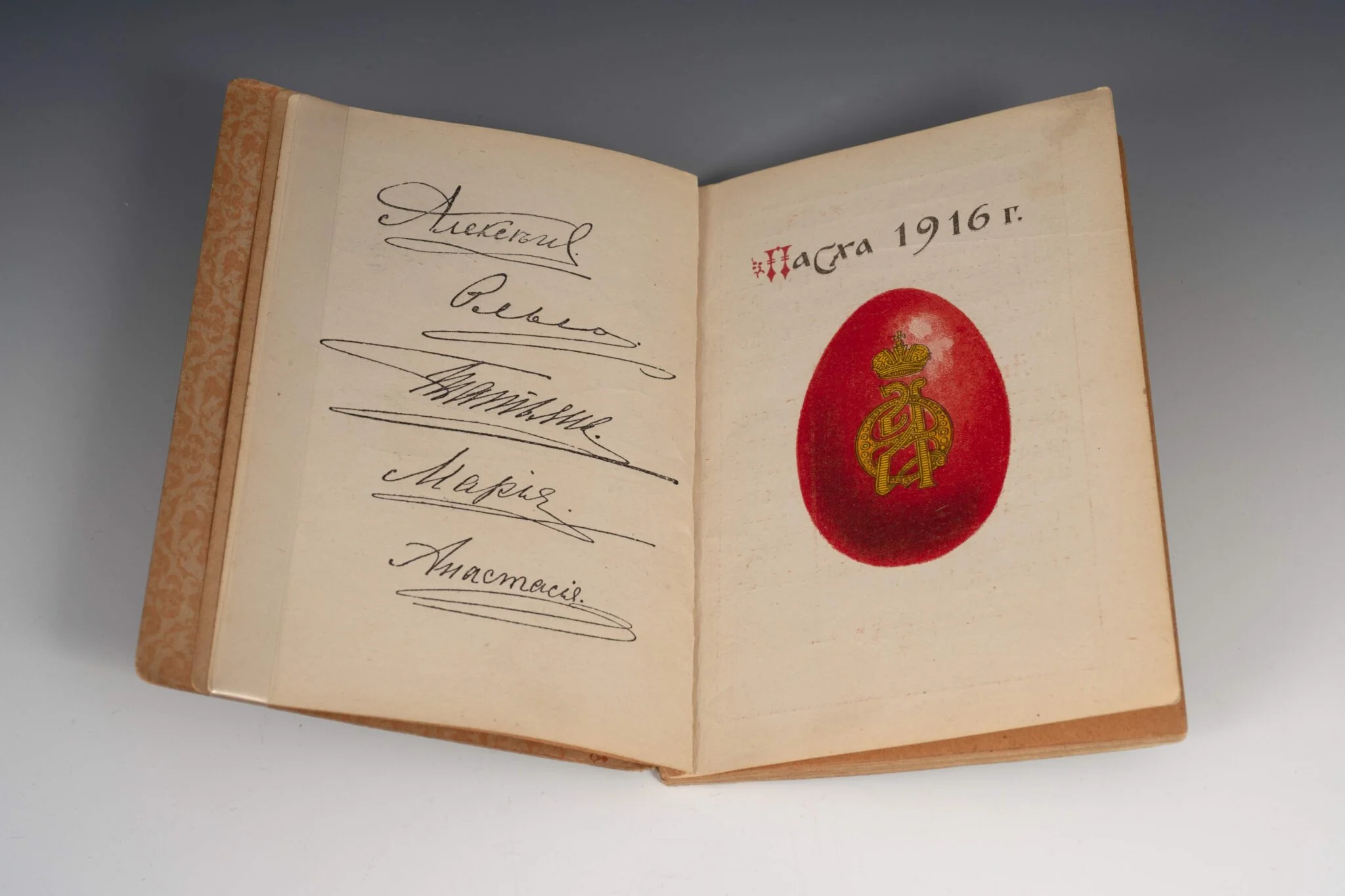
Another Easter-related publication in the collection dates to the turbulent years of World War I, which the Russian Empire entered on August 1, 1914. In this time of upheaval, Orthodox feast days took on heightened meaning. The Imperial family made a point of observing these holy days not only at court, but in solidarity with the soldiers who had left home for the front.
The full cycle of Great Feasts was maintained as much as wartime circumstances permitted. Portable “field churches” accompanied troops into the theaters of war, ensuring that services could be held wherever soldiers were stationed. Traditions once associated primarily with the court, such as the exchange of Easter eggs and festive greetings, were extended to the rank and file. Nicholas II and members of his family sent Easter gifts to soldiers, emphasizing that, particularly in wartime, all Russians were united in Christ.
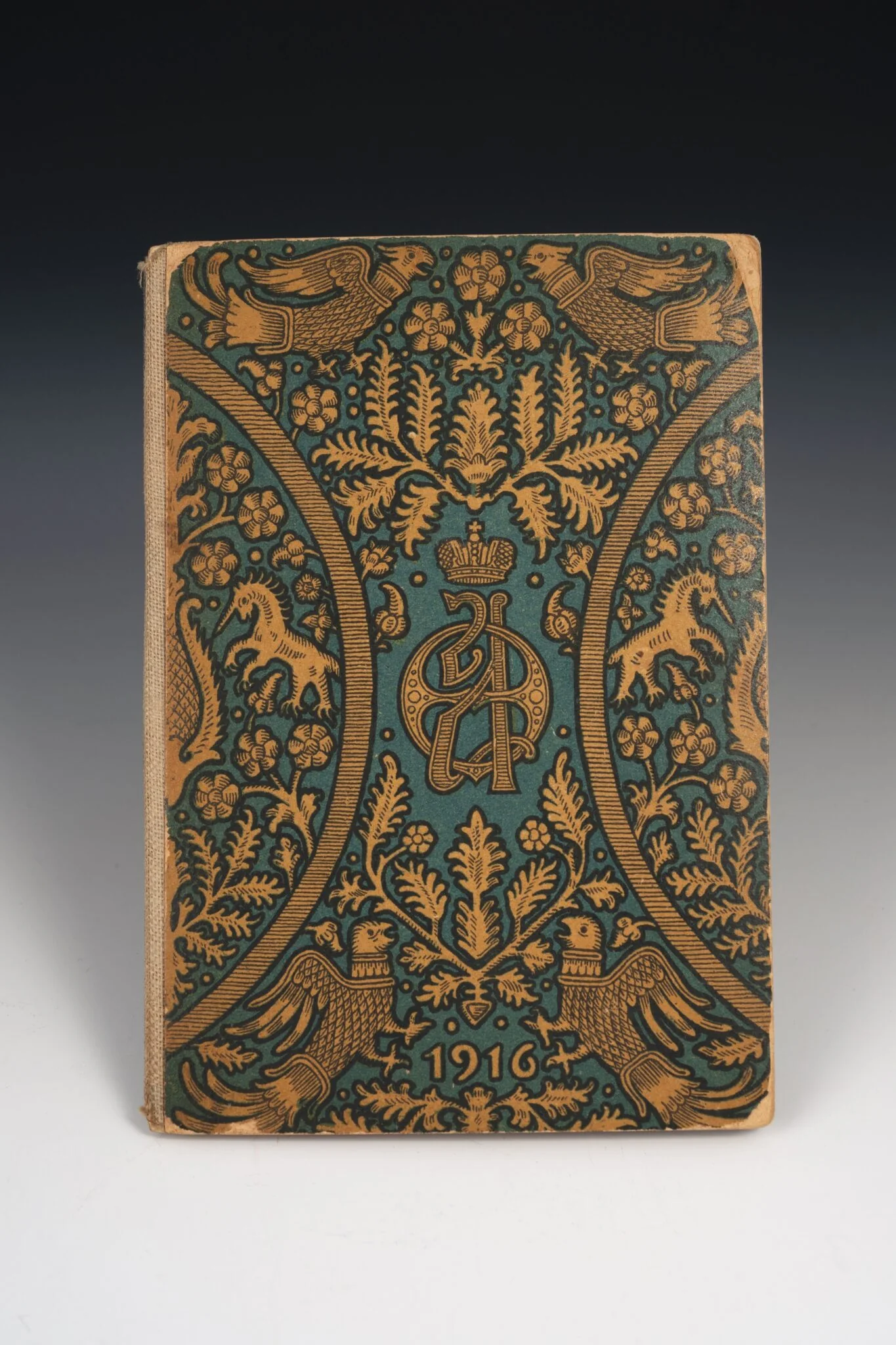
This publication, issued in 1916, exemplifies that effort. Its covers were designed by the noted Russian artist Boris Zvorykin, and it was distributed widely at the front as an imperial presentation piece. Within its pages appears an image of a red Easter egg bearing the monogram of Alexandra Feodorovna, accompanied by the signatures of the Imperial children.
Beyond its collection of prayers, the booklet also served a practical purpose. It included the church calendar for 1916, a selection of official orders issued by Nicholas II to the army and navy, and instructions for soldiers and their families on how to apply for pensions.
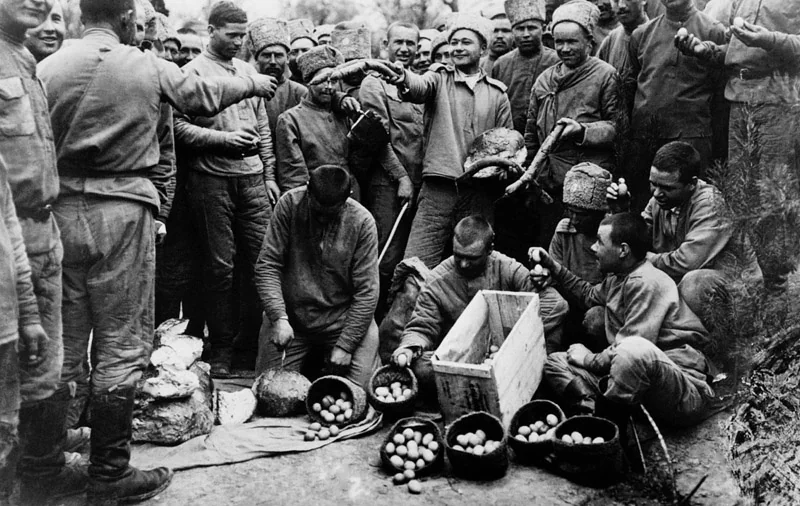
World War I. Easter at the front. Distribution of kulich (Easter bread) and eggs. Source: https://russiainphoto.ru/
Greeting from the Grand Duchess
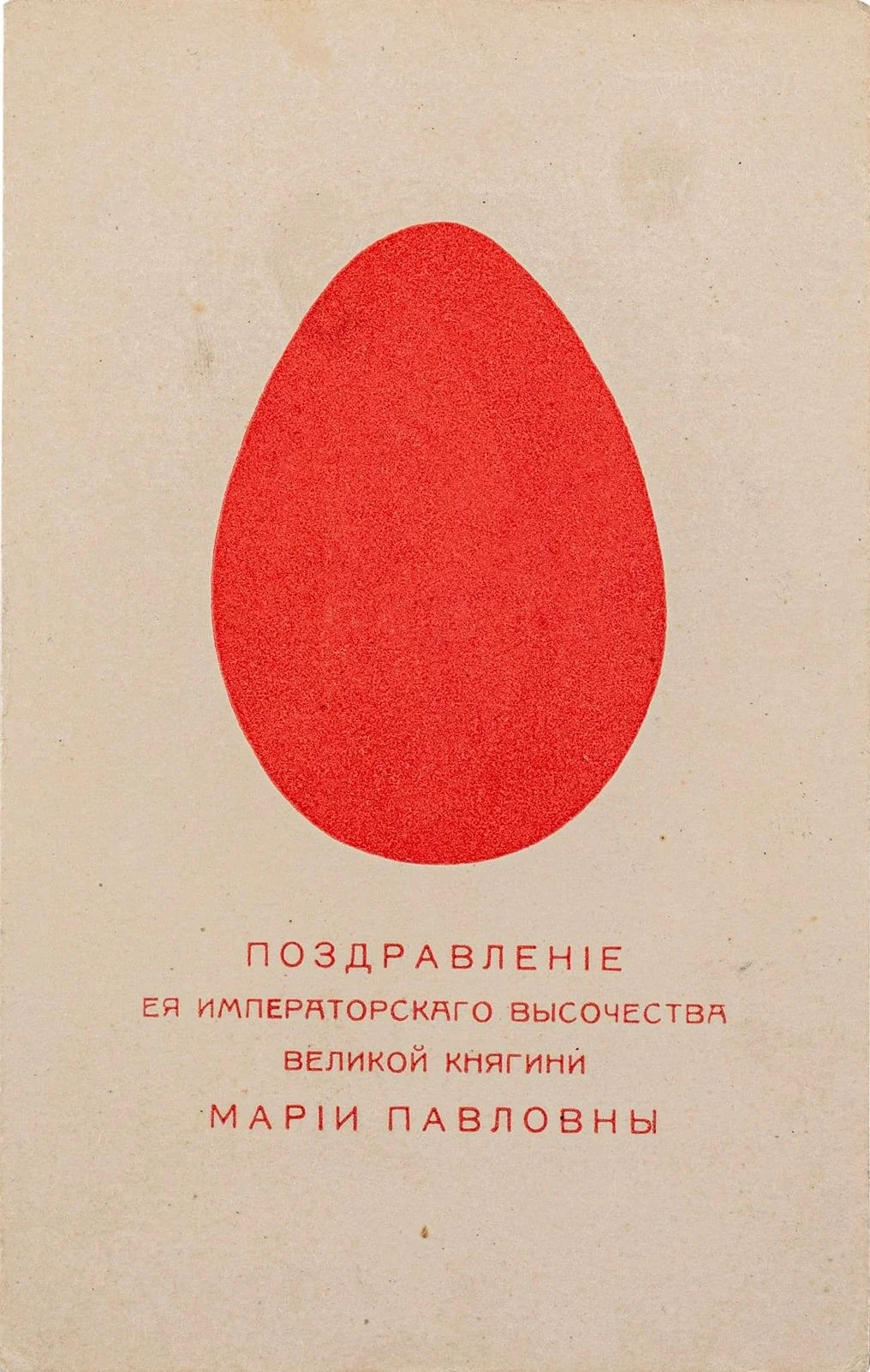
Also dating to the years of World War I, this postcard stands out for its strikingly modern design. A simple red, egg-shaped oval dominates the composition: minimalist, bold, and unmistakably contemporary. The inscription, rendered in pre-revolutionary Cyrillic typography, identifies it as a commission of Grand Duchess Maria Pavlovna the Elder.
Born a princess of Mecklenburg-Schwerin, Maria Pavlovna married Grand Duke Vladimir Alexandrovich, the second surviving son of Alexander II, in 1874. Renowned as a patron of the arts, she championed innovative and modern work, supporting figures such as Boris Kustodiev, Sergei Diaghilev, and Léon Bakst. Though sometimes criticized for her involvement in political and social affairs, she was widely respected for her exceptional ability to organize and lead large-scale philanthropic and humanitarian initiatives.
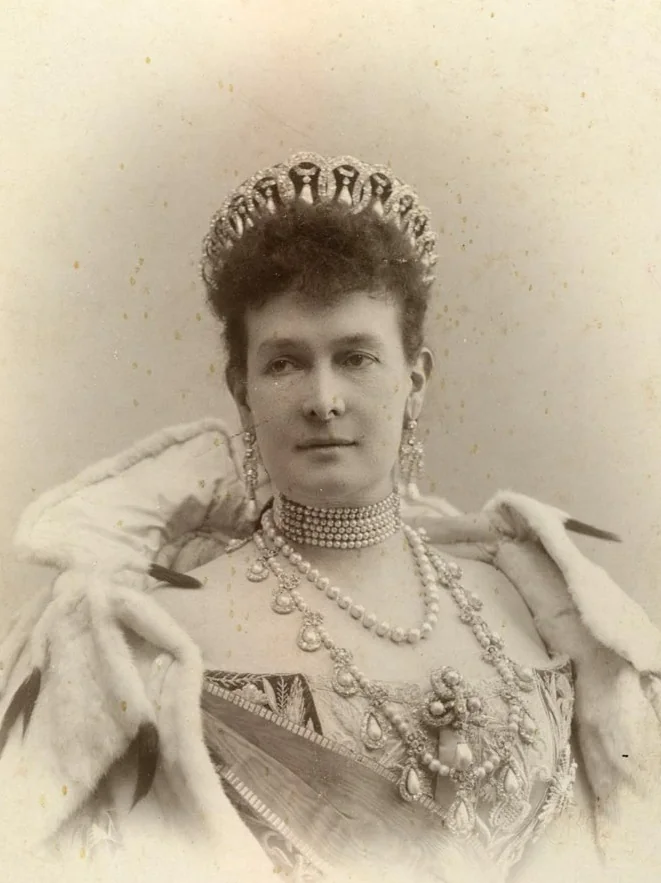
Portrait of Maria Pavlovna of Russia (1854-1920). Source: Wikipedia.org
When war broke out, those organizational talents became indispensable. Her efforts were highly valued by Nicholas II, who, on August 17, 1914, wrote to his aunt by marriage: “I entrust Your Imperial Highness with the responsibility of maintaining the military hospitals and infirmaries of St. Petersburg. I embrace you firmly, Nicholas.”
Maria Pavlovna was well prepared for this role, having already gained experience in charitable and medical work during the Russo-Turkish War and the Russo-Japanese War. Postcards like this one were distributed widely among soldiers and volunteers, many of whom would have encountered her work firsthand, whether as patients in the medical trains and hospitals she established or as participants in the broader network of wartime aid she directed.
Pascha in Exile
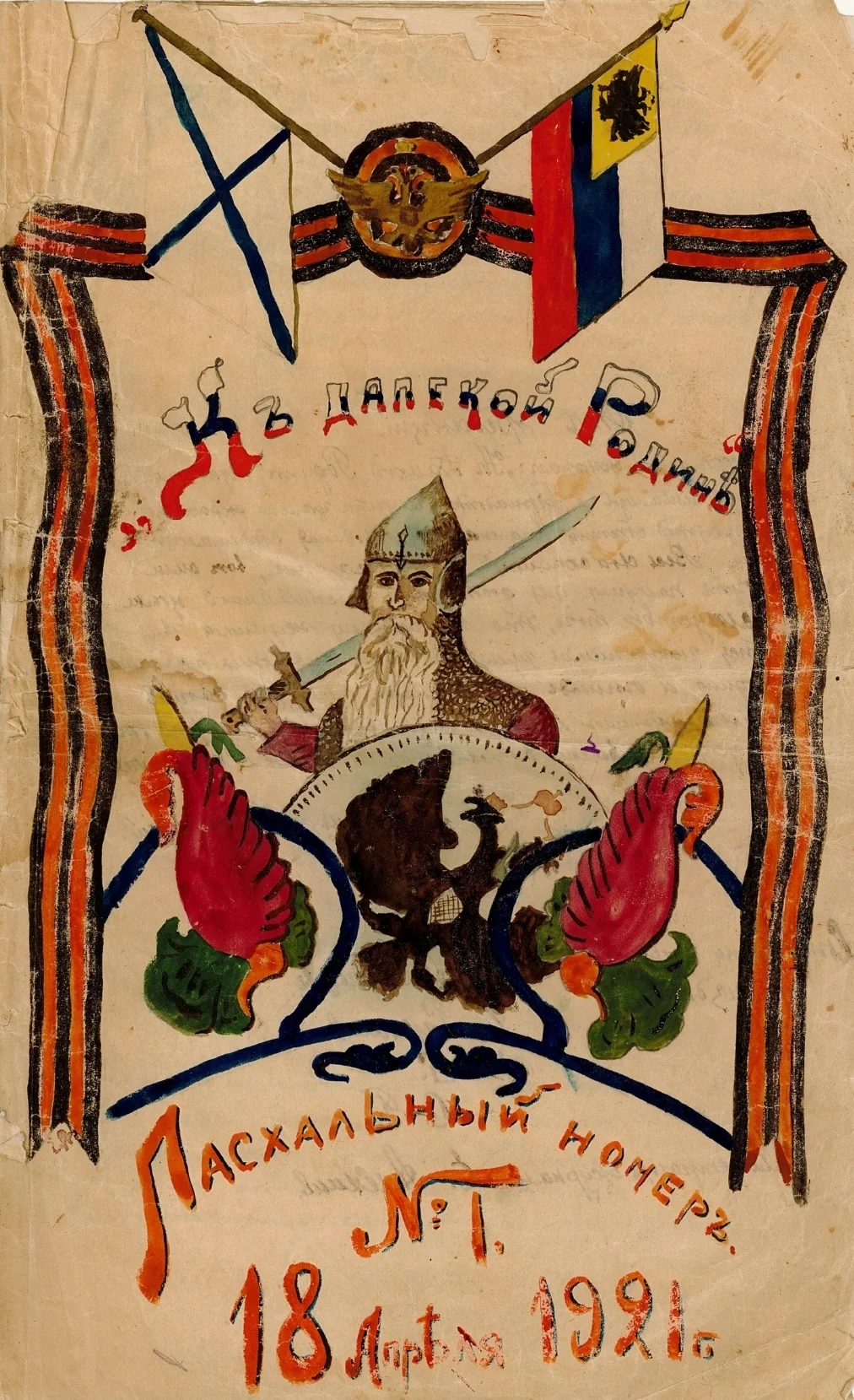
This unique handwritten periodical offers a rare glimpse into life in exile following the Russian Civil War. This manuscript is the very first issue of К далекой родине (To the Distant Homeland), a little-known publication created under extraordinary circumstances. This inaugural, Pascha-themed edition is dated April 18, 1921, and was produced in Camp Bernadotte at San Stefano (now Yeşilköy, a suburb of Istanbul), which housed Russian refugees. Edited by Lapkin-Medveditsky and published by A. Tultsev and B. Ruslanov, with illustrations by E. Alekhin, it represents a fragile but powerful artifact of émigré life.
The periodical emerged in the aftermath of the evacuation from Crimea in 1920, when remnants of the White Army, including Cossack units that had fought in the Civil War, found themselves displaced in Turkey. In camps like San Stefano, these soldiers endured a difficult period of transition, striving to maintain their military organization, communal bonds, and cultural identity while facing an uncertain future. The creators of this journal were among them, and their work reflects both the hardships of exile and a determined effort to preserve spiritual and cultural traditions far from home.
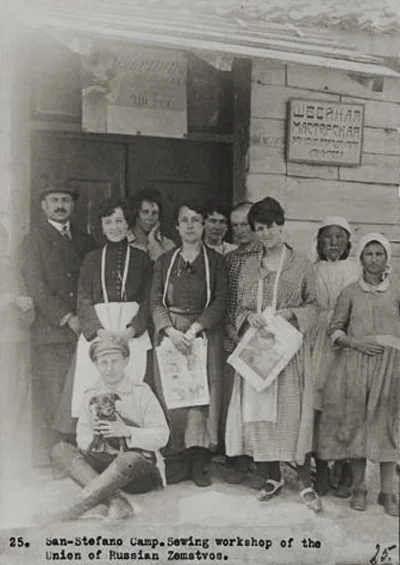
San Stefano Camp. Sewing workshop of the Union of Russian Zemstvos, 1920s. Source: https://www.levantineheritage.com/
Within its pages, the Paschal theme unfolds in deeply personal ways. One poem by Lapkin-Medveditsky is composed as an acrostic: the first letters of each line spell out Христос Воскресе (“Christ is Risen”). Another short piece recalls childhood celebrations of Easter—visits from relatives bearing gifts, the joyful peal of church bells in Moscow—underscoring the contrast between past and present. Amateurish watercolor illustrations throughout lend the manuscript a vivid, intimate quality, reinforcing its handmade character.
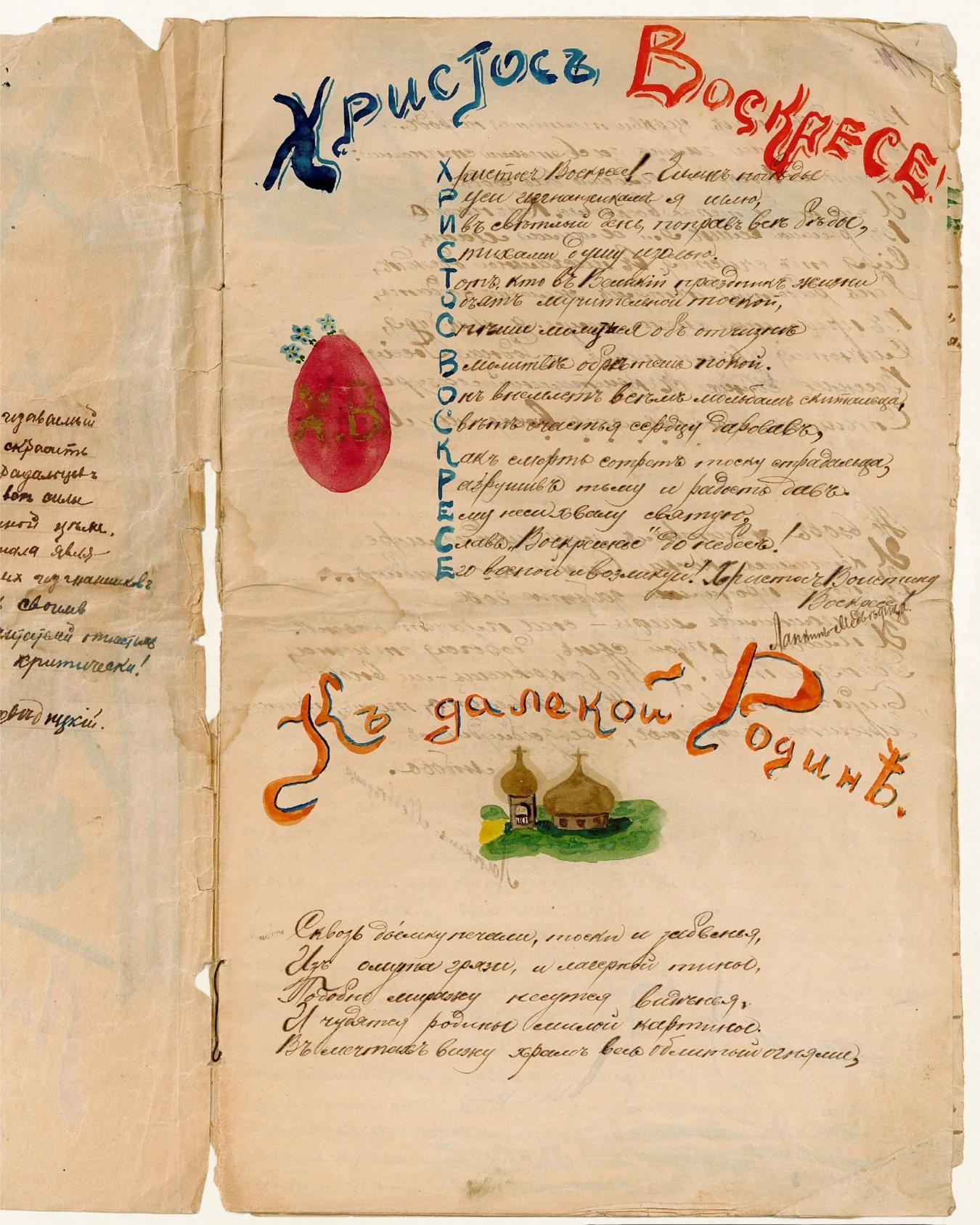
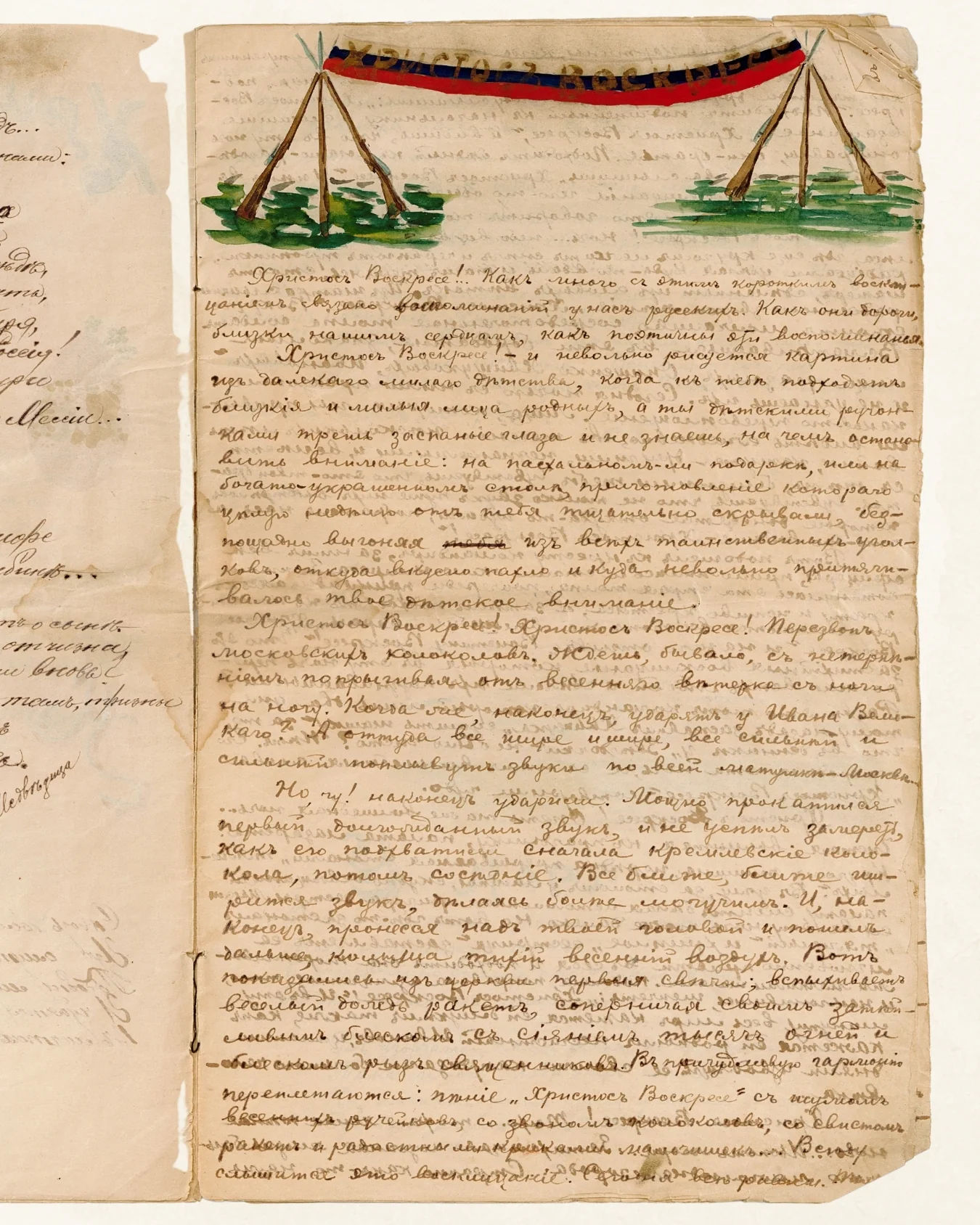
A further poem, “A Dream in a Foreign Land,” expresses a quiet longing for the lost homeland:
…А вон тропинка над рекой
И виден храм. Спешит старик
А крест сияет золотой
И ярче виден Спаса Лик…
…There, a path runs above the river,
And a church comes into view.
An old man hurries along,
And the golden cross shines brightly,
And the Savior’s face appears more radiant…
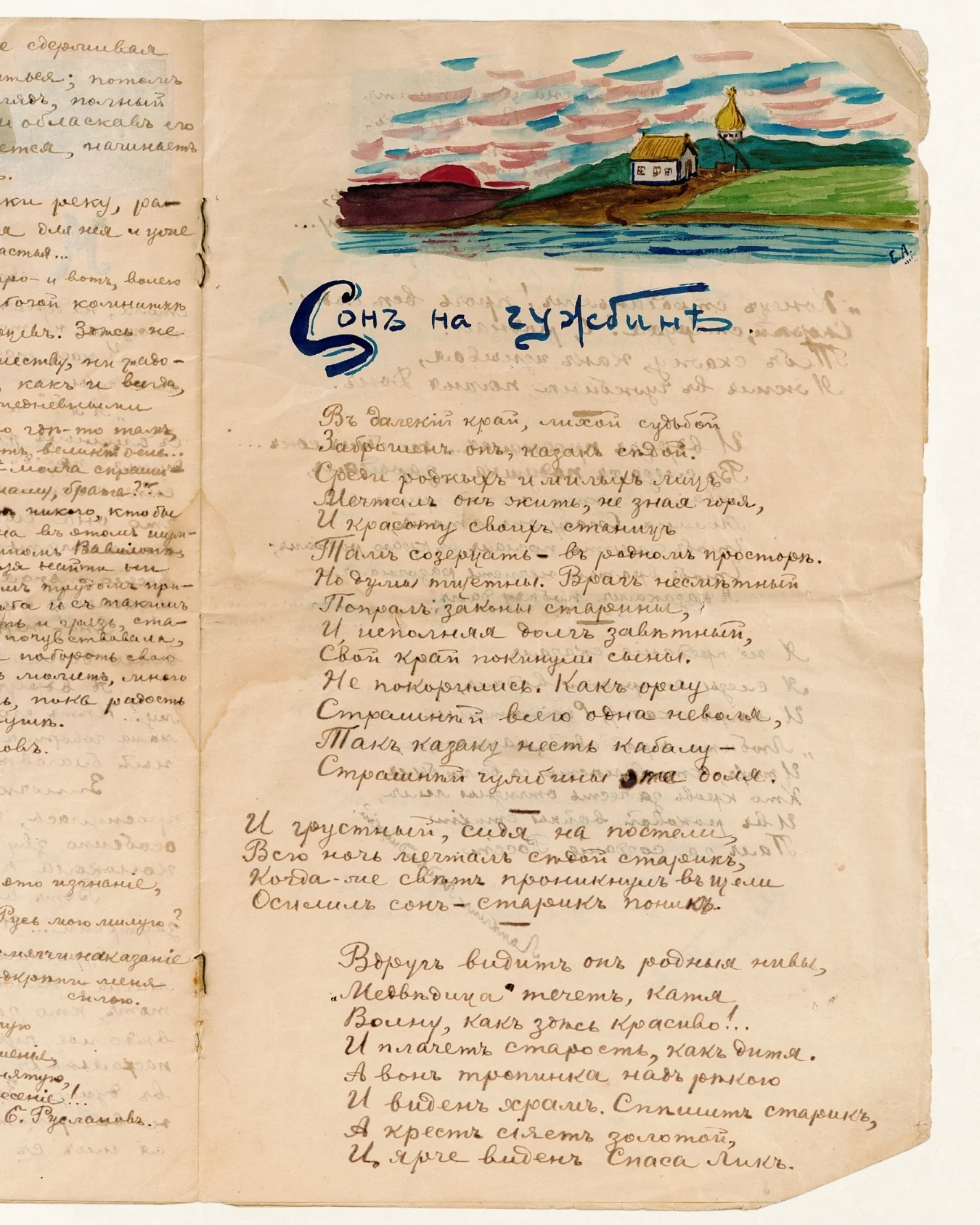
Other issues survive today in archives in Russia and the Czech Republic, making this first issue especially valuable. Taken as a whole, this manuscript offers a poignant window into the inner lives of Russian émigré veterans. In displacement, Pascha took on new meaning, leading one to deeply reflect on memory, identity, faith, and hope.


