

Easter Eggs from Imperial Russia: Royal Gifts to Stylish Accessories
Author: Anastasia Shteinert
Editor: Michael Perekrestov
As Orthodox Christians prepare to celebrate Easter, the season’s symbols of rebirth and resurrection take on renewed meaning. In Imperial Russia, the spirit of Pascha—the most important feast of the Orthodox liturgical year—found expression not only in church rituals but also in the artistry of Easter eggs and egg-shaped objects.
The Russian History Museum’s collection features a number of such treasures. Some were created by renowned imperial workshops, while others served surprisingly practical purposes. Yet each one carries its own unique story, revealing how deeply the Easter message was woven into both the sacred and everyday fabric of Russian life.
A Gift from the Empress

Empress Alexandra Feodorovna, wife of Nicholas II, presented this egg to Nikolai Yakovlevich Sedov. An officer of the Crimea Cavalry Regiment, Sedov was wounded on the World War I front and was convalescing at a hospital that operated under the Empress’s patronage. (Incidentally, Alexandra Feodorovna was the chef, or honorary commander, of Crimea Regiment).
The egg features a painted image of St. Seraphim of Sarov, a monastic saint who lived at the turn of the 18th century. Nicholas II and his family held St. Seraphim in special esteem, and the Emperor himself played a decisive role in the saint’s canonization in 1903. That summer, the imperial family attended the solemn canonization festivities in Sarov.
After the Revolution, Nikolai Sedov’s loyalty to the imperial family led him to join a group that sought to rescue the former tsar and his family from imprisonment. He even traveled to Siberia in an unsuccessful attempt to aid in their escape. Later in life, Sedov became a monk, taking the name Seraphim—perhaps in honor of the saint and the Empress’s symbolic gift.
This egg was featured in our museum’s special exhibition the final days of Nicholas II and his family, Last Days of the Last Tsar.
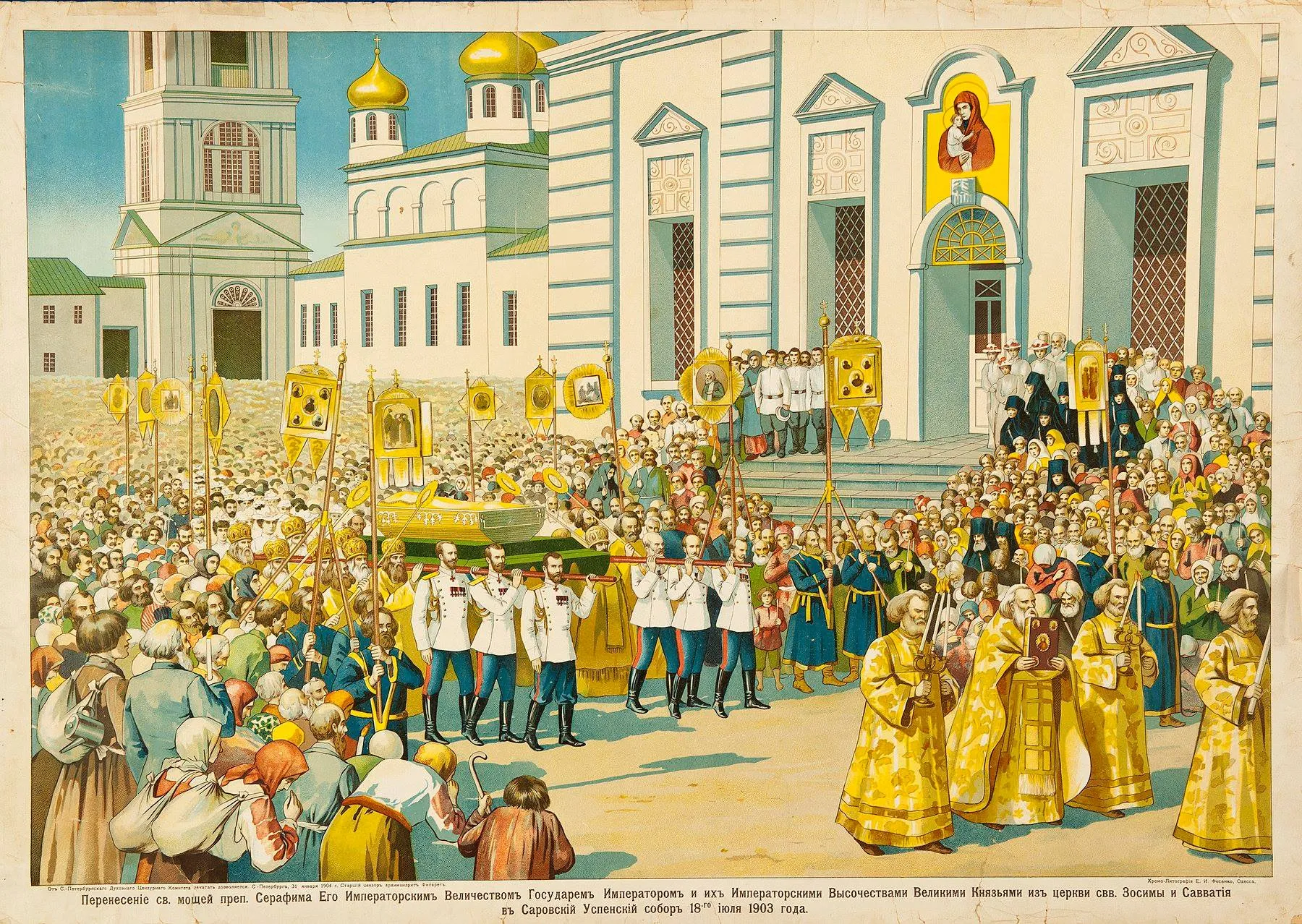
Tsar Nicholas II carrying the relics of St. Seraphim of Sarov during the saint's canonization in 1903. Chromolithograph. Firm of Fesenko, Odessa. Russian History Museum collection (102.2007)
A Coin Purse?
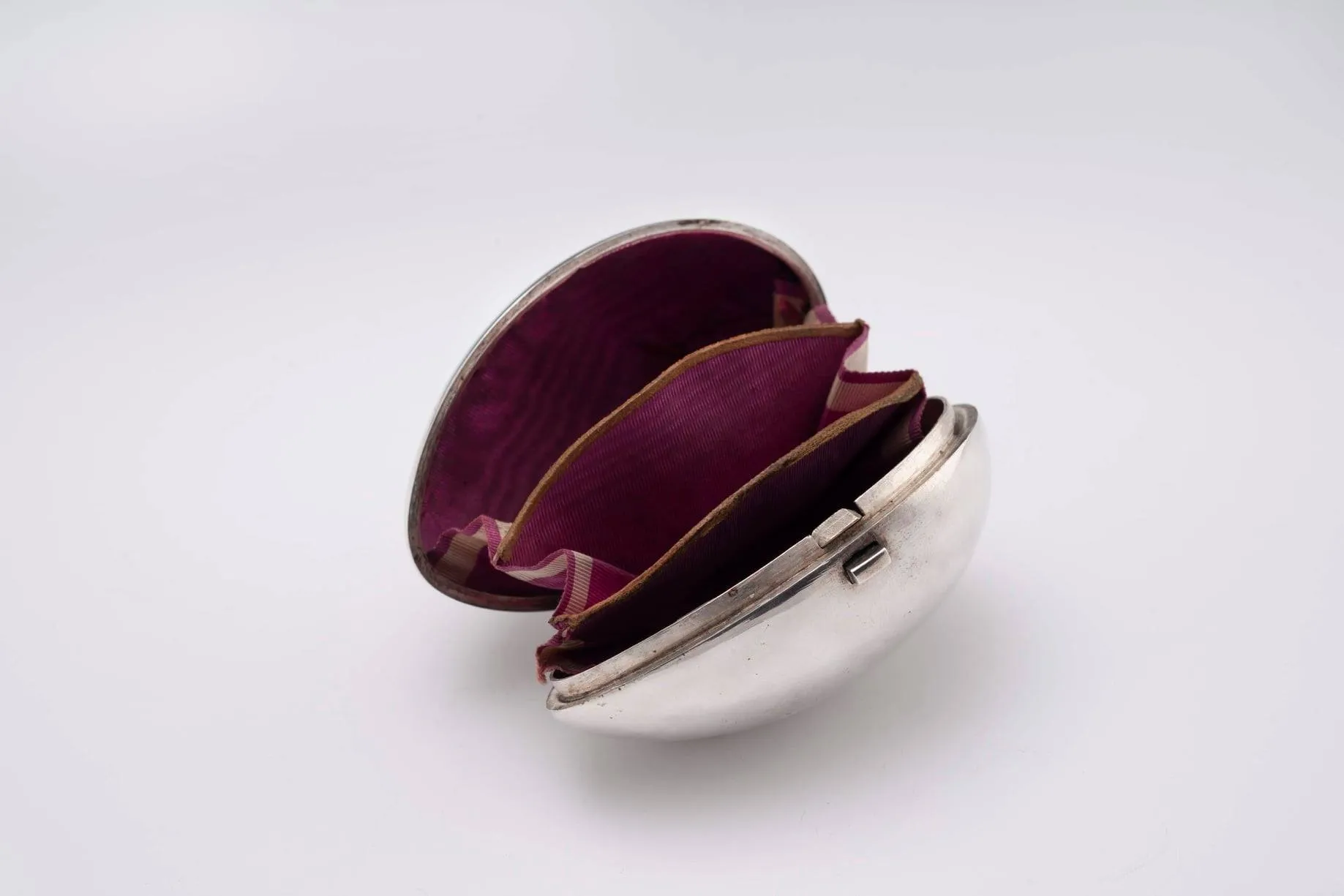
Not all Easter eggs were made for display alone. A striking example is this simple yet elegant silver coin purse crafted in the shape of an egg.
Made by St. Petersburg silversmith Henrik Lassas around 1890, the purse demonstrates how spiritual symbolism could be woven into everyday life. With its streamlined form and dark red silk lining, this small accessory may have accompanied a man or woman on errands.
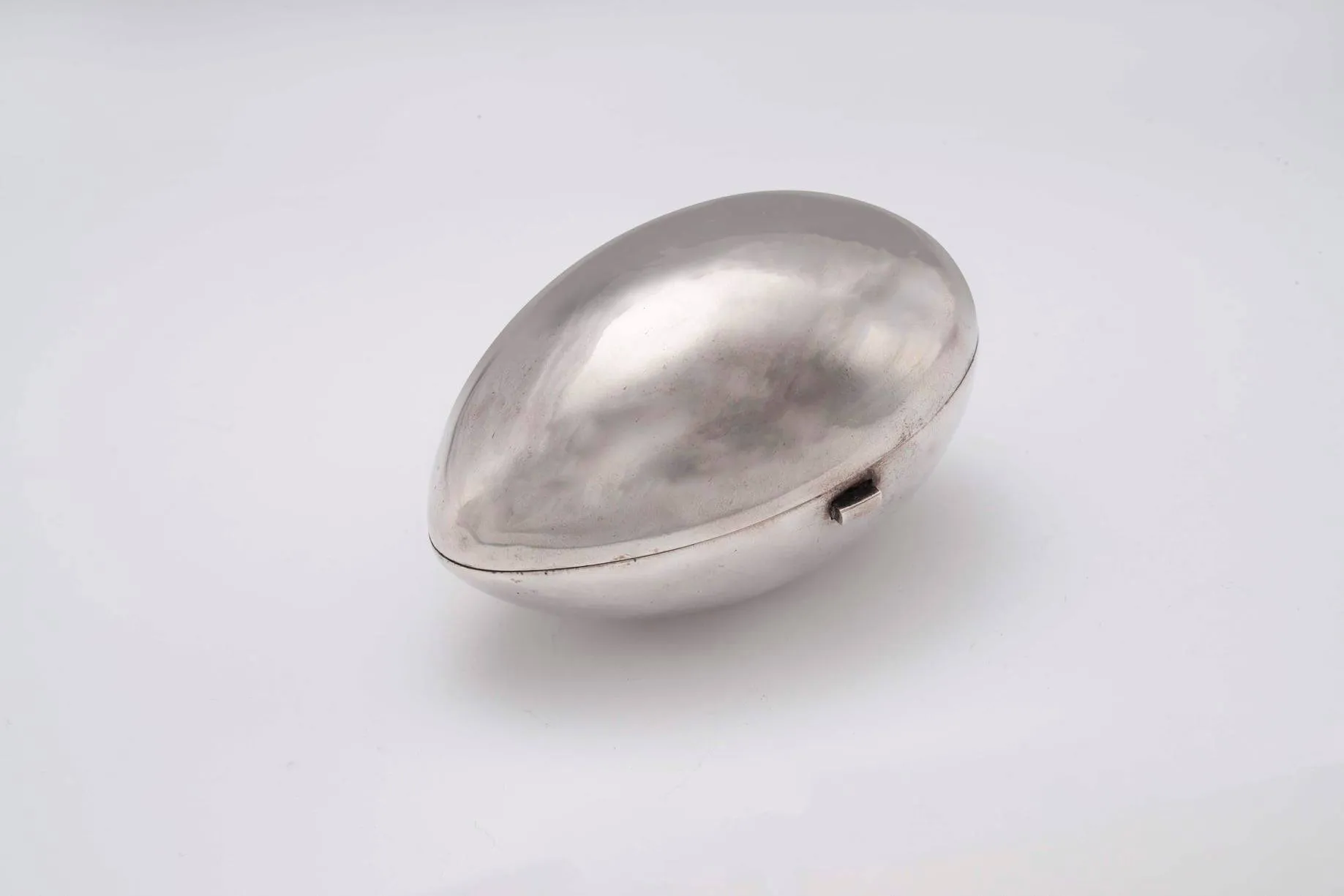
Other egg-shaped items were also popular in late Imperial Russia. Teacups, picture frames, pendants, bonbonnieres, and perfume flasks took on the form of the egg, serving as constant reminders of the joy and renewal associated with Easter.
Wartime Craftsmanship
The Romanov women played active roles in the Russian Red Cross during World War I, both as patrons and as nurses. The Red Cross had operated in Russia since the mid-19th century, but during WWI it became a critical lifeline for wounded soldiers. Empress Alexandra Feodorovna and her daughters trained as sisters of mercy, working in hospitals and directly supporting the war effort.
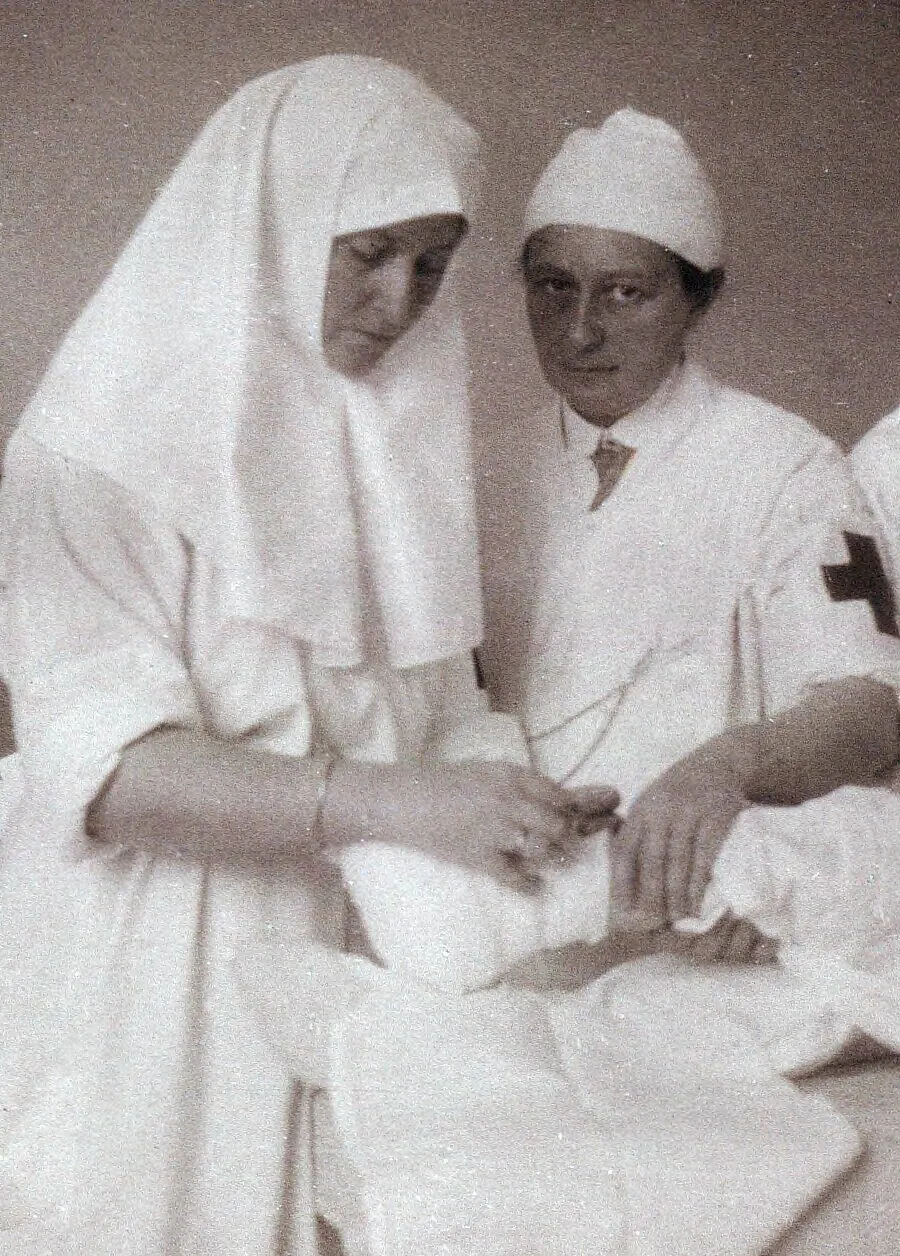
Empress Alexandra Feodorovna and Princess Vera Gedroits at the Tsarskoye Selo hospital, 1915. Source: Wikipedia
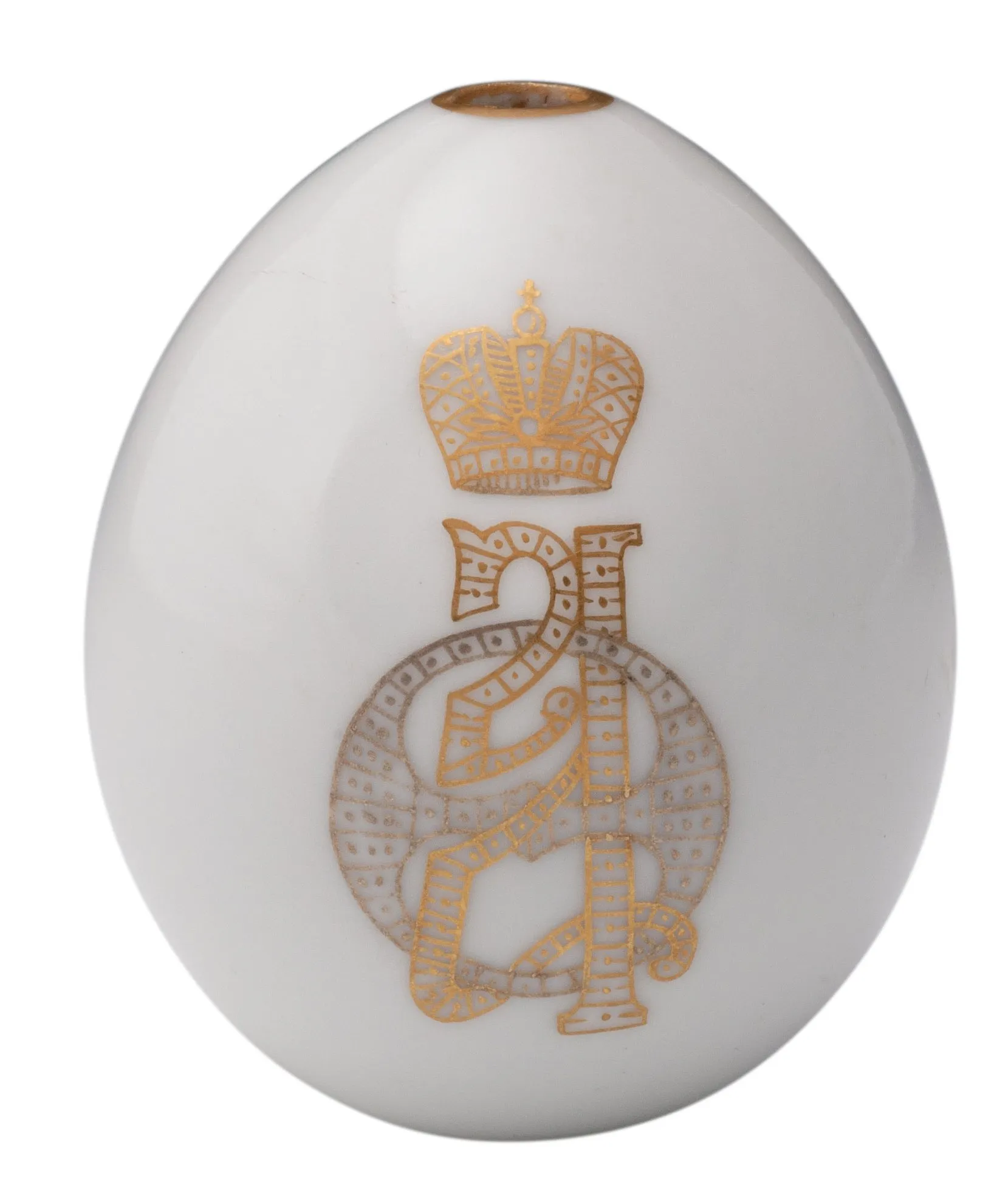
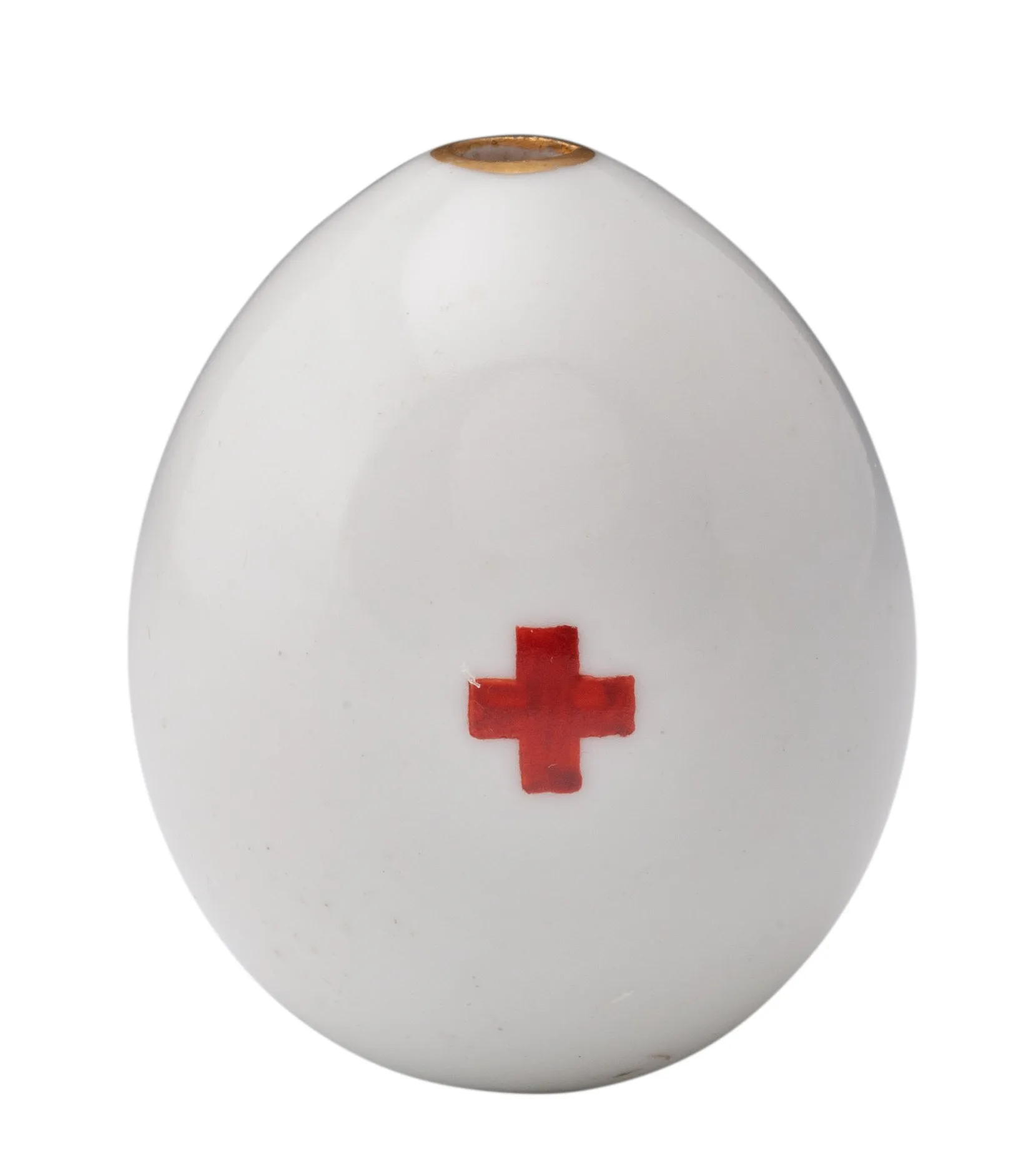
This Red Cross egg, created by the Imperial Porcelain Factory between 1914 and 1917, was presented to soldiers as a token of gratitude and solidarity. One side features the Empress’s cypher, while the other bears the simple symbol of the Red Cross.
A similar egg was created by the Carl Fabergé workshop in 1915, commissioned by Nicholas II. He gave it to his mother, Empress Maria Feodorovna, as both a traditional Easter gift and a tribute to her leadership of the Russian Red Cross.
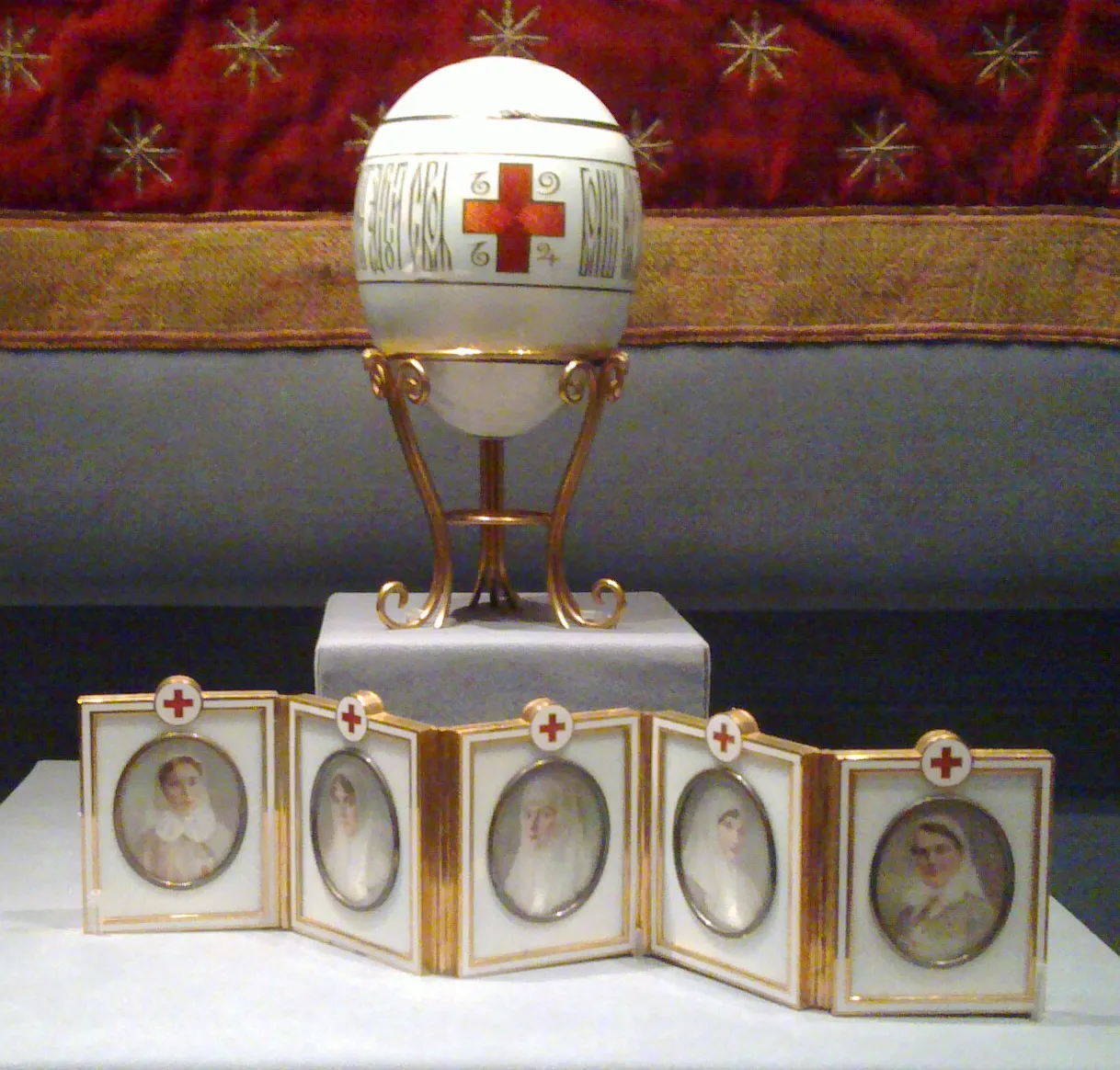
Red Cross with Imperial Portraits (Fabergé egg). 1915. Virginia Museum of Fine Arts. Source: Wikipedia
A Family Story
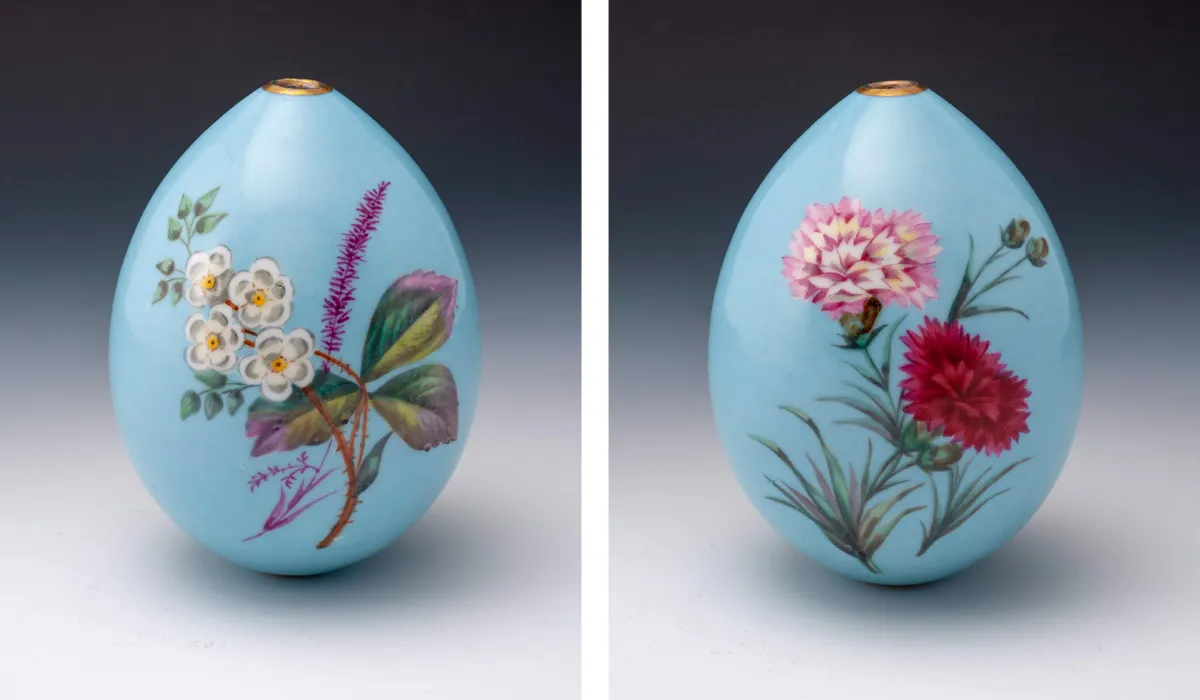
This porcelain Easter egg has a personal and heartfelt story. It was given by Tsar Nicholas II to Agnes Bachman, a governess working in Tsarskoe Selo.
Originally from Poland (then part of the Russian Empire), Bachman moved to St. Petersburg, where she worked briefly as a laundress in 1907 before securing employment as a governess and German tutor with the family of an Orthodox priest, Fr. Iakov Cherviakovskii. On Easter of 1909, Bachman attended the midnight Paschal service at St. Catherine Cathedral—where Fr. Iakov served and the imperial family sometimes worshipped—and received a decorated porcelain egg from the Emperor himself.
She later recalled the moment in her memoir:
“At Easter I was able to join in the festivities that take place at midnight on Easter Day to celebrate the Resurrection. It was quite an event for me. The ceremony took place in a ‘Sabor’, we would say Cathedral. Only the Imperial Court was allowed to enter. Tsar Nicholas II gave porcelain eggs as gifts for Easter. I also received one. It measured seven Zoll [German inches], has cherry blossoms painted on one side and red carnations on the other. It was a great honor for me: and to this day I cherish this gift from the Tsar.”
In 2019, Patricia Axelrod, Bachman’s granddaughter, donated the delicate egg to the Russian History Museum, along with a collection of documents from Bachman’s time as a governess in St. Petersburg.
Discover Agnes Bachman’s full story in this article.
Symbolism in Lacquer

This lacquered papier-mâché egg, crafted between 1843 and 1855, depicts the Resurrection of Christ on one side and religious symbols on the other: a chalice, the tablets of the law, and a Book of Gospels. The tablets represent the Old Testament, while the Gospels represent the New Testament. The chalice represents the Eucharist and Christ’s sacrifice, who bridges the Old and New Testaments by fulfilling the Law and the Prophets through His incarnation, life, death, and resurrection. A deep red background, traditionally associated with Easter in Orthodox tradition, enhances the golden tones of the painted symbols.

The egg was made at the Lukutin workshop at Fedoskino, one of the leading producers of hand-painted lacquered items in 19th-century Russia. The appeal of their wares was based on the use of vivid colors, exquisite craftsmanship, and charming scenes from Russian daily life.
Learn more about Russian lacquer tradition in our lecture.
Also, continue exploring the eggs in our collection and discover the rich traditions of Russian Easter:


