A Palace Rediscovered: Solving the Mystery of a Romanov Album
Author: Michael Perekrestov
Every now and then, a quiet object in the museum’s collection reveals an extraordinary story. For decades, a heavy leather-bound album, its cover elegantly embossed in gold with the words “Views of His Own Palace and Rooms, St. Petersburg” lay, largely unnoticed, in the Russian History Museum’s archives. According to old museum records, it showed the interiors of the Anichkov Palace, home of Emperor Alexander III.
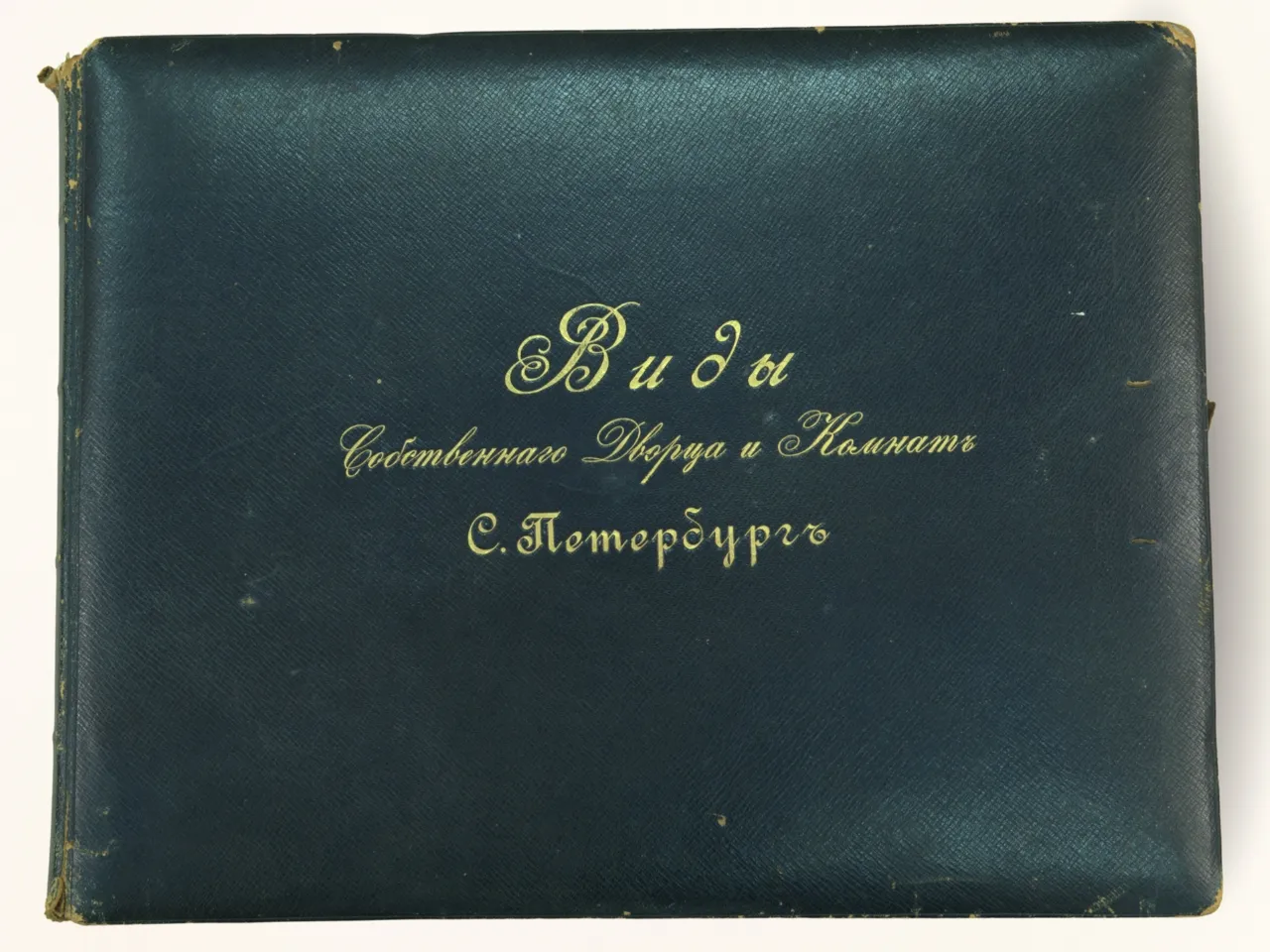
Yet, something didn’t add up. The rooms pictured in the album bore no resemblance to that residence. So, whose palace was it?
What began as a question about a misidentified album soon turned into an unexpected tale of discovery, linking this artifact to the tragic fate of a Romanov Grand Duke, informing the research of an art historian and his new book, and ultimately bringing a long-overlooked treasure into the spotlight in our current exhibition, Mysteries and Odysseys.
The Mystery Album
The album contained twenty large-format photographs by the atelier of A. D. Petersen, showcasing soaring halls, opulent dining rooms, grand staircases, ornate studies, and no fewer than four luxurious drawing rooms. But whose home were we seeing?

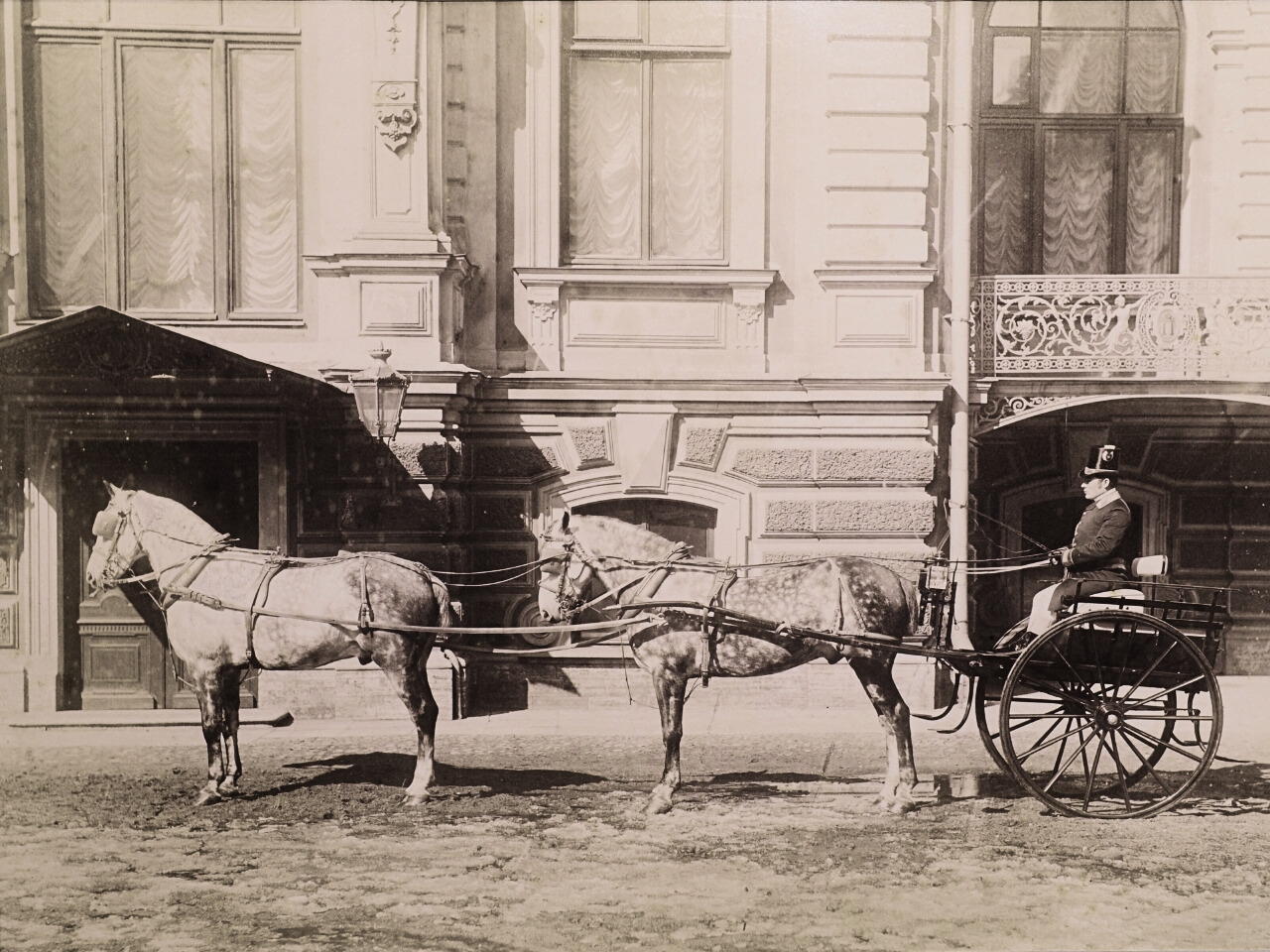
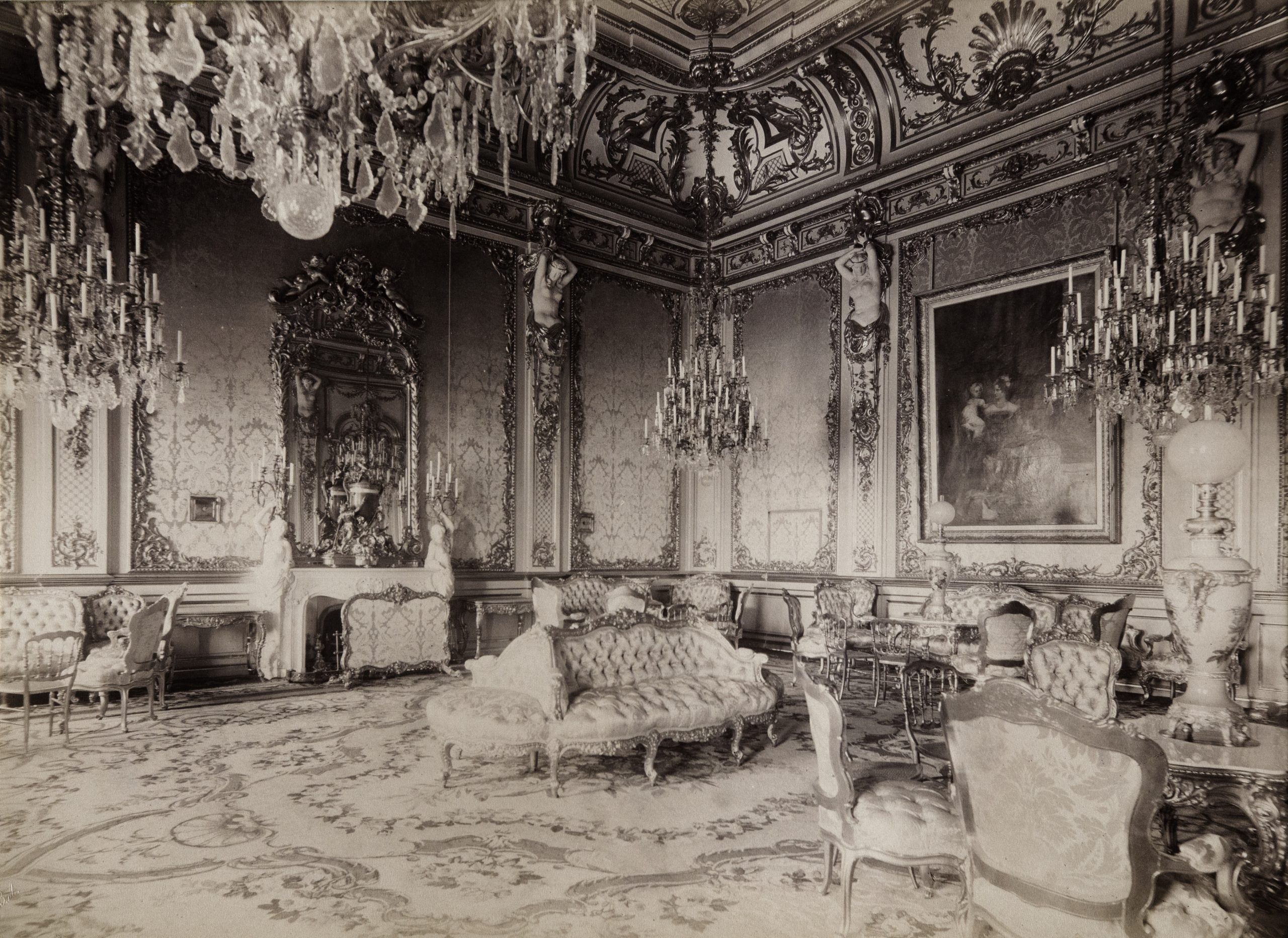
Museum staff began a careful investigation, searching for clues hidden within the images themselves.
- Clue #1: Portraits and photographs of the Romanov family adorned the interiors. Could this indicate that the palace belonged to a member of the imperial dynasty?
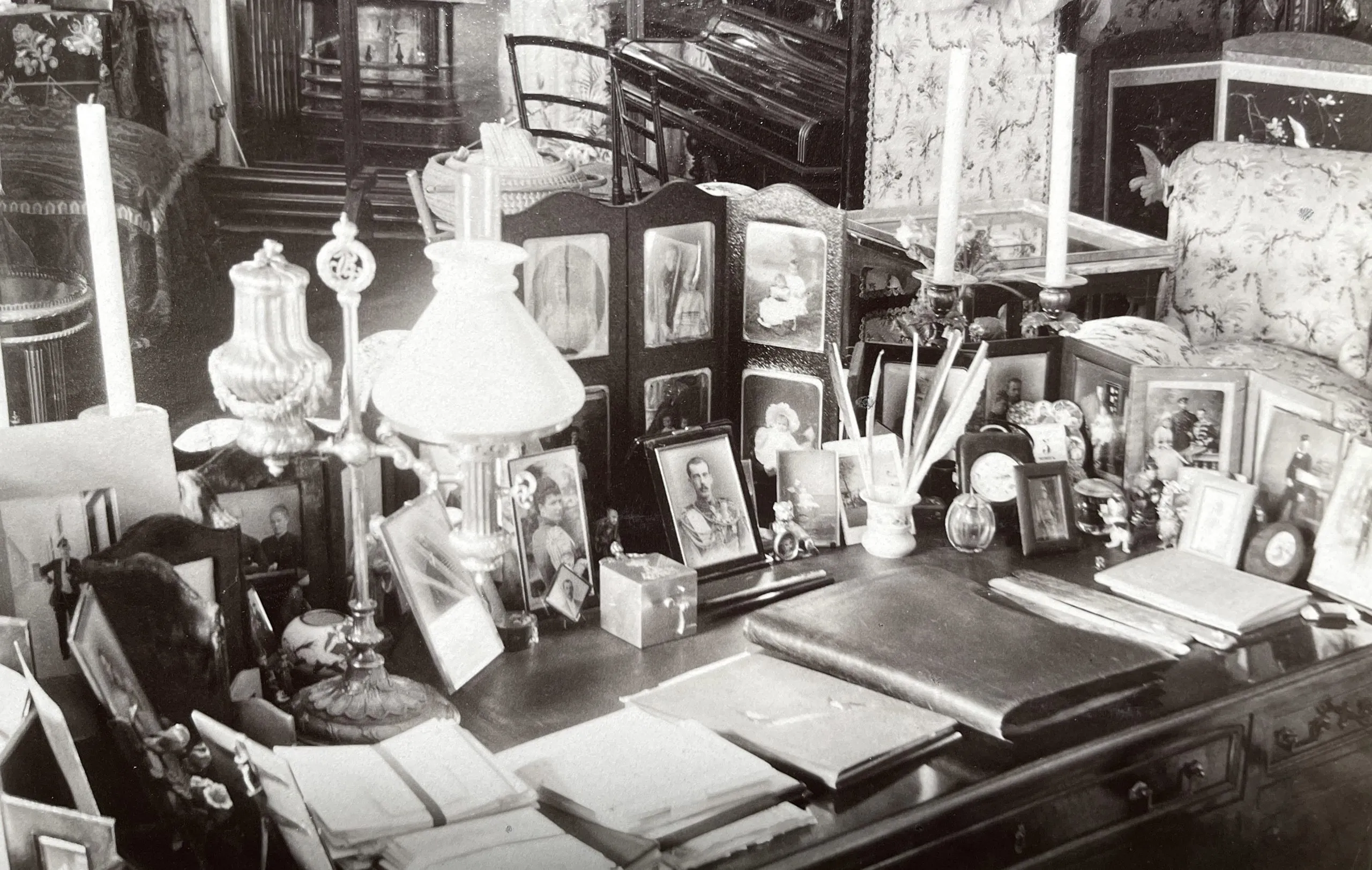
Close-up of a table arrangement in one of the studies. The photographs on the table depict members of the Romanov family
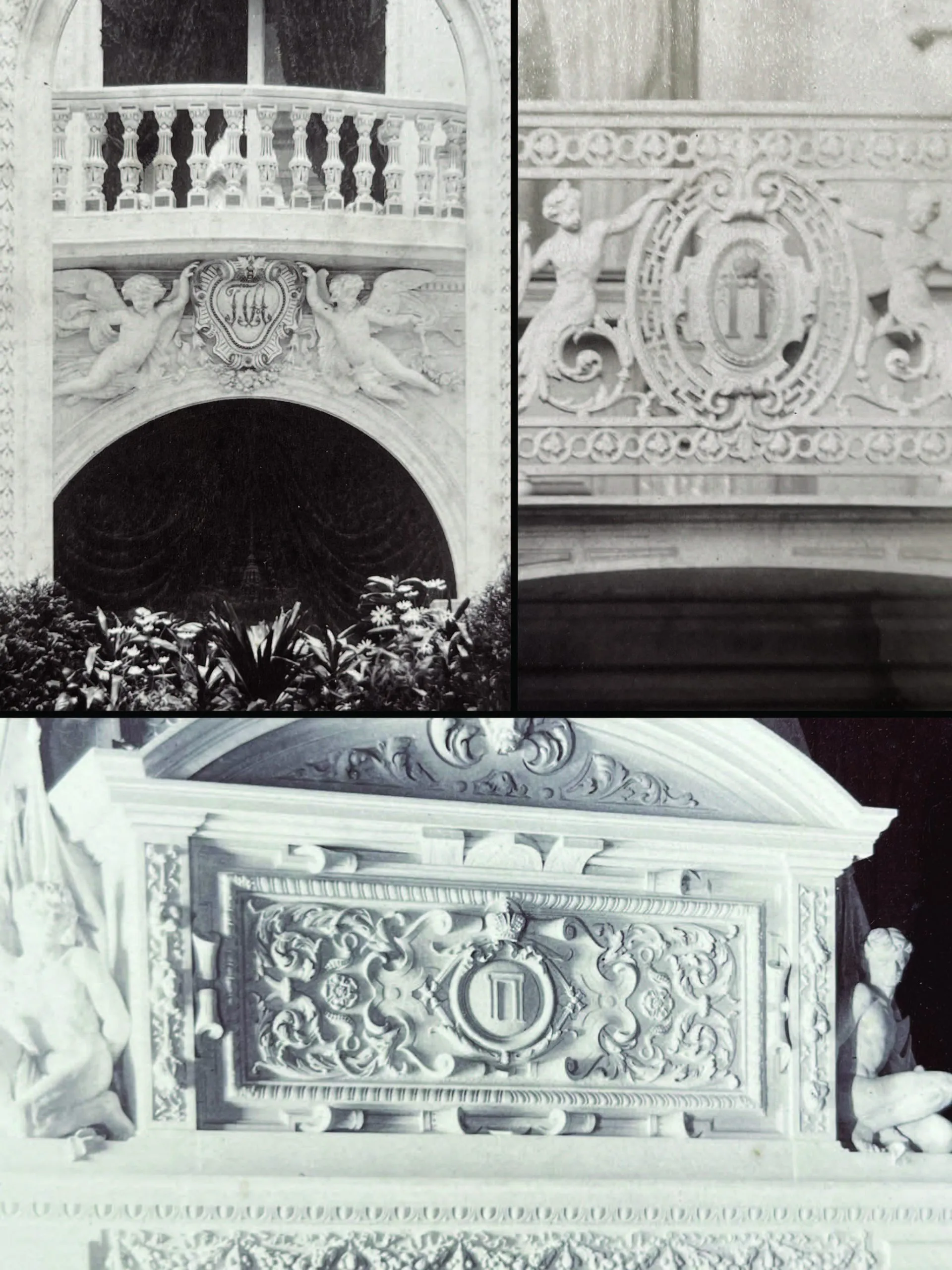
- Clue #2: A recurring motif—a Cyrillic letter “P” surmounted by a crown—appeared on fireplaces, railings, and furniture. Perhaps the owner’s name began with “P”: Peter… or Paul?
- Clue #3: One photograph captured a grand dining room dominated by a monumental painting of hunters returning from the chase. Could this distinctive artwork help pinpoint the palace’s identity?
That last clue proved decisive.
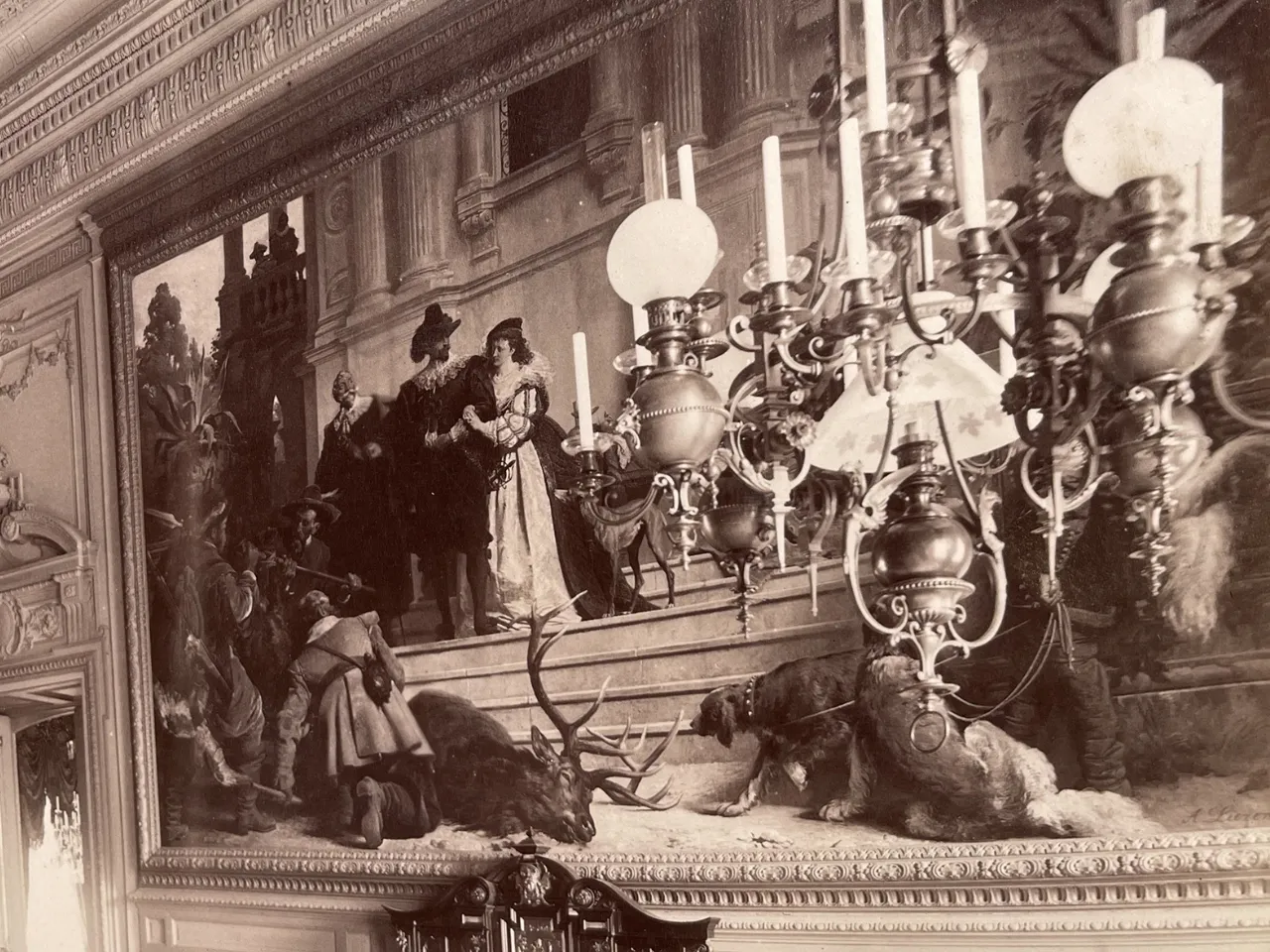
While poring over images of St. Petersburg palaces in reference books and early digital archives (this was before the convenience of reverse image search), we came across a meticulous watercolor by the Italian artist Luigi Premazzi (1814–1891). It depicted a dining room in a mansion on the English Embankment, one of the imperial capital’s most fashionable addresses. Instantly, the towering painting above the sideboard caught our attention—it was identical to the one in our mysterious album. A closer comparison confirmed it: every architectural detail, down to the placement of the furniture, matched perfectly.
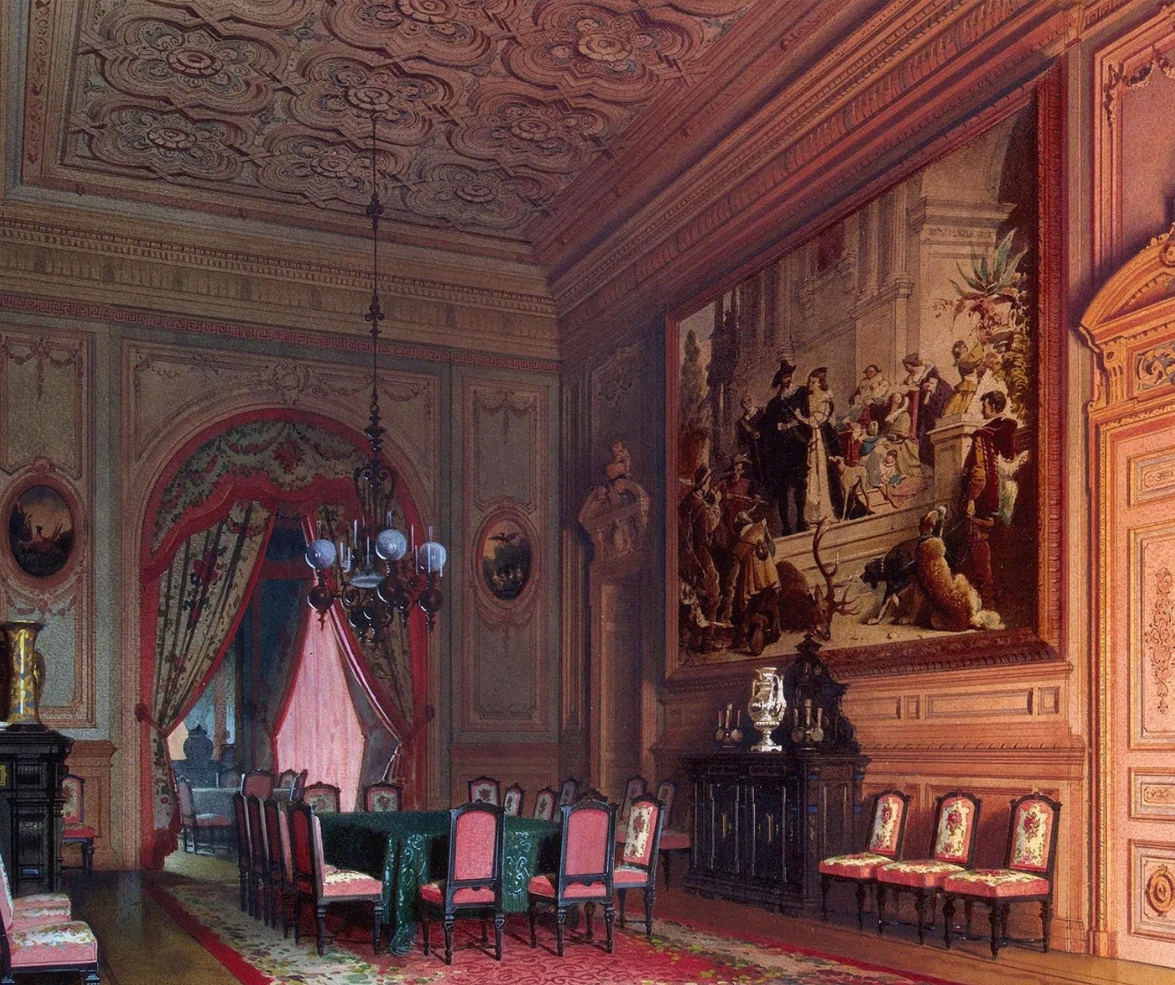
Luigi Premazzi, Watercolor of a grand dining room, 1869–1872. State Hermitage Museum collection
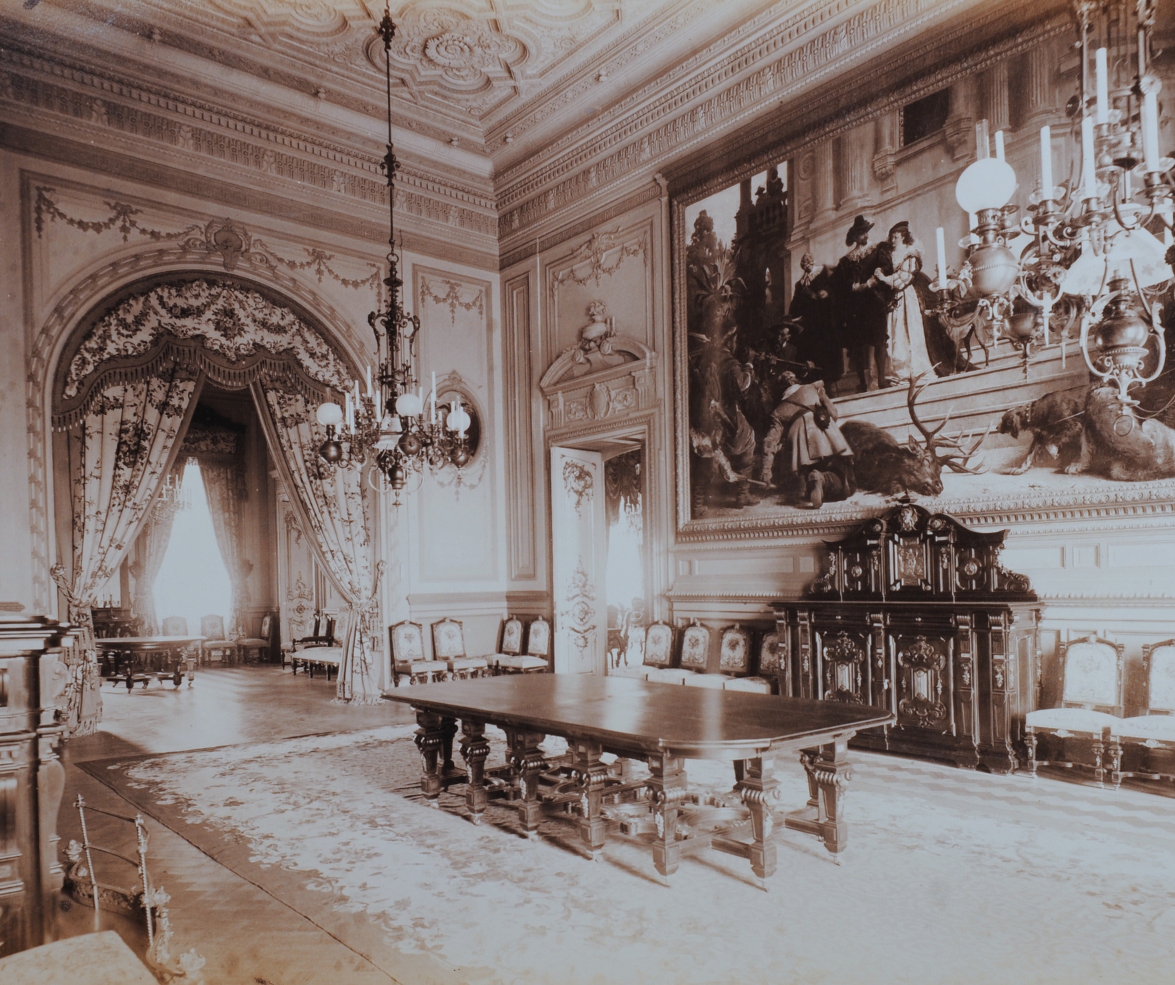
Photograph of a grand dining room, from an album in the Russian History Museum archives
Further research revealed that Premazzi’s watercolor was part of a series, now in the collection of the State Hermitage, documenting the interiors of Baron Alexander von Stieglitz’s mansion. Comparing his paintings to the photographs erased any doubt—the album showed the very same rooms. But new questions emerged: why did these photographs include so many portraits of the Romanovs, and what explained the crowned letter “P” appearing throughout the décor?
From Mansion to Palace
Further research revealed the building’s history. In 1859, Baron Alexander von Stieglitz (1814–1884), one of Imperial Russia’s most powerful financiers and philanthropists, commissioned architect Alexander Krakau to design a grand Renaissance Revival mansion for his residence in St. Petersburg. Stieglitz served as head of the State Bank of the Russian Empire, financed Russia’s earliest railways, and owned manufacturing enterprises. Among his philanthropic endeavors was establishment of the St. Petersburg’s renowned Stieglitz School and Museum of Applied Arts, institutions that still bear his name today.
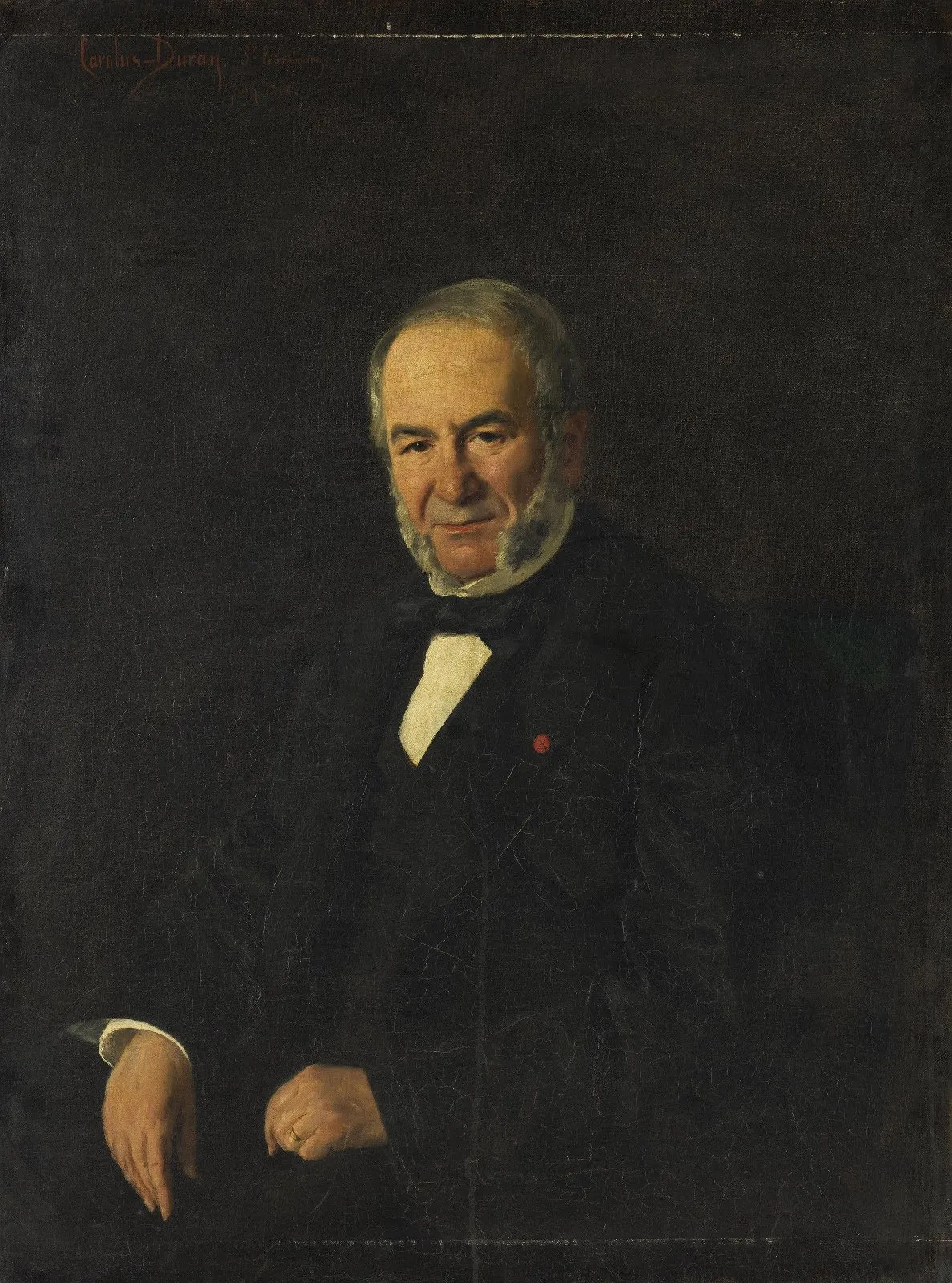
Émile Auguste Charles Carolus-Duran, "Portrait of Baron Alexander von Stieglitz," 1876, oil on canvas. State Hermitage Museum collection
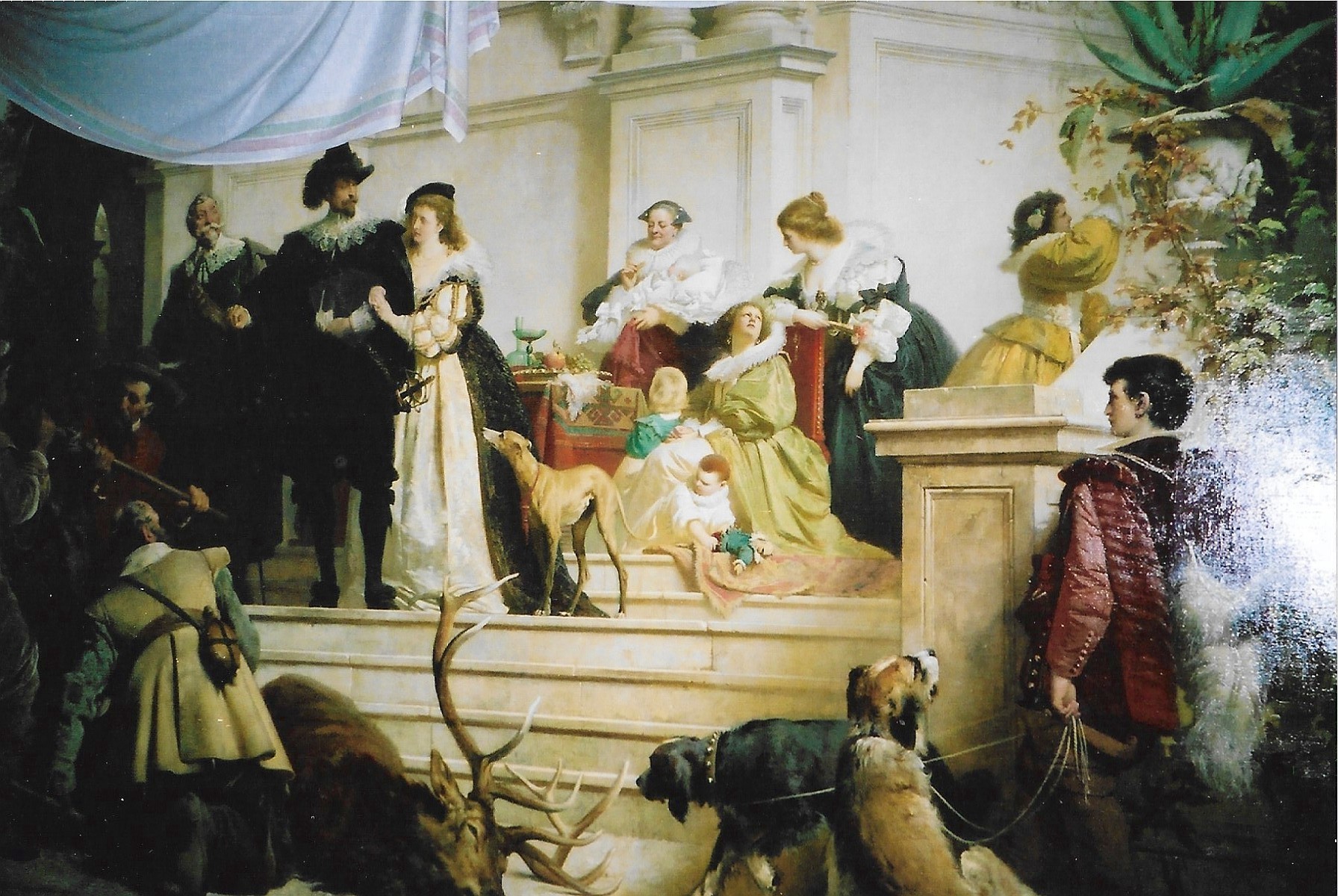
Completed in 1862 at the staggering cost of 3.5 million rubles, the Stieglitz mansion stood as a dazzling testament to the wealth of its owner. Every inch of the residence spoke of luxury and opulence. Luigi Premazzi’s meticulous watercolors, painted within five years of its completion, capture the mansion’s sumptuous interiors in extraordinary detail: gleaming marble, lavish textiles, elegant sculptures and paintings, polished wood, and sparkling chandeliers illuminated by cascades of light. Among the many artworks created for the mansion was Hungarian painter Alexander von Wagner’s towering canvas Return from the Hunt (1864), whose massive scale presided over the splendor of the dining room.
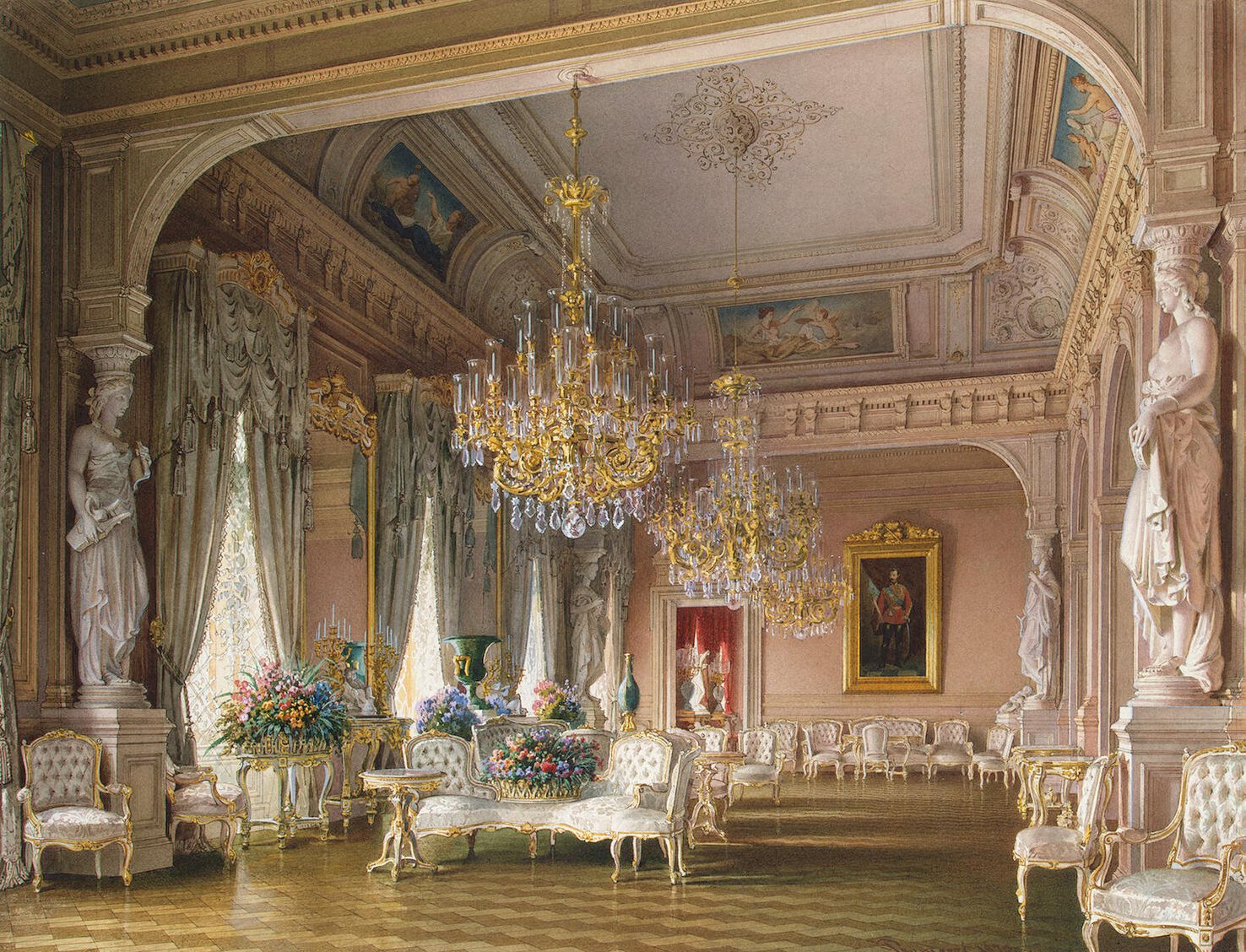
The white drawing room
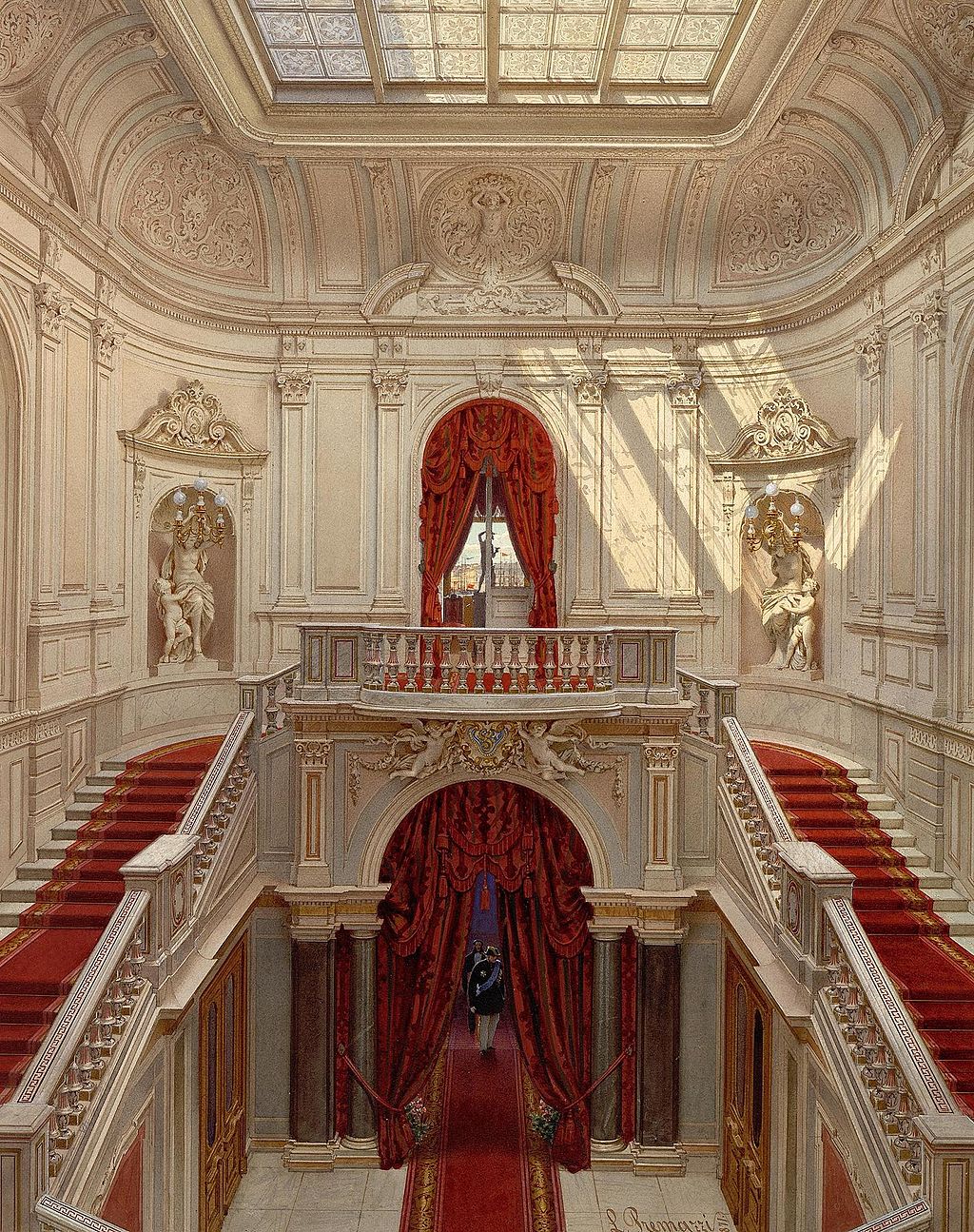
The main staircase
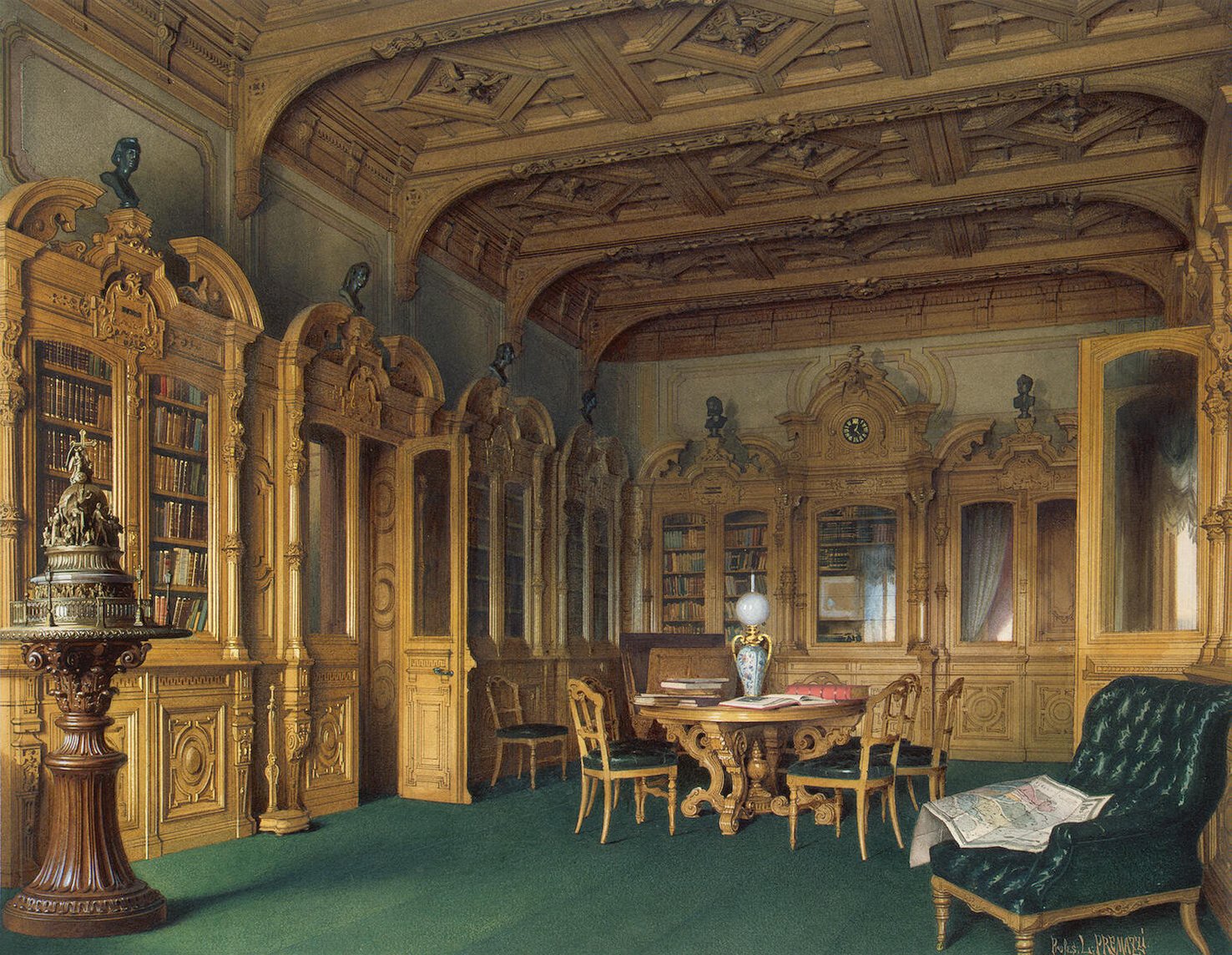
The library
The mansion, however, did not remain in the Stieglitz family for long. After the Baron’s death his adopted daughter sold the property. In 1889 it was acquired by Grand Duke Paul Alexandrovich, the youngest brother of Emperor Alexander III, shortly before his marriage to Princess Alexandra of Greece.
At last, the mystery was solved: the album did not depict the Anichkov Palace at all, but rather offered a vivid visual record of Grand Duke Paul’s newly acquired residence on the English Embankment. The crowned letter “P” stood for the new owner, the Romanov portraits reflected his imperial lineage. Given the gilt inscription on the cover and the exceptional quality of the volume—with its large-format, crisp photographs mounted on thick, gilt-edged pages—it is likely that the album was a personal possession of the Grand Duke and his wife.
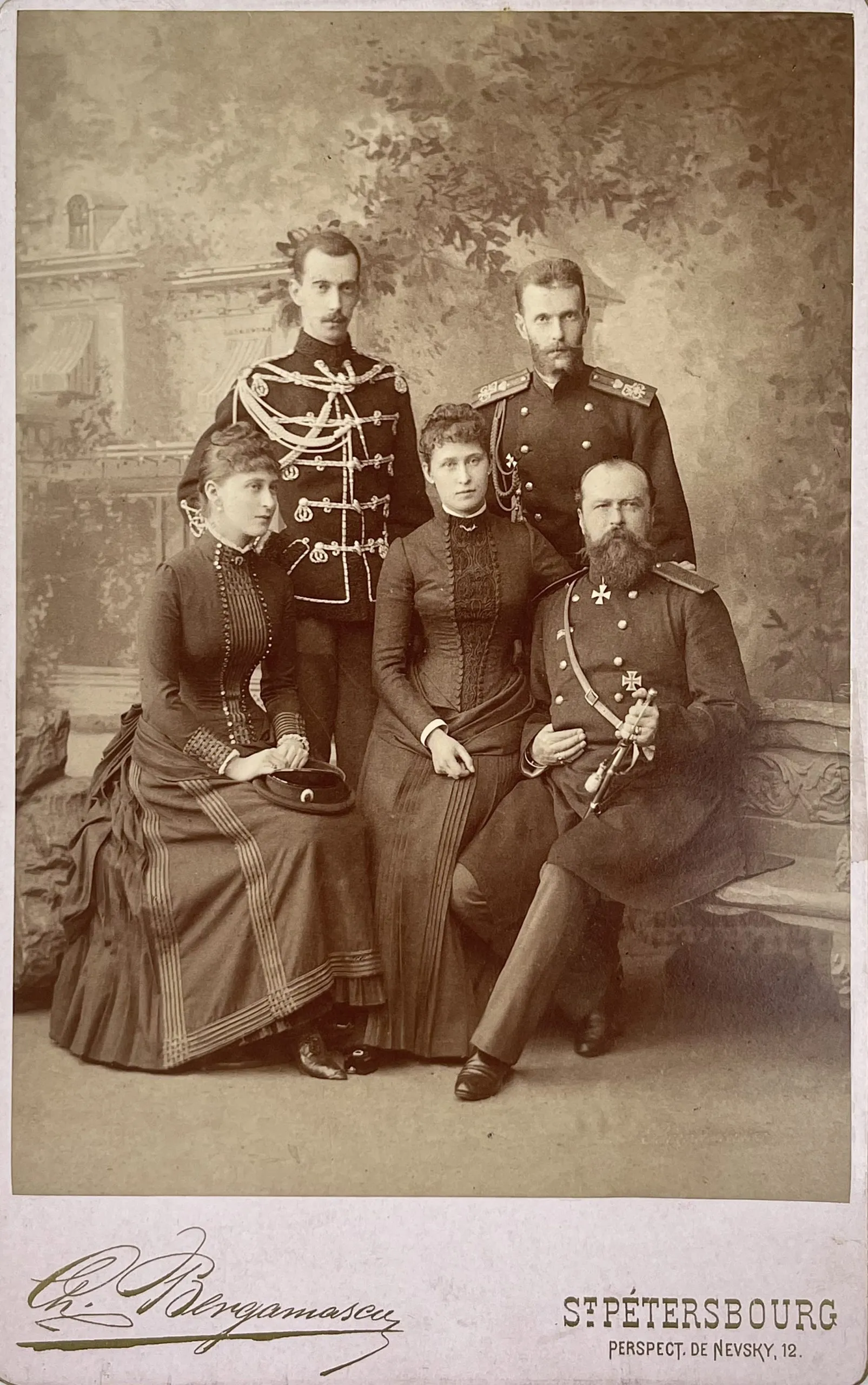
Photograph of Grand Duke Paul with Princess Alexandra of Greece, alongside Grand Duke Serge, Princess Irene of Hesse, and Louis of Hesse. Charles Bergamasco Atelier, Saint Petersburg, ca. 1890. Russian History Museum collection
Documenting a Grand Duke’s Residence
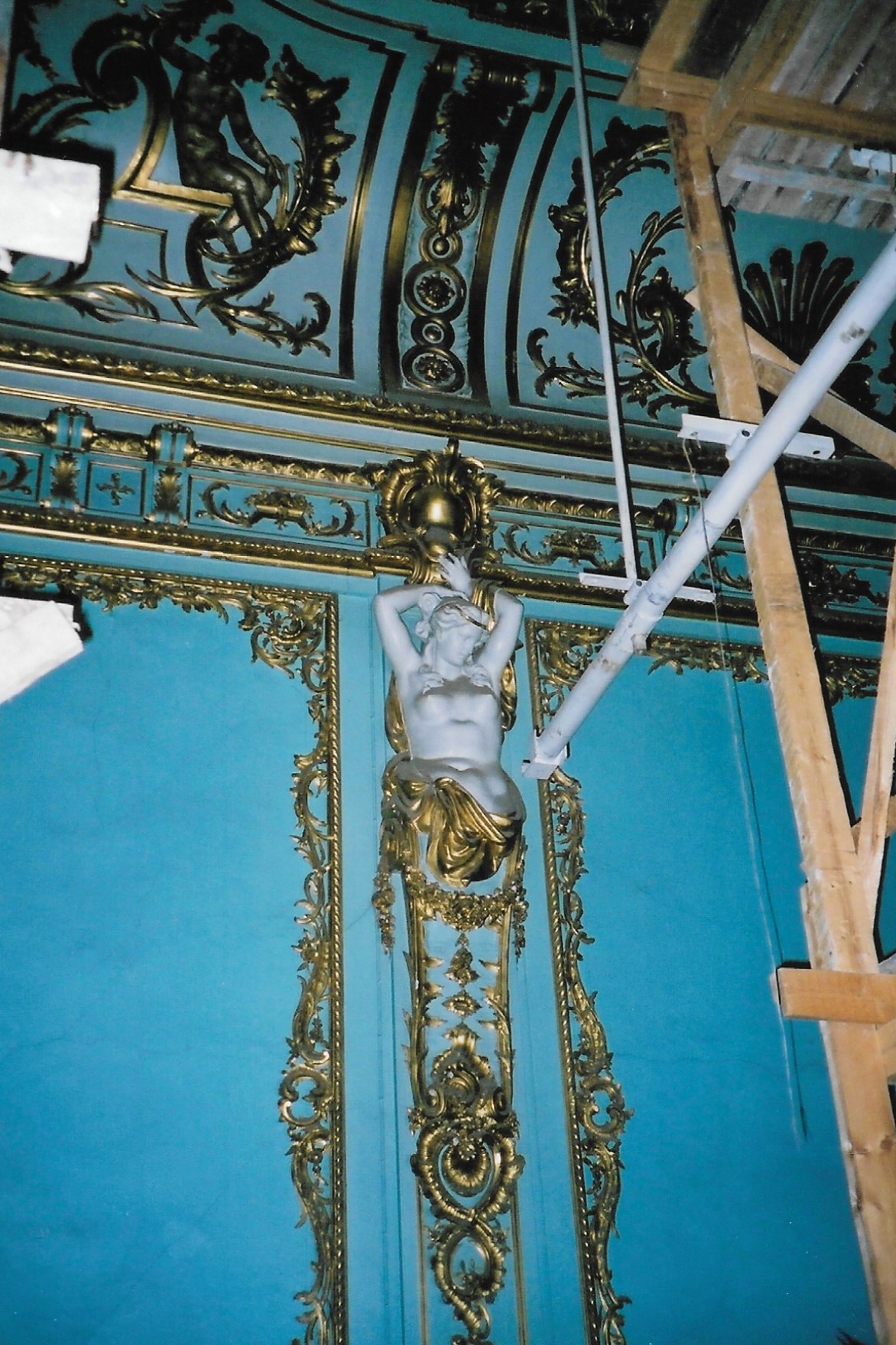
The photographs, probably dating to around 1889, show that Grand Duke Paul and Princess Alexandra retained much of Baron von Stieglitz’s original décor, blending inherited grandeur with personal touches. The Blue Drawing Room, for instance, remained almost entirely unchanged. Executed in the Louis XV style, its gilded furniture and ornate detailing evoked the splendor of Versailles, yet reflected a distinctly 19th-century St. Petersburg sensibility, complete with caryatid figures—a decorative feature scarcely found in true 18th-century French design.
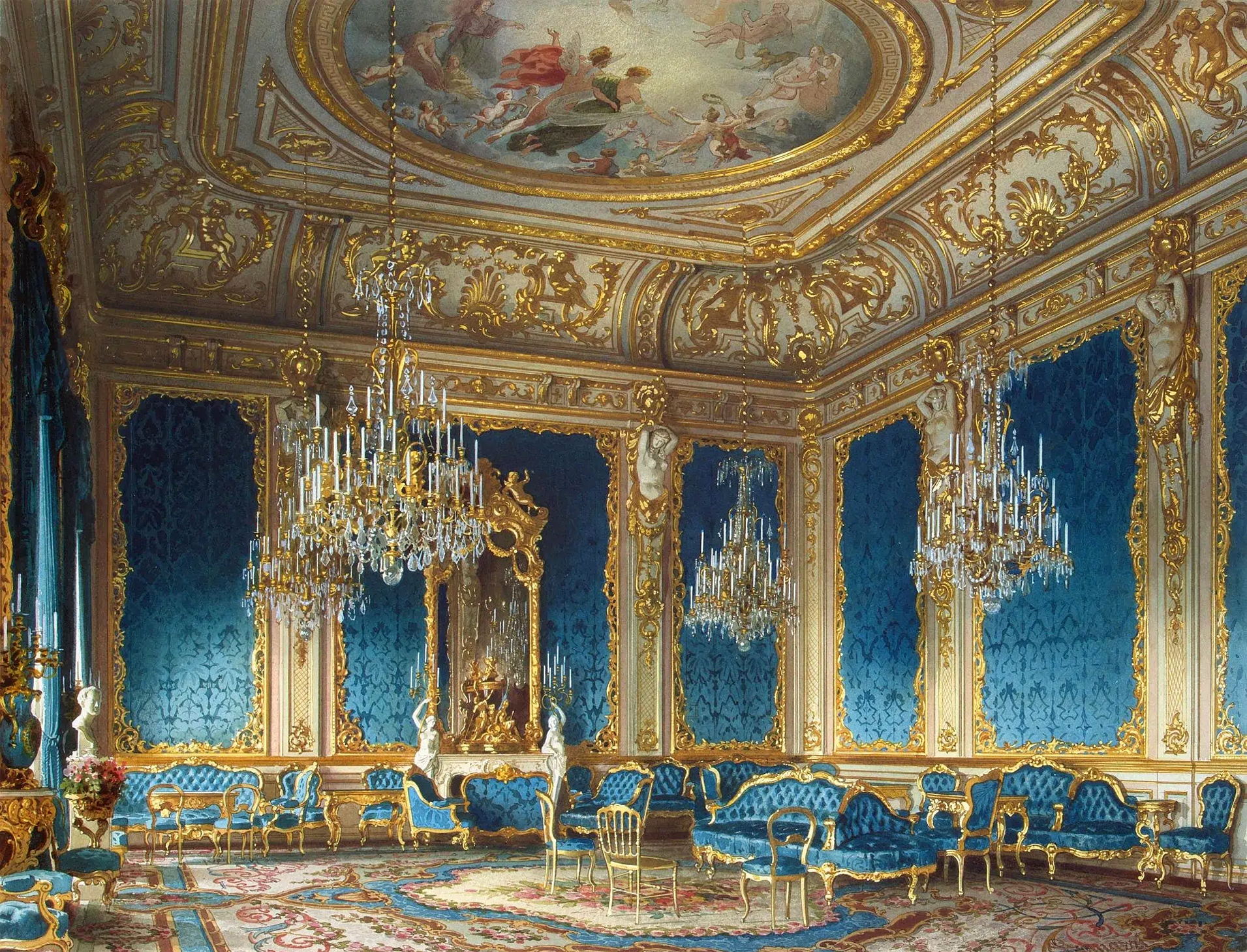
Luigi Premazzi, Watercolor of a blue drawing room, 1869–1872. State Hermitage Museum collection
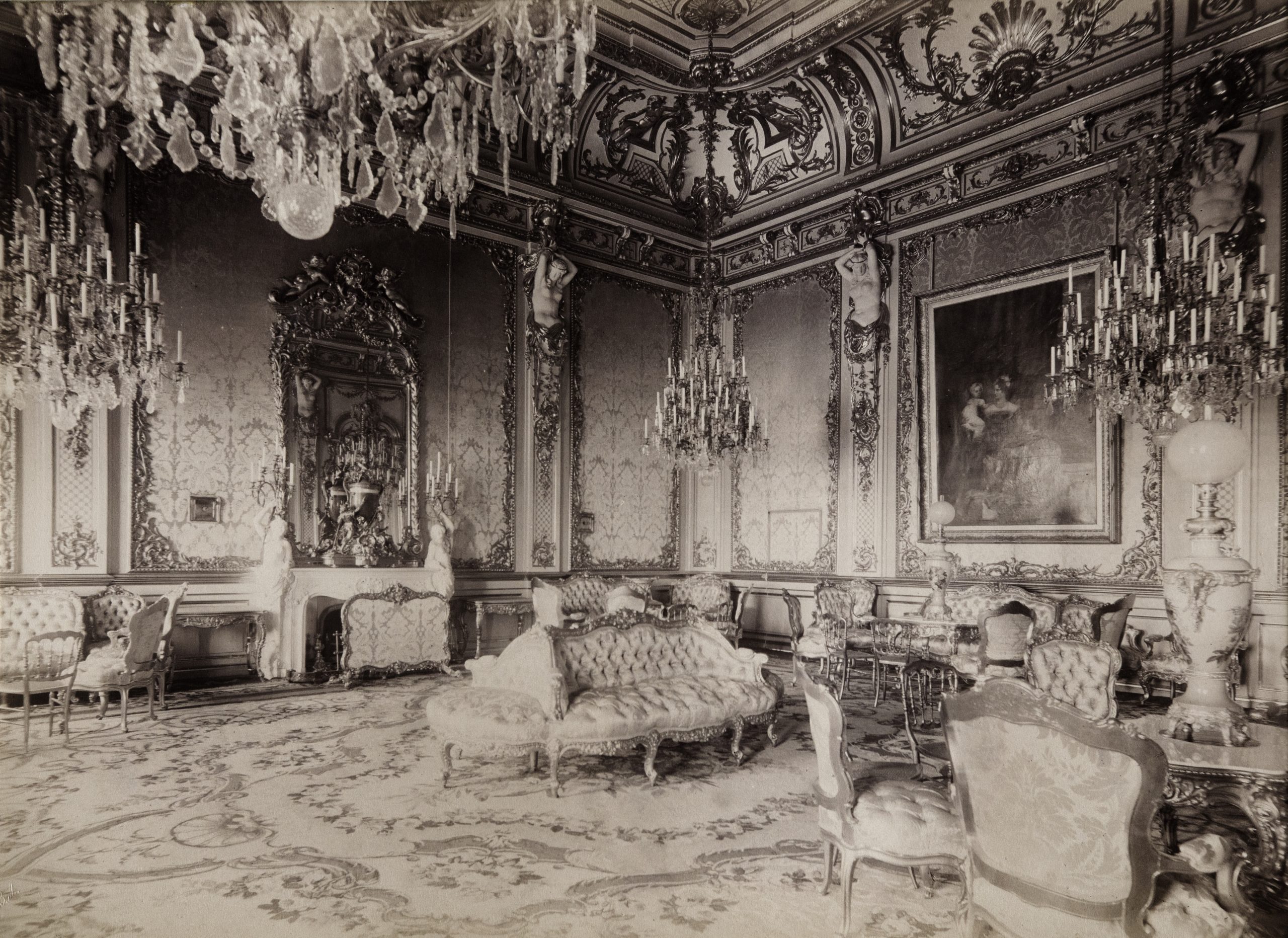
Photograph of a blue drawing room, from an album in the Russian History Museum archives
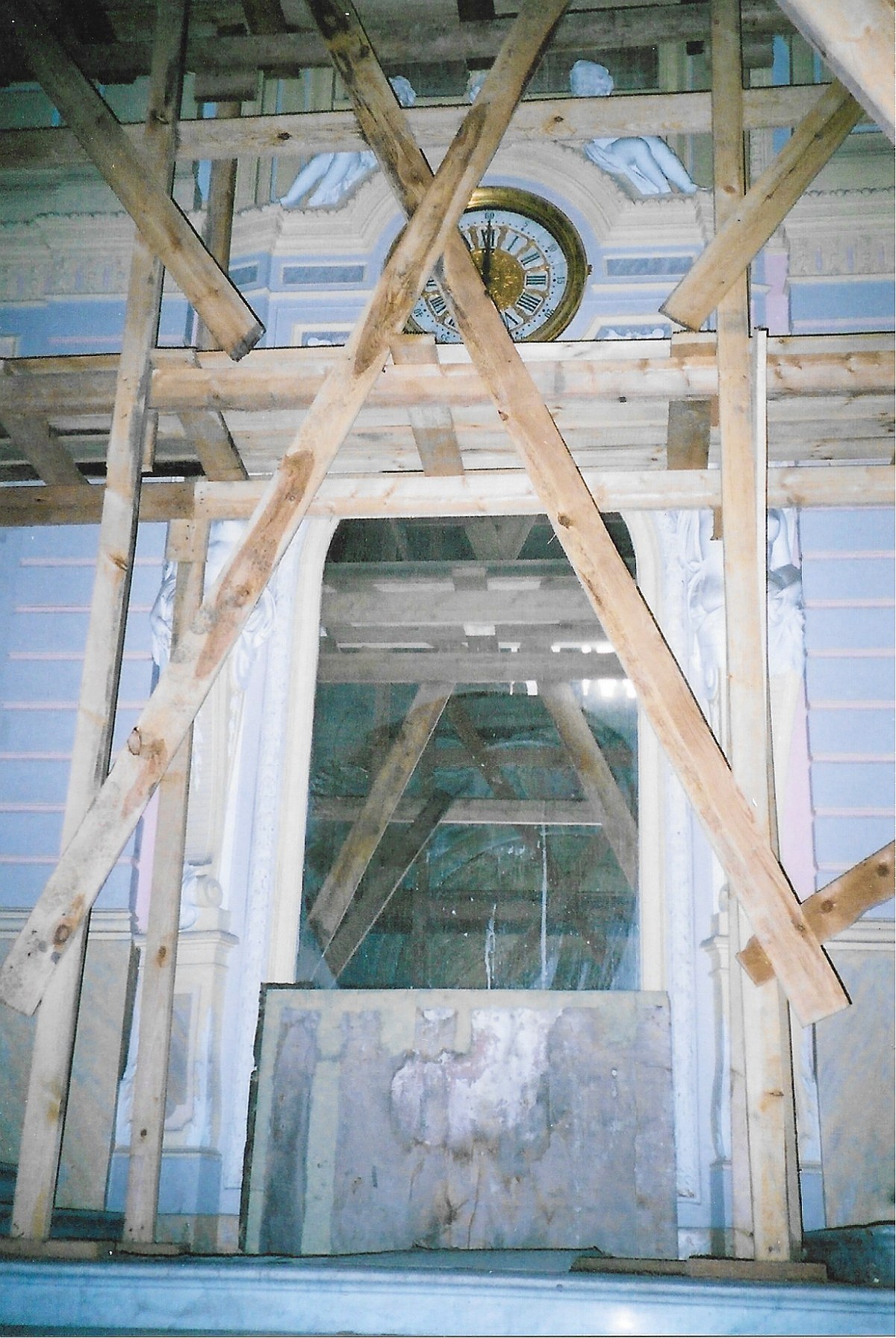
Much of the original scheme endured: the upholstered walls and furniture, the polished marble mantel, and the imposing ormolu clock all survived from Stieglitz’s installation. To this refined setting, however, the Grand Duke added a personal touch: a large portrait of his grandmother, Empress Alexandra Feodorovna, with her eldest children, painted by the English artist George Dawe.
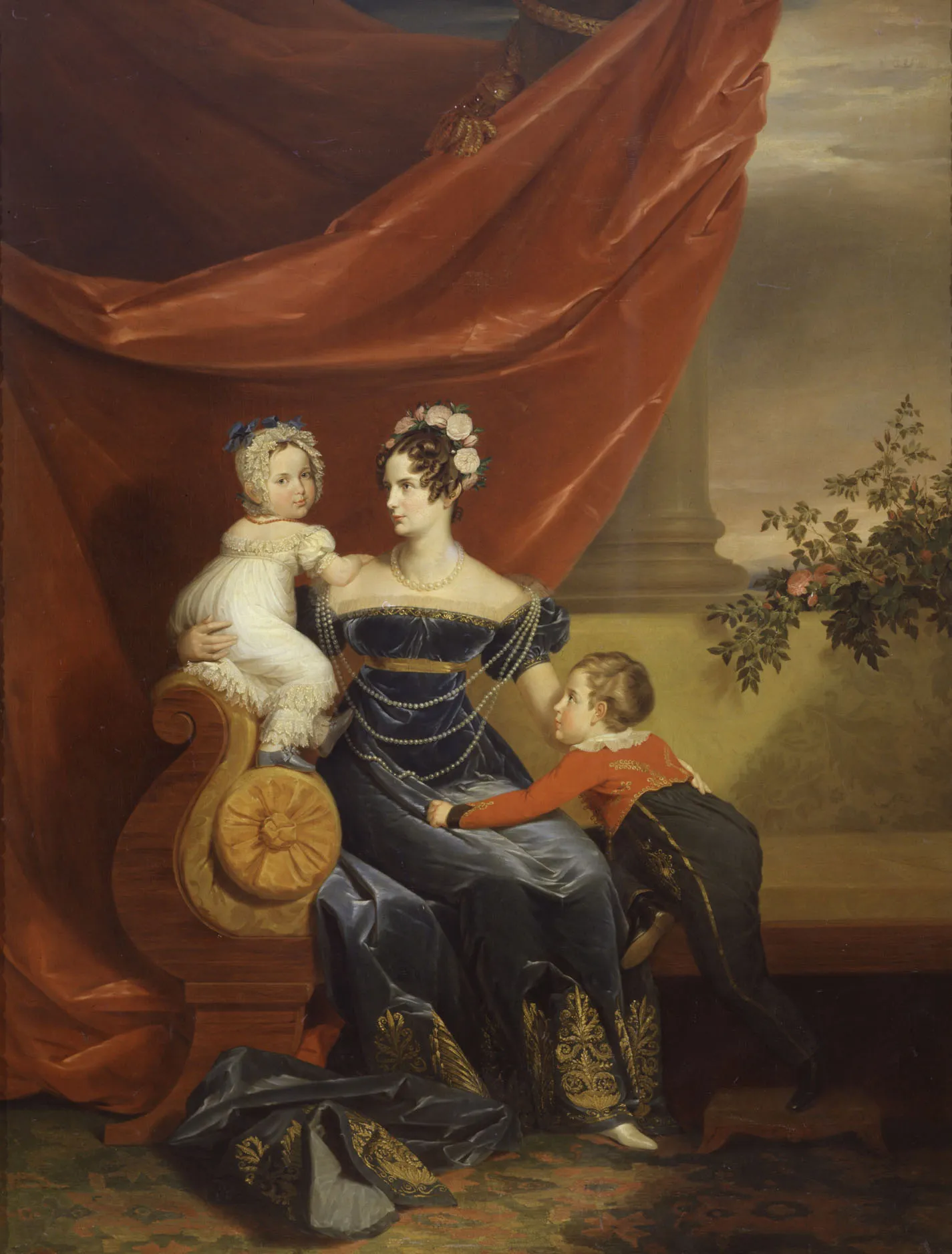
George Dawe. Charlotte (Alexandra Feodorovna), Empress of Russia, with her children, Alexander and Maria. The Royal Collection of the British royal family
A Palace and Its Stories
With the palace now identified, its human story came into focus. Grand Duke Paul and Princess Alexandra married in 1889 and had two children, Maria and Dmitri (the latter would later play a role in the murder of Grigori Rasputin). Their happiness was brief: Alexandra tragically died in 1891 following an accident while pregnant with their second child.
When compared to Luigi Premazzi’s earlier watercolors of the Stieglitz mansion, the photographs confirm a striking continuity—the same rooms, furnishings, and finishes reinterpreted through the lens of a new generation of imperial occupants. Were these subtle changes a deliberate choice, an act of reverence toward the house’s former grandeur, or simply the result of circumstance? Perhaps the couple’s brief time together—barely two years—left little opportunity to make their own mark on the interiors.
Grand Duke Paul was devastated by the death of his young wife. For years he lived in mourning, raising their two children, Maria and Dmitri. While serving in the Imperial Guard, Paul met Olga Karnovich, the wife of a fellow officer. Their relationship soon deepened into an affair that caused considerable scandal within the imperial family. In 1897 Olga gave birth to their first child, and, determined to formalize their union, Paul married her without Tsar Nicholas II’s permission—a grave breach of dynastic protocol. As a result, he was stripped of his official functions, banished from Russia, and his property confiscated.
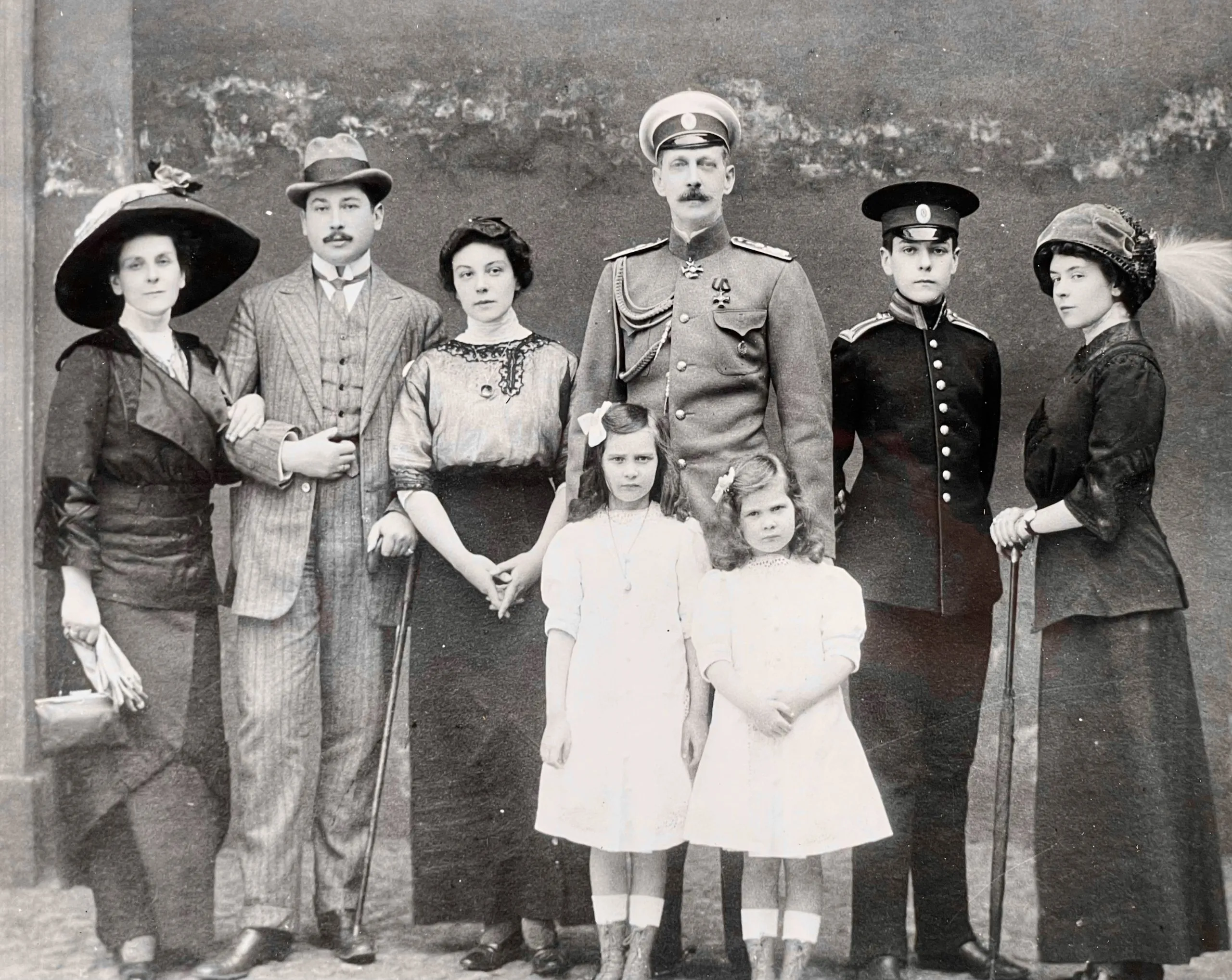
Princess Olga Paley, Alexander von Pistohlkors, Olga von Pistohlkors, Grand Duke Paul Alexandrovich, Princess Irina Paley, Princess Natalia Paley, Prince Vladimir Paley, and Marianne von Pistohlkors. Ca. 1914. Russian History Museum collection
The couple settled in France, where they lived for nearly a decade. In 1915, after years of estrangement, Nicholas II officially recognized the marriage, granting Olga the title Princess Paley and extending limited rights to their children. When the family returned to Russia, they did not move back into Paul’s former palace on the English Embankment but instead took up residence in a new home in Tsarskoe Selo.
Paul’s reconciliation with the throne was tragically short-lived. After the Bolshevik Revolution, he was arrested, imprisoned in the Peter and Paul Fortress, and executed in January 1919, alongside three of his cousins.
From Discovery to Display and Publication
With the album’s true identity finally established, this long-overlooked treasure has been placed on public view for the first time. Visitors can now encounter it in our current exhibition, Mysteries and Odysseys, where the once-misidentified photographs reveal the opulent interiors of a lost St. Petersburg residence and the layered histories behind its walls. The album’s journey illustrates how ongoing research can transform forgotten objects into vivid witnesses of Russia’s imperial past.
The story of this discovery extends beyond the museum as well. Museum staff shared the newly attributed photographs with Dr. Wilfried Zeisler, Chief Curator of the Hillwood Museum, during a research visit. Zeisler incorporated several of these previously unpublished images into his book on the life of Grand Duke Paul and Olga Paley in France (the English-language edition of The Belle Époque Life in Paris: Olga Paley and Paul of Russia was published earlier this year). This is yet another example of how ongoing research within museum collections continues to inform and enrich contemporary scholarship, ensuring that once-forgotten artifacts continue to shed new light on history.
Post Scriptum: Soviet Fate (+Unique Contemporary Photos)
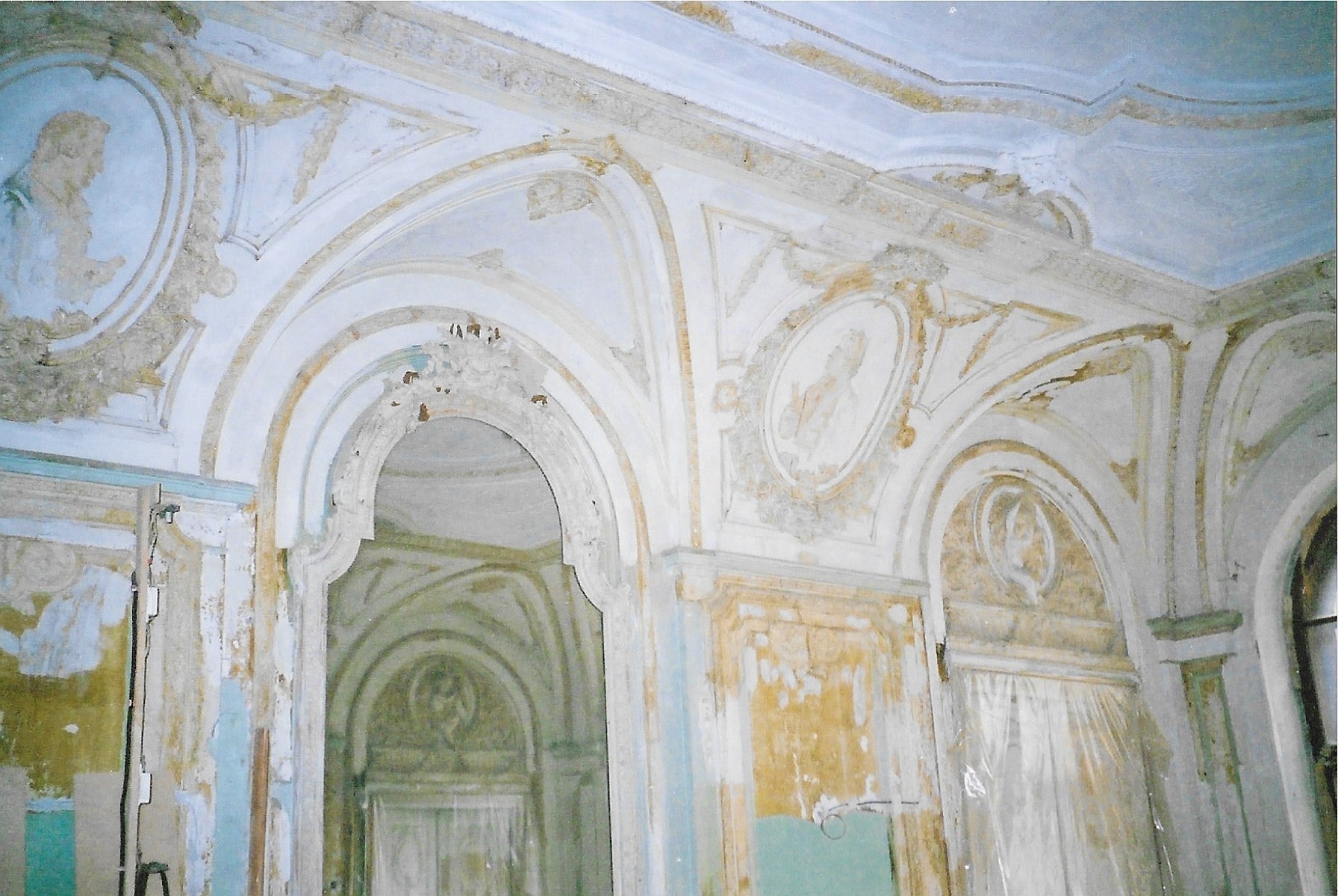
After Grand Duke Paul’s departure from Russia, the palace stood vacant, though it continued to be properly maintained. Following the 1917 Revolution, the building was nationalized and subsequently occupied by various government institutions throughout the Soviet era. Some of its valuable contents, including paintings, disappeared without a trace.
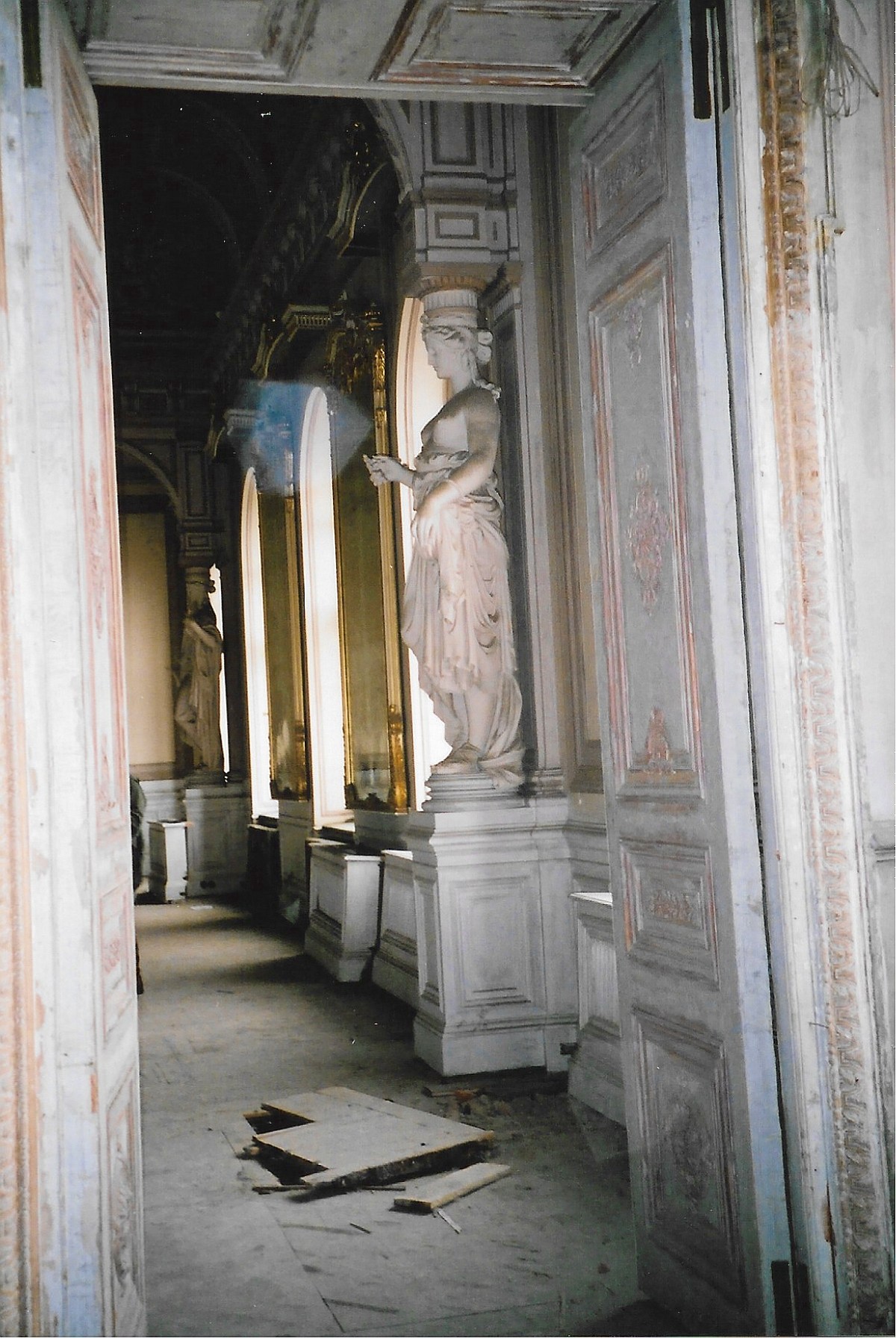
Discussions about restoring the palace began in the 1960s, and partial restoration work took place in the 1980s. These efforts, however, came to a halt with the collapse of the USSR in 1991 and the economic turmoil that followed. In 1998, the oil company Lukoil leased the mansion for 49 years, intending to invest in its reconstruction and eventually privatize it. The plans never came to fruition, and in 2011 the building was transferred to the management of Saint Petersburg State University, though it remains federal property.
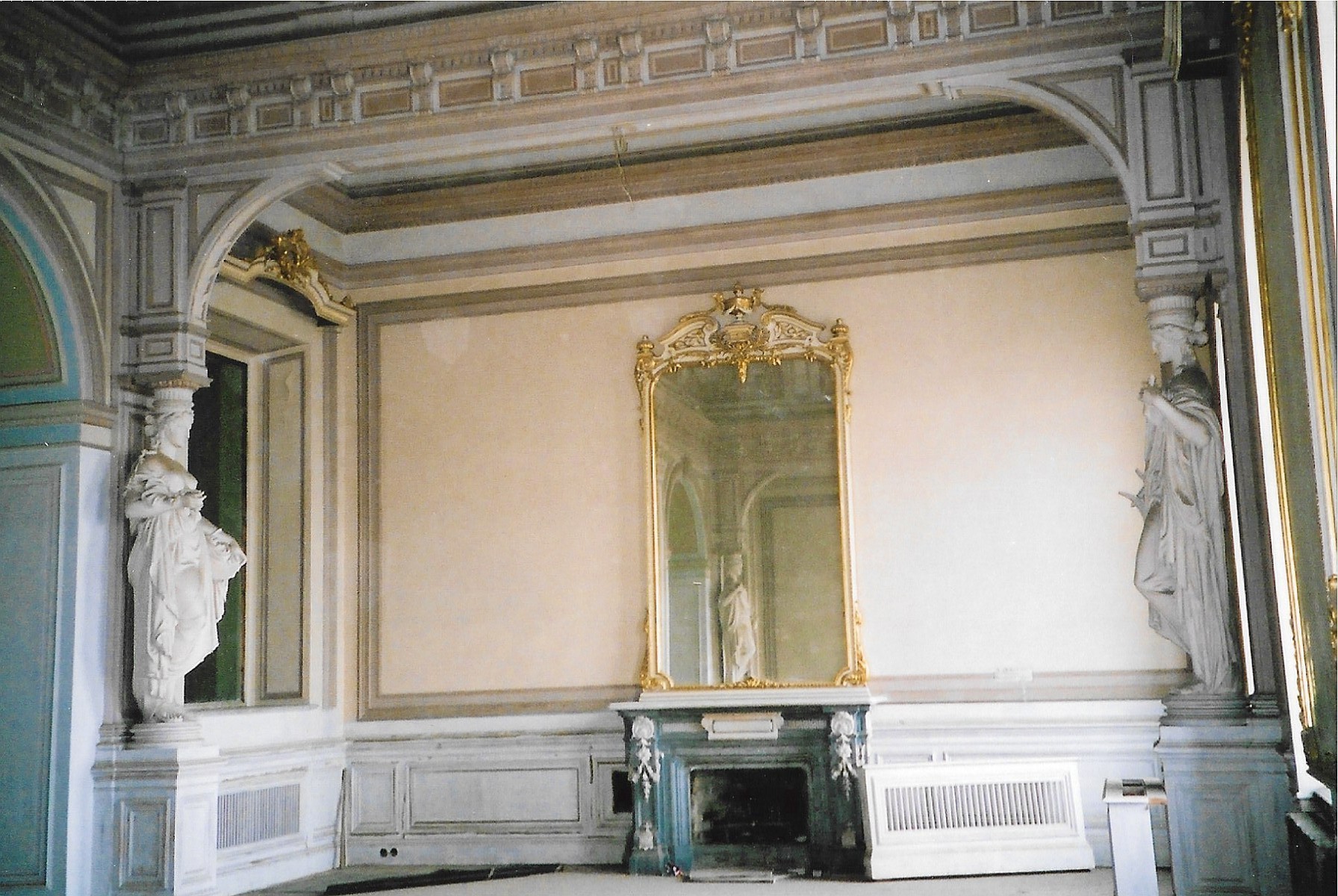
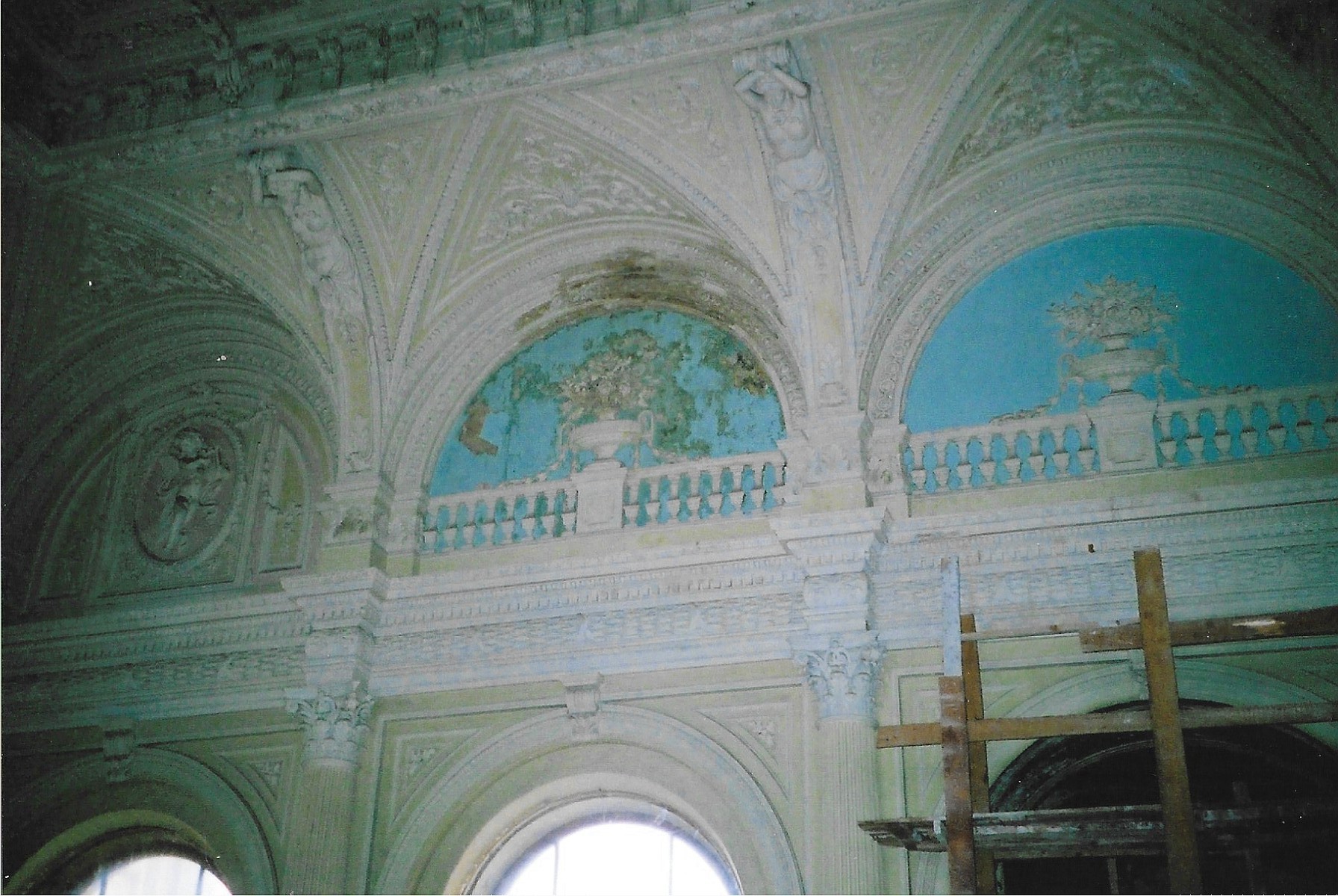
Today, the palace is closed to the public and in a deteriorated state. On rare occasions, it serves as a setting for film productions and photo sessions.
After reading this article, our museum friend Katrina Warne kindly shared photographs she took during a visit to the palace in September 2003. Many of the interior elements visible in Luigi Premazzi’s watercolors and the historical photographs featured in our album can still be recognized in her images, albeit in a much more fragile state. Among these is Return from the Hunt by Alexander von Wagner, which has since been transferred to the Hermitage Museum.
We extend our sincere thanks to Ms. Warne for generously allowing us to publish these remarkable photographs.
Scroll right for more pictures!