
For Every Date and Purpose: Calendars from the Russian History Museum’s Collection
Author: Anastasia Shteinert
On January 31, 1918, Russians went to sleep and woke up on February 14—as if 13 days had been erased from existence. How did this leap in time happen?
It was a bureaucratic decision with profound consequences. In an effort to align Russia with the Western world, the young Soviet government replaced the Julian calendar with the Gregorian, shifting from the so-called Old Style to the New Style. The transition was absolute, yet for ordinary people, it must have been disorienting. How many birthdays, anniversaries, and other important dates were lost in the gap? How many calendars suddenly became obsolete?
Calendars are, indeed, invaluable historical witnesses. That is why, at the Russian History Museum, we treat them with the same care as other precious objects. Some of the calendars in our collection once belonged to the imperial family, while others were printed in pre-revolutionary Russian literary magazines or produced in Jordanville, NY, serving religious purposes for the Russian diaspora.
Marking the Tsar’s Last Days
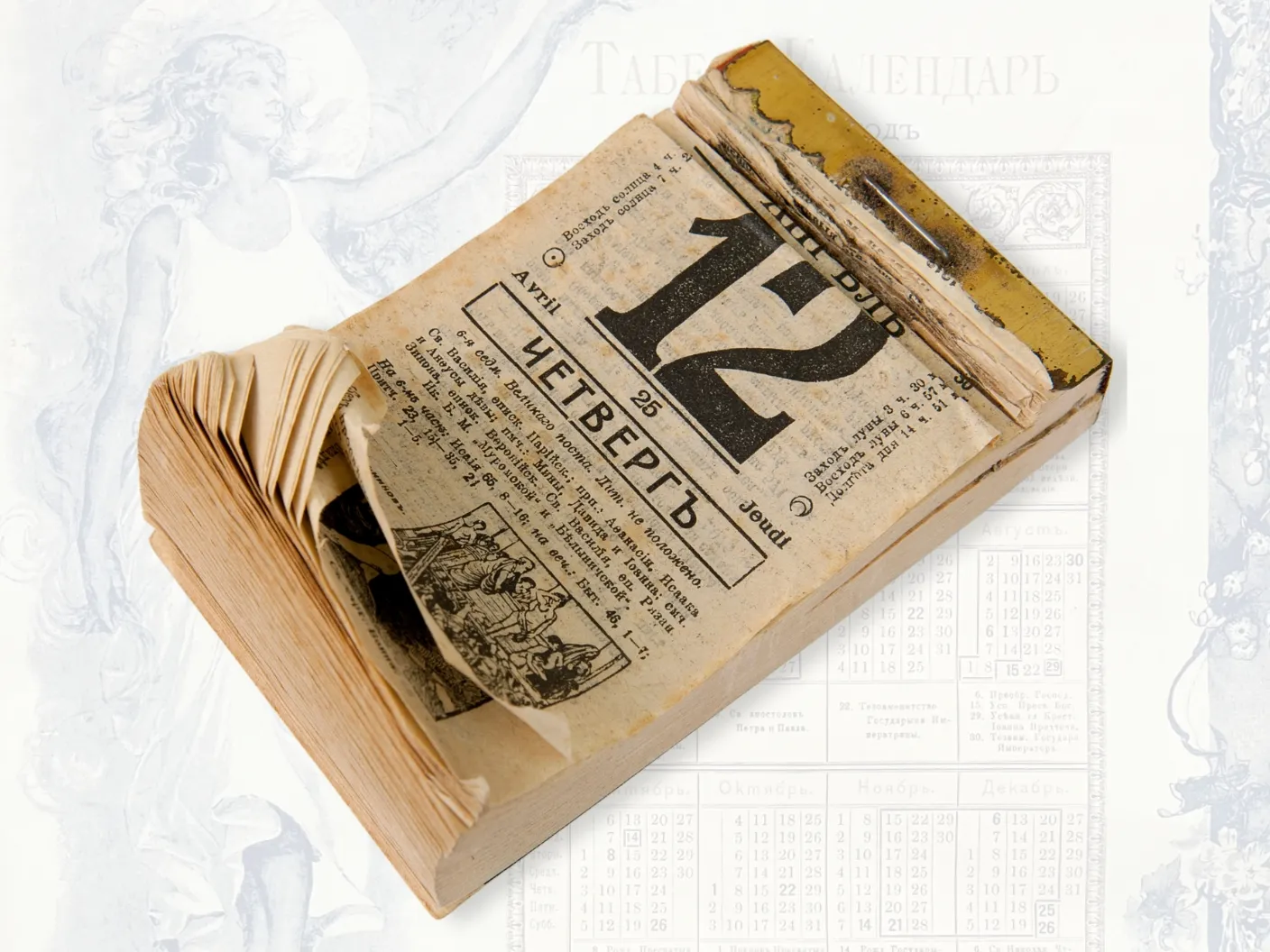
Two calendars in our museum’s collection are directly connected to the family of the last Russian emperor, Nicholas II. One of them is a tear-off calendar published by the I. Sytin printing house. These calendars were called tear-offs because each page corresponded to a single day, and to reveal the next day, one had to remove the previous sheet. Compact and versatile, they could be hung on a wall, placed on a desk, or even carried in a pocket.

Tear-off calendar. I. Sytin firm, 1918. Russian History Museum collection
The 1918 tear-off calendar in our collection most likely belonged to Prince Vasily Dolgorukov (1868–1918), Marshal and a close advisor to Nicholas II. After the February Revolution, he voluntarily followed the imperial family into exile, but in 1918, he was arrested by the Bolsheviks in Yekaterinburg. On July 10, 1918, just a week before the execution of the Romanovs, Dolgorukov himself was executed.
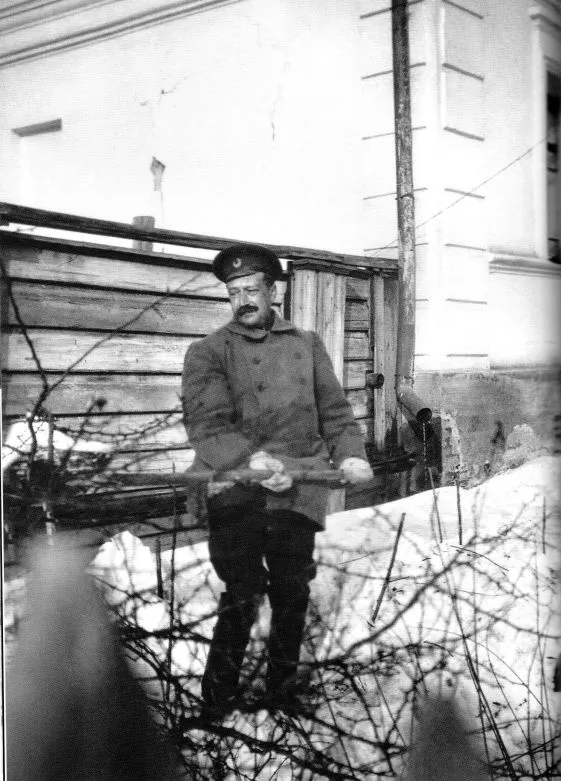
Prince Dolgorukov shovelling snow. Tobolsk, 1917. Source: Pinterest
The top page of Dolgorukov’s calendar displays the date Thursday, April 12 (April 25, New Style), 1918—the last full day the imperial family spent in Tobolsk. The following day, Nicholas II, Alexandra Feodorovna, and their daughter Grand Duchess Maria, accompanied by several attendants, including V. Dolgorukov, were transported from Tobolsk to Yekaterinburg.
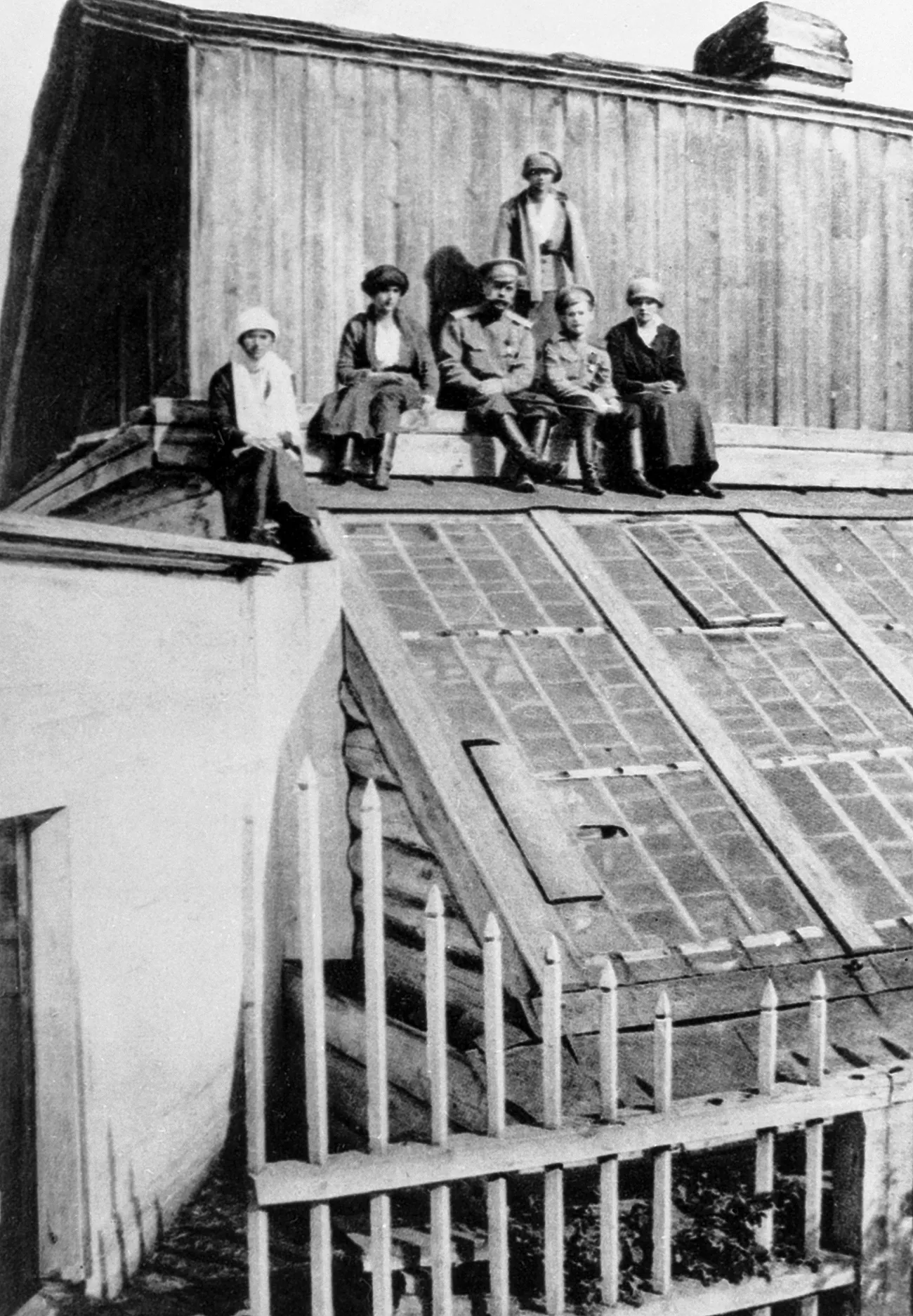
The Romanovs on the roof of a house in Tobolsk. Source: Wikimedia Commons
A closer look at the calendar reveals that it does more than simply mark the date: it also provides information about sunrise and sunset times and lists Orthodox saints commemorated on that day. Each page of the calendar features a reproduction of artwork, and the April 12 page depicts a painting “Slave Market in Ancient Rome” by Jean-Léon Gérôme.
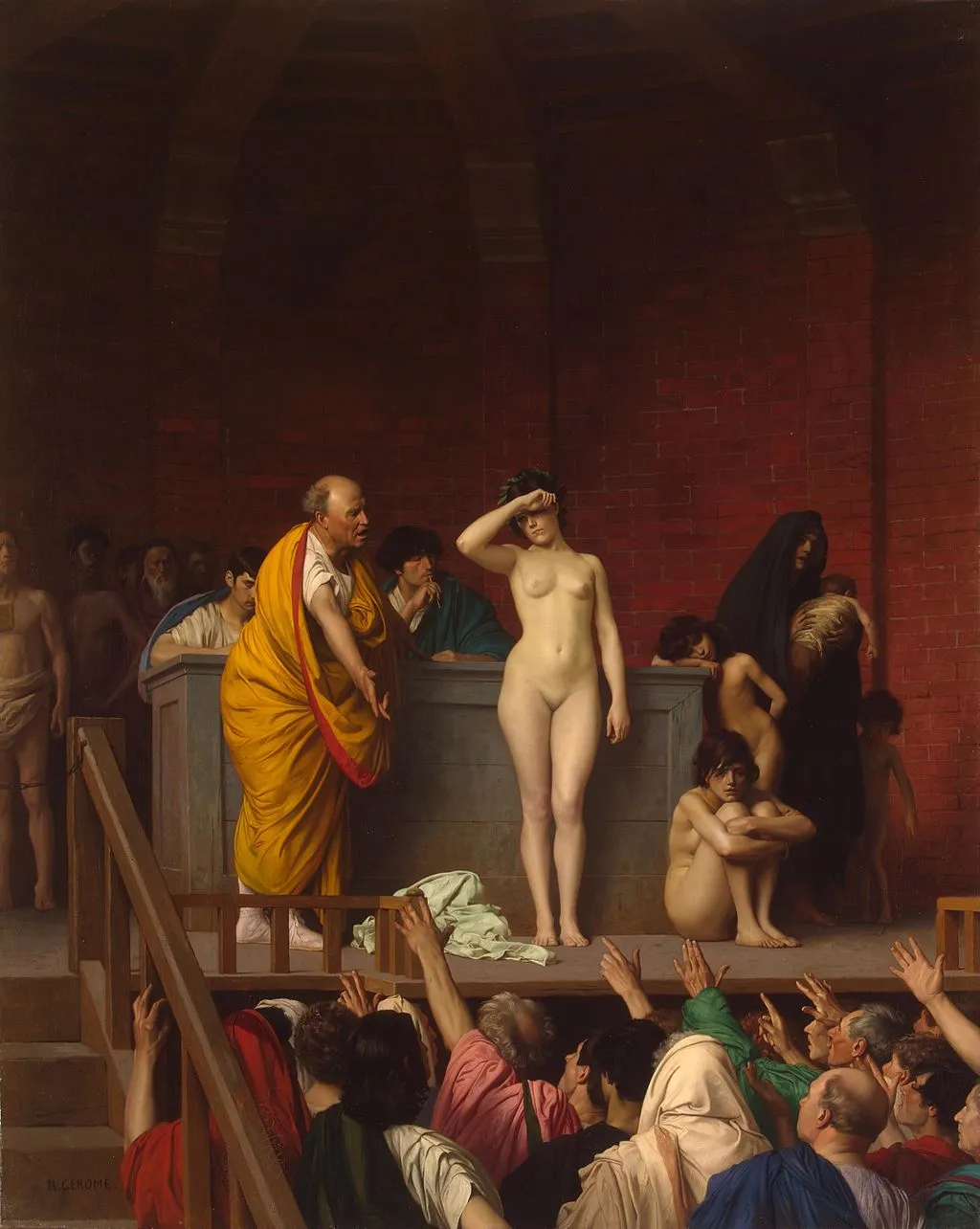
Jean-Léon Gérôme, “Slave Market in Ancient Rome,” c. 1884. Hermitage Museum. Source: Wikipedia
Tear-off calendars remained popular in Soviet Russia and are still used today by older generations. They have become a recognizable feature of Russian daily life, often appearing in films and cartoons, such as the beloved Soviet animation Three from Prostokvashino.
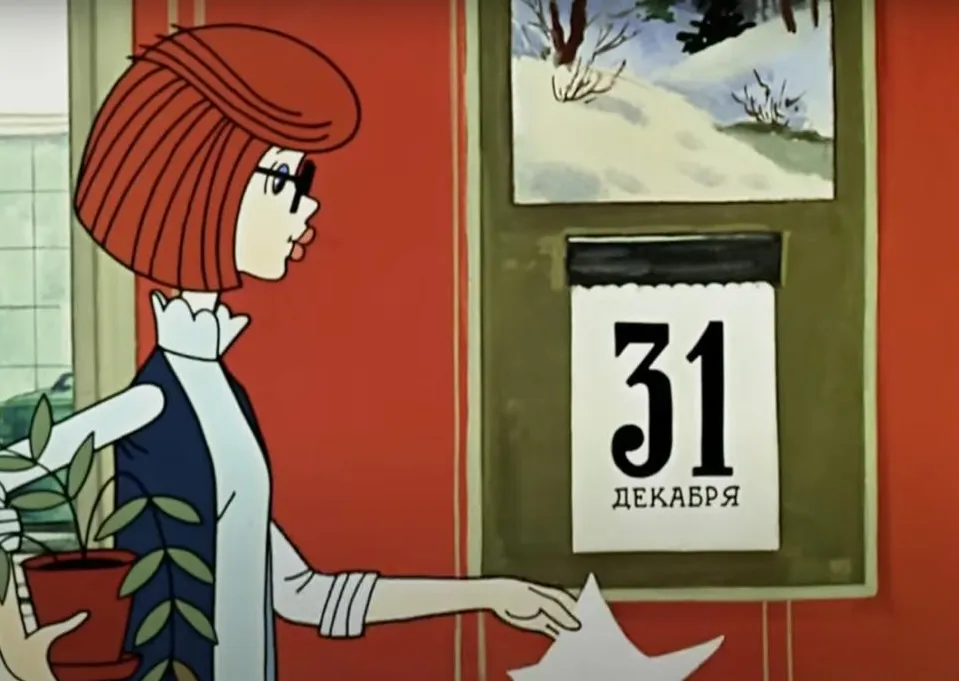
"Winter in Prostokvashino," 1984
Another calendar fragment from our collection was allegedly found in the Ipatiev House in Yekaterinburg, the very place where the imperial family was executed. The surviving fragment contains pages spanning July 30 to August 12, 1917. As was customary, each date is accompanied by Orthodox feast days, and beside them are blank spaces for personal notes.
At first glance, the presence of both Old Style and New Style dates in the calendar may seem confusing—especially considering that August 12/30 is marked as the birthday of Tsarevich Alexei. This detail proves that the calendar was printed before the Bolshevik revolution and the calendar reform. However, even in imperial Russia, it was fairly common to list both Julian (Old Style) and Gregorian (New Style) dates, especially in official documents related to international affairs and in some periodicals. This dual dating system helped Russians navigate European dates more easily.
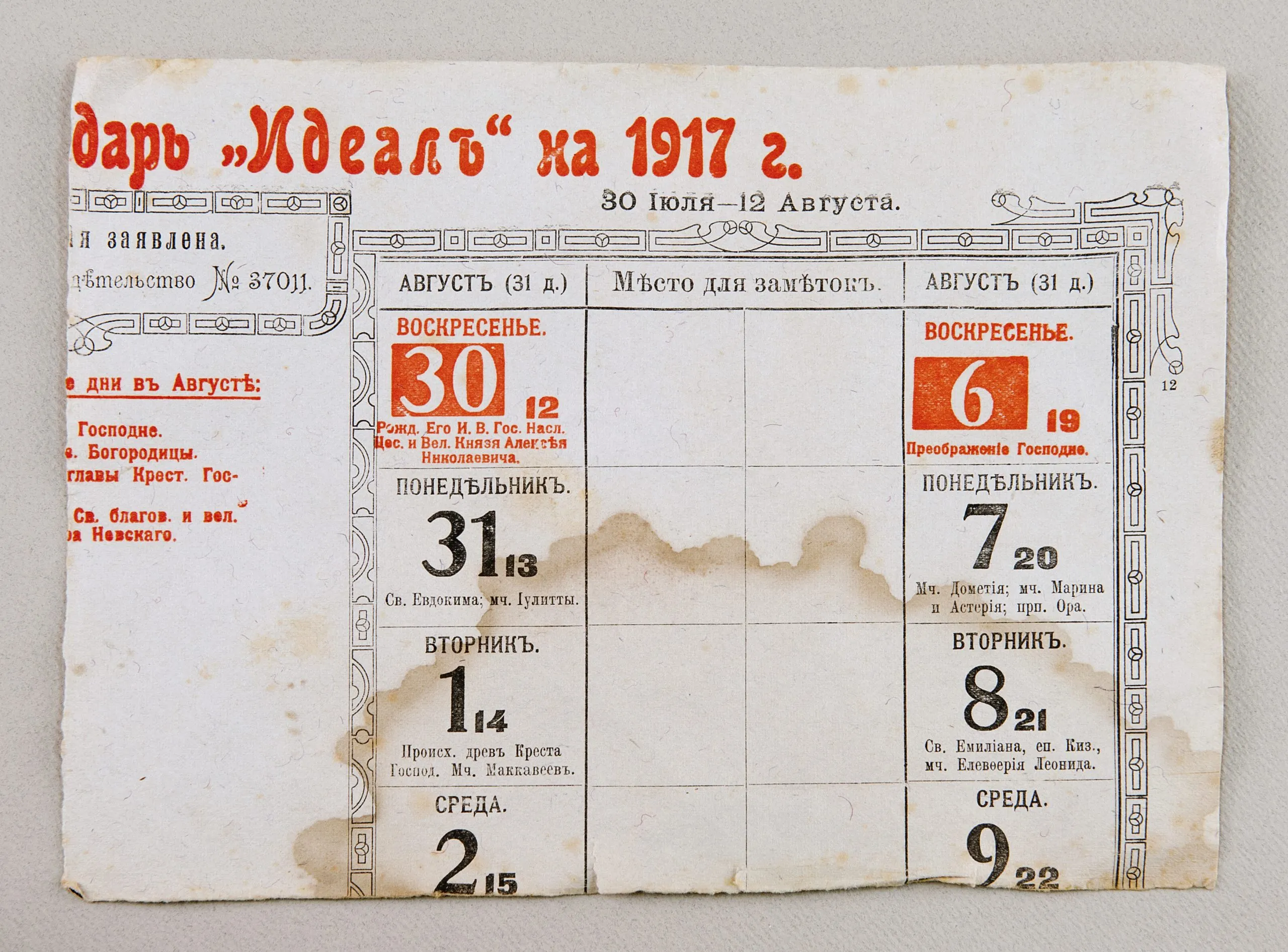
Fragment of a calendar for 1917. Found in Ipatiev House. Russian History Museum сollection
Calendar as a Textbook
The General Russian Calendar (Всеобщий русский календарь) holds a special place in the history of Russian publishing. It was not just a calendar in the conventional sense but an encyclopedia for the general public. Its publisher and creator, Ivan Dmitrievich Sytin (1851–1934), was one of Russia’s most prominent publishers, entrepreneurs, and educators of the late 19th and early 20th centuries. As the founder of I. D. Sytin Partnership, he revolutionized the accessibility of books, newspapers, and magazines for a broad audience.
Sytin envisioned calendars not merely as datebooks but as educational tools with practical information—household tips, religious holidays, and even medical advice. In his memoirs, he explained why his idea was so significant for Russian society:
“From the very first days of its existence, the publishing house began considering the release of a people’s calendar… In such a vast country as Russia, millions lived and died, cut off from urban centers by distances and impassable roads. These people had no access to books, newspapers, or schools. For them, the calendar was the only window through which they could see the world. They thought according to the calendar, learned from it, and found guidance for all aspects of life on its pages.”
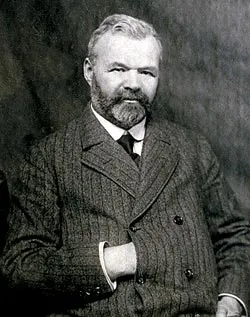
Ivan Sytin, c. 1900. Source: Wikipedia
In 1884, Sytin published the first edition of the General Russian Calendar with colorful illustrations. Each issue included a message inviting readers to report errors or share suggestions. The editorial team received numerous letters with feedback, and subsequent editions were refined based on audience input.
The Russian History Museum holds a rare copy of the 1917 edition the General Russian Calendar—the last published before the Russian Revolution and the fall of the monarchy. The cover features Emperor Nicholas II, Empress Alexandra Feodorovna, and Tsarevich Alexei, surrounded by imperial subjects dressed in traditional ethnic costumes, symbolizing the diverse peoples of the Russian Empire just before its collapse.
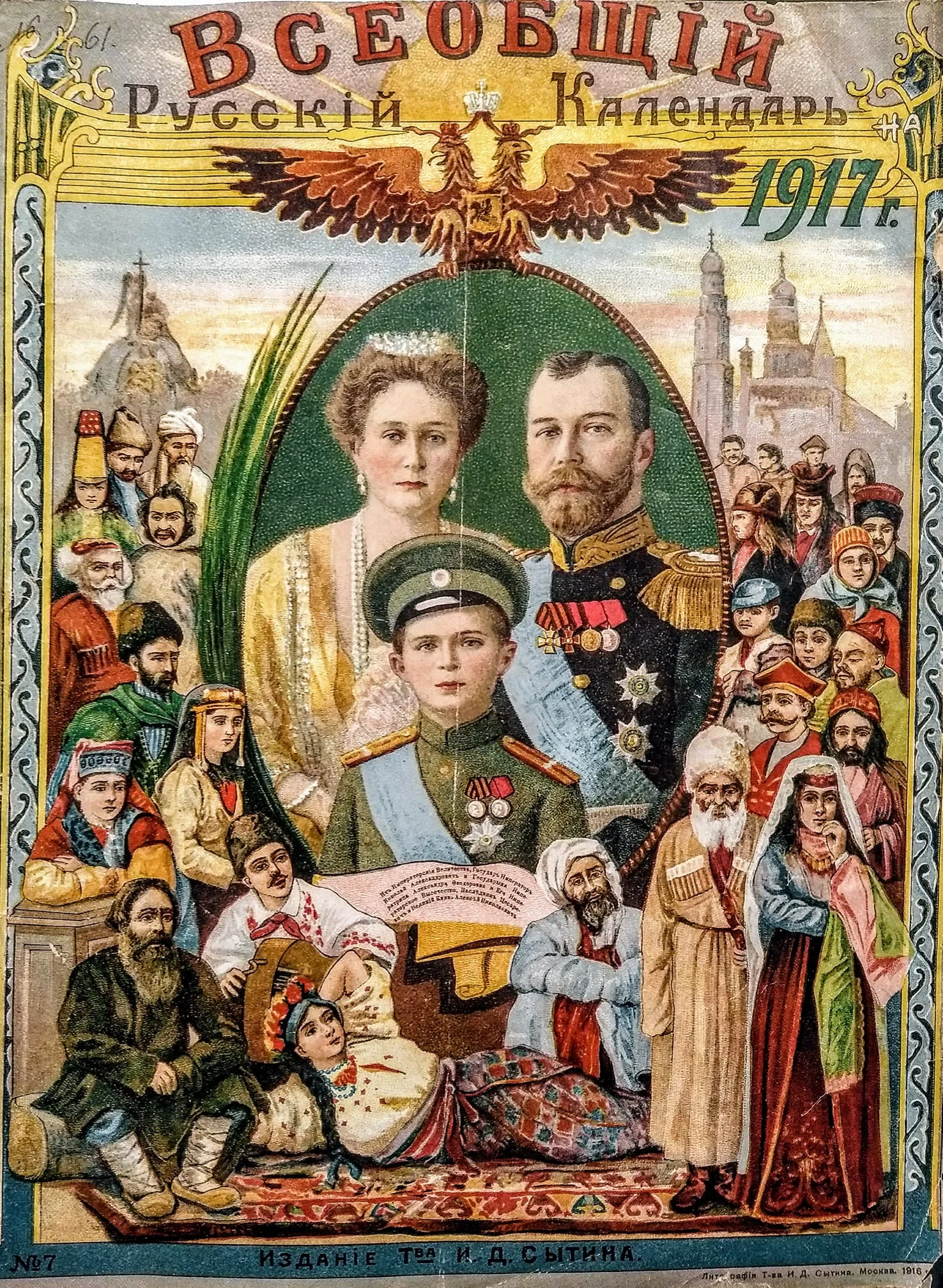
The Russian General Calendar for 1917. Published by I. Sytin's firm. Russian History Museum collection
Nevertheless, Sytin was not the only publisher producing illustrated calendars. Many periodicals included calendars as complimentary supplements to boost readership and add practical value to their publications. One such example in the museum’s collection is the 1887 calendar, a free supplement to the popular illustrated magazine Vsemirnaya Illustratsiya (World Illustration). It features a beautifully designed monthly layout including Orthodox holidays.
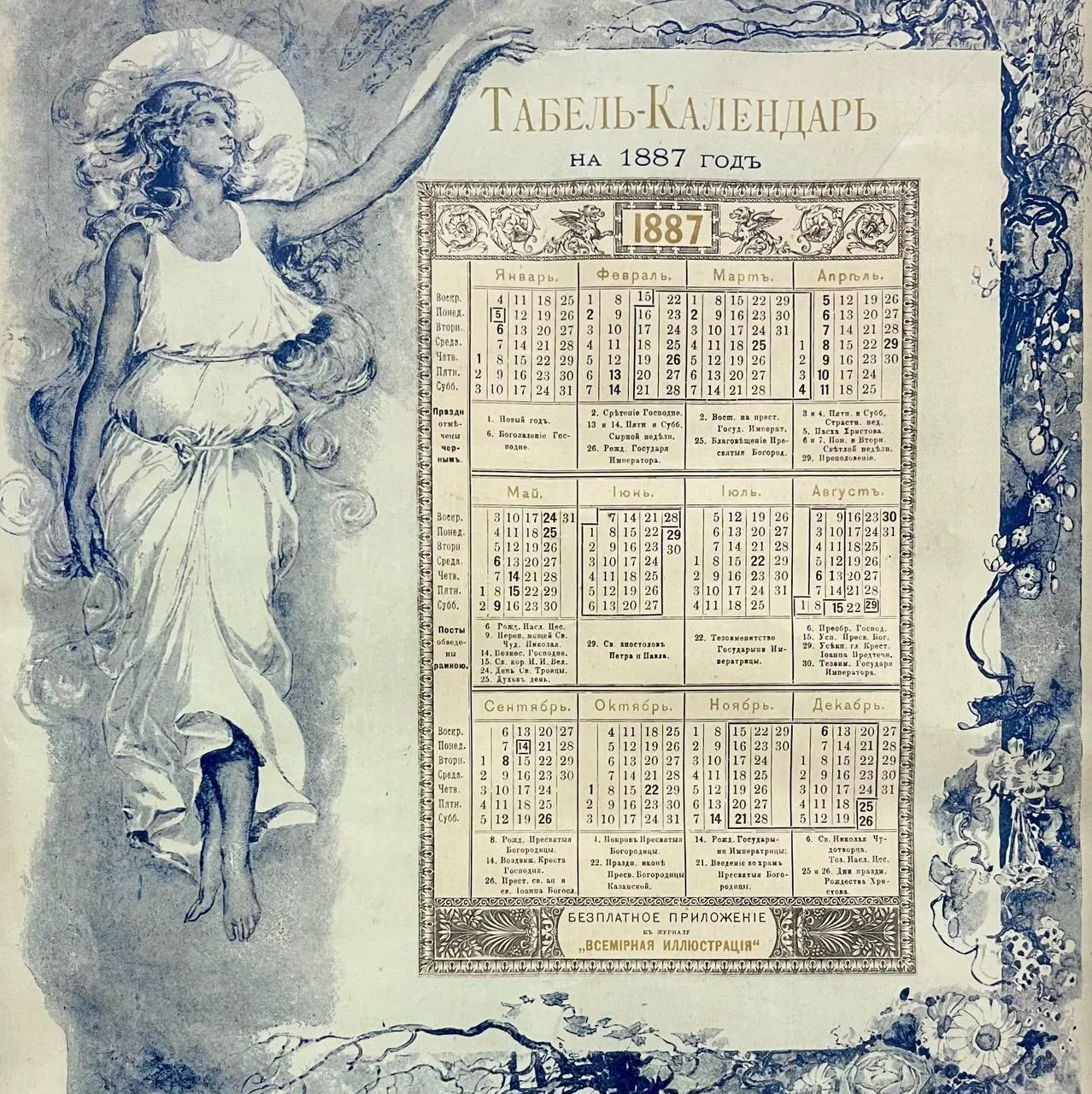
Calendar for 1887, complimentary supplement to the "World Illustration" magazine. Russian History Museum collection
Published weekly, Vsemirnaya Illustratsiya was one of the most widely read illustrated literary magazines of the late 19th-century Russian Empire. It frequently included supplemental materials to attract and retain subscribers. The magazine collaborated with renowned cultural figures, including writer Anton Chekhov and marine painter Ivan Aivazovsky.
Unexpected Formats
Not all calendars were designed for a broad audience or had colorful illustrations to grab attention. One such example is the court calendar, a format that became widely used in Russia in the 18th century. Similar calendars had already existed in Europe, serving as essential reference tools for officials, nobility, diplomats, and members of the aristocracy. In addition to listing important dates, they contained detailed information on court ranks, government positions, the diplomatic corps, and schedules of ceremonies and state festivities. As an official document, the court calendar helped navigate the imperial court’s hierarchy and events.
Our museum’s collection includes a court calendar from 1903, a substantial volume of 600 pages. Beyond its calendar and listing of church holidays, this publication meticulously documents Nicholas II’s courtiers, categorized by rank and title. Additionally, a separate section is dedicated to the household of Empress Alexandra Feodorovna. Rather than being a mass-market product, this calendar functioned as a historical record, offering insight into the structure and protocol of the Russian imperial court.
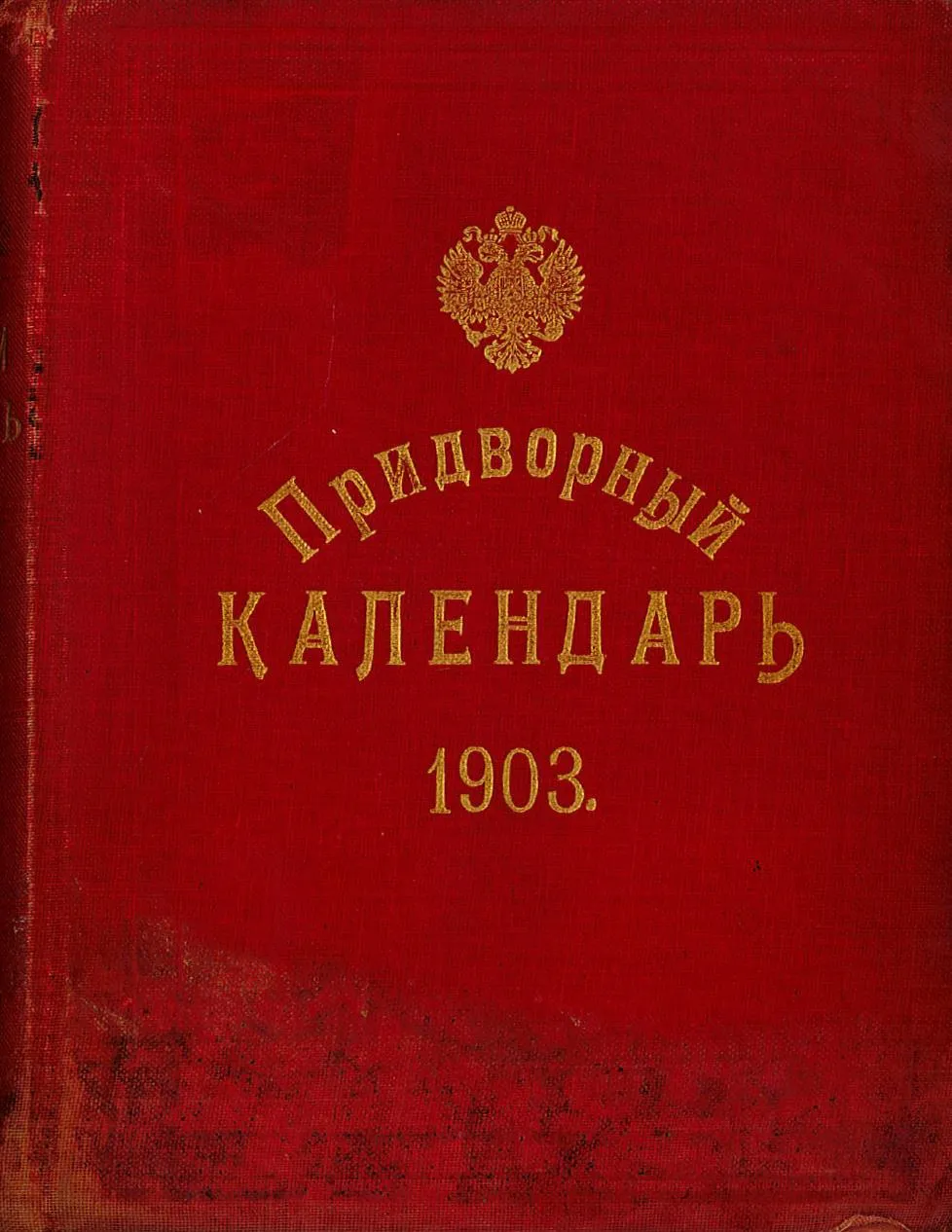
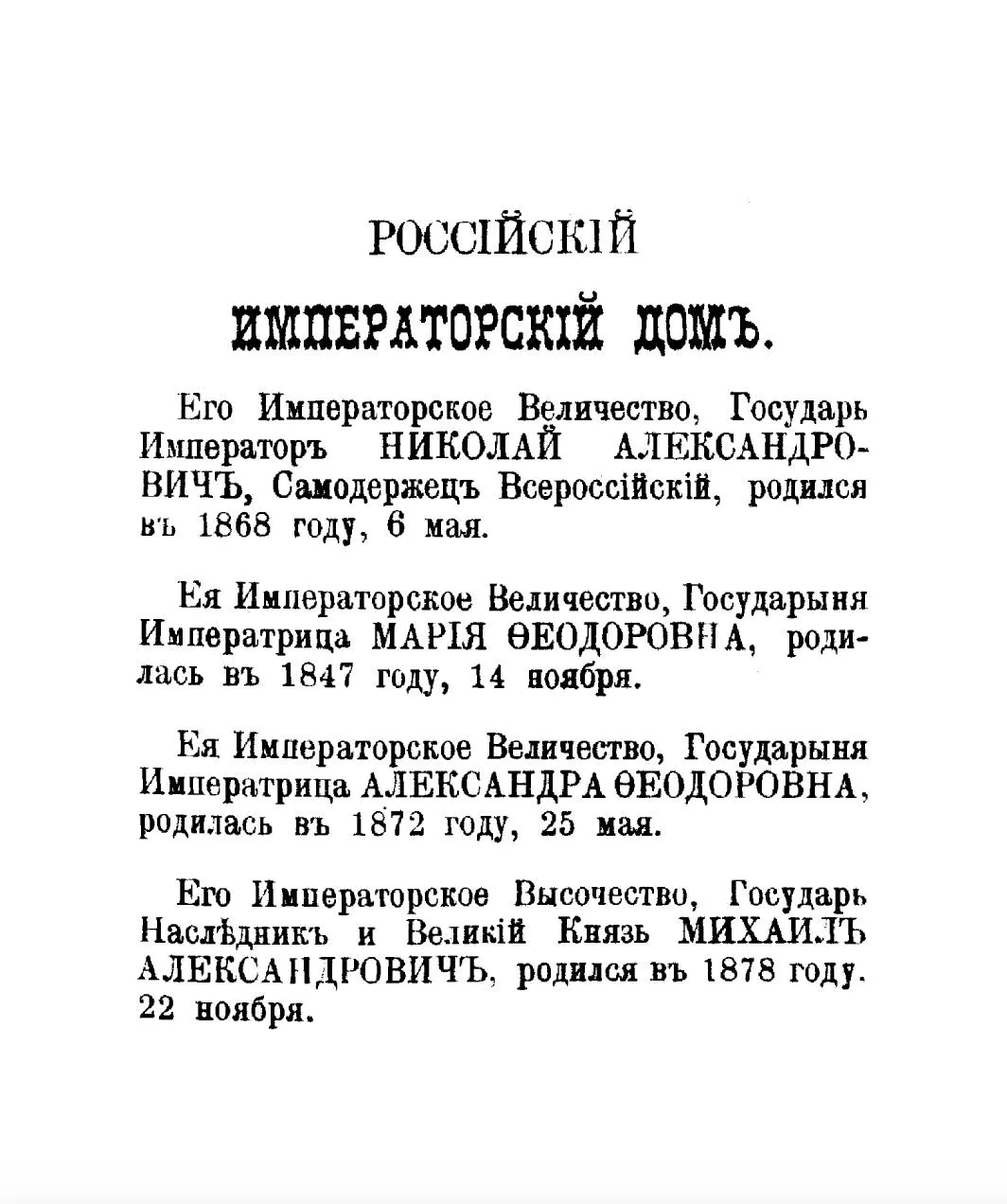
Court calendar for 1903, R. Golike firm. Russian History Museum
Another unusual calendar in our collection was printed in Jordanville, New York. Titled The Expanded Menologion of Russian Saints and a Brief Account of Miraculous Icons of the Mother of God, this 1951 edition was compiled by the religious writer and publicist Nikolai Talberg, who fled Russia after the revolution. The book details Orthodox feast days dedicated to saints, provides historical background on them, and includes illustrations of renowned Orthodox icons.
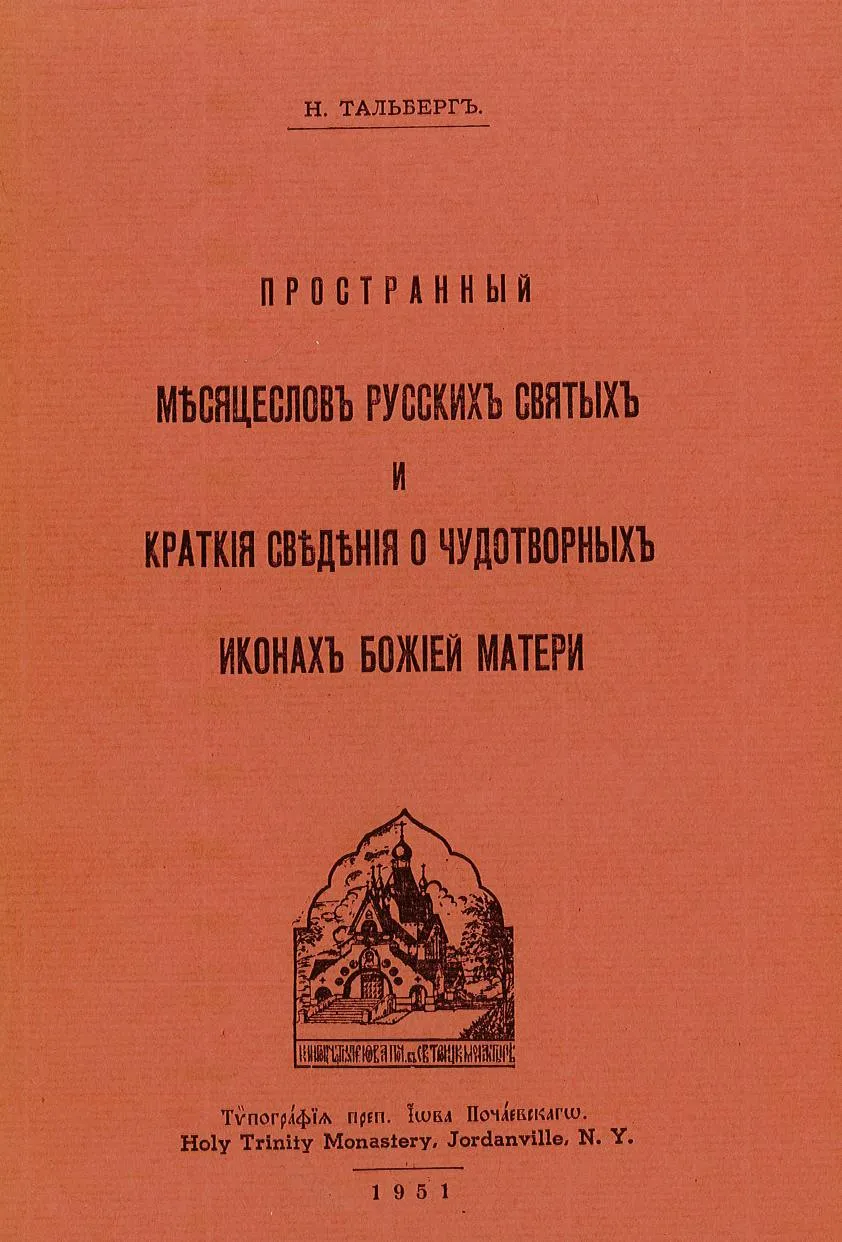
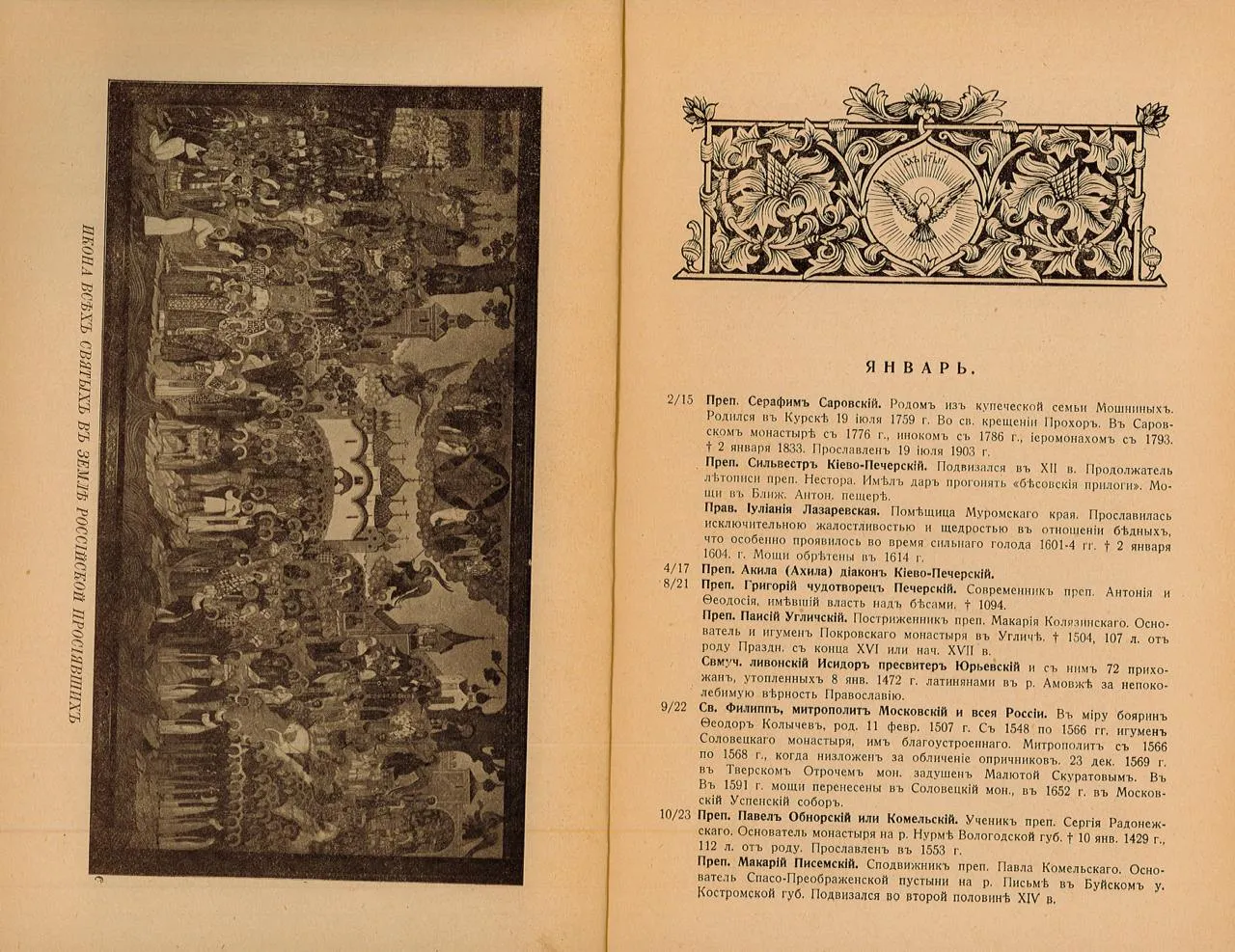
The Expanded Menologion of Russian Saints and a Brief Account of Miraculous Icons of the Mother of God, 1951. Jordanville, NY. Russian History Museum collection
_____
The 1918 calendar reform fundamentally changed how Russians measured time, aligning the country with the rest of Europe. Yet the Old Style did not entirely disappear. To this day, the Russian Orthodox Church and several other Eastern Orthodox communities continue to follow the Julian calendar for religious observances, such as celebrating Christmas on January 7. This is another reminder that calendars are more than practical tools—they, after all, shape and reflect our historical memory.


